



Visit Iceland in July: The Ultimate Guide
- Iceland by Month
- 4 Jun 2026
Picture a summer evening where the sun never truly sets and the landscape glows long into the night. July is Iceland at its most vibrant, offering endless daylight, stunning scenery, and the freedom to explore at your own pace.
Key Takeaways
- July is one of the warmest and brightest months in Iceland, with nearly 24 hours of daylight.
- Temperatures typically range between 10°C and 15°C (50°F–59°F), making it ideal for sightseeing and outdoor activities.
- July in Iceland offers the best conditions for road trips, hiking, whale watching, and exploring the Highlands.
- Puffin season is at its peak, making it one of the best months for wildlife enthusiasts.
- Popular attractions are busier than during the shoulder seasons, so advance booking is highly recommended.
- July is perfect for visitors wanting to experience Iceland’s dramatic landscapes without winter weather challenges.
Why Visit Iceland in July?
July is one of the best times to visit Iceland.
The weather is mild, the days are long, and most of the country is easy to explore. With average temperatures between 10–15°C (50–59°F) and up to 21 hours of daylight, July offers excellent conditions for road trips, hiking, whale watching, and exploring the Highlands.
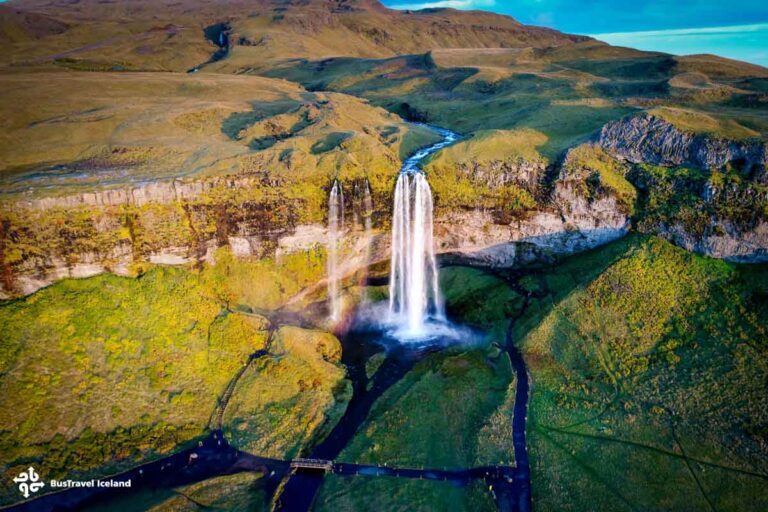
Summer transforms Iceland’s landscapes. Waterfalls are fed by glacial meltwater, lava fields turn bright green, and roads into remote regions such as the Highlands reopen after the winter season. July gives you access to more places and outdoor adventures than almost any other month of the year.
The Midnight Sun in Iceland in July is another major highlight. Although the Summer Solstice in Iceland takes place in late June, the country continues to enjoy exceptionally long days throughout July. With daylight lasting late into the evening, you have more time to sightsee, hike, and enjoy popular attractions.
What Is the Weather Like in Iceland in July?
July brings some of the warmest, driest, and most stable weather conditions of the year in Iceland, making it one of the best months for exploring the country. Average daytime temperatures range from 10°C to 15°C (50°F–59°F), although sunny days can occasionally reach 20°C (68°F), particularly in sheltered inland areas and northern Iceland.
Weather conditions vary across Iceland, and understanding regional differences can help you plan your itinerary and know what to expect from the weather in Iceland in July.
South Iceland generally experiences mild temperatures and moderate rainfall throughout July. You often see a mix of sunshine, clouds, and occasional showers. While conditions are usually comfortable for sightseeing, strong coastal winds can still occur.

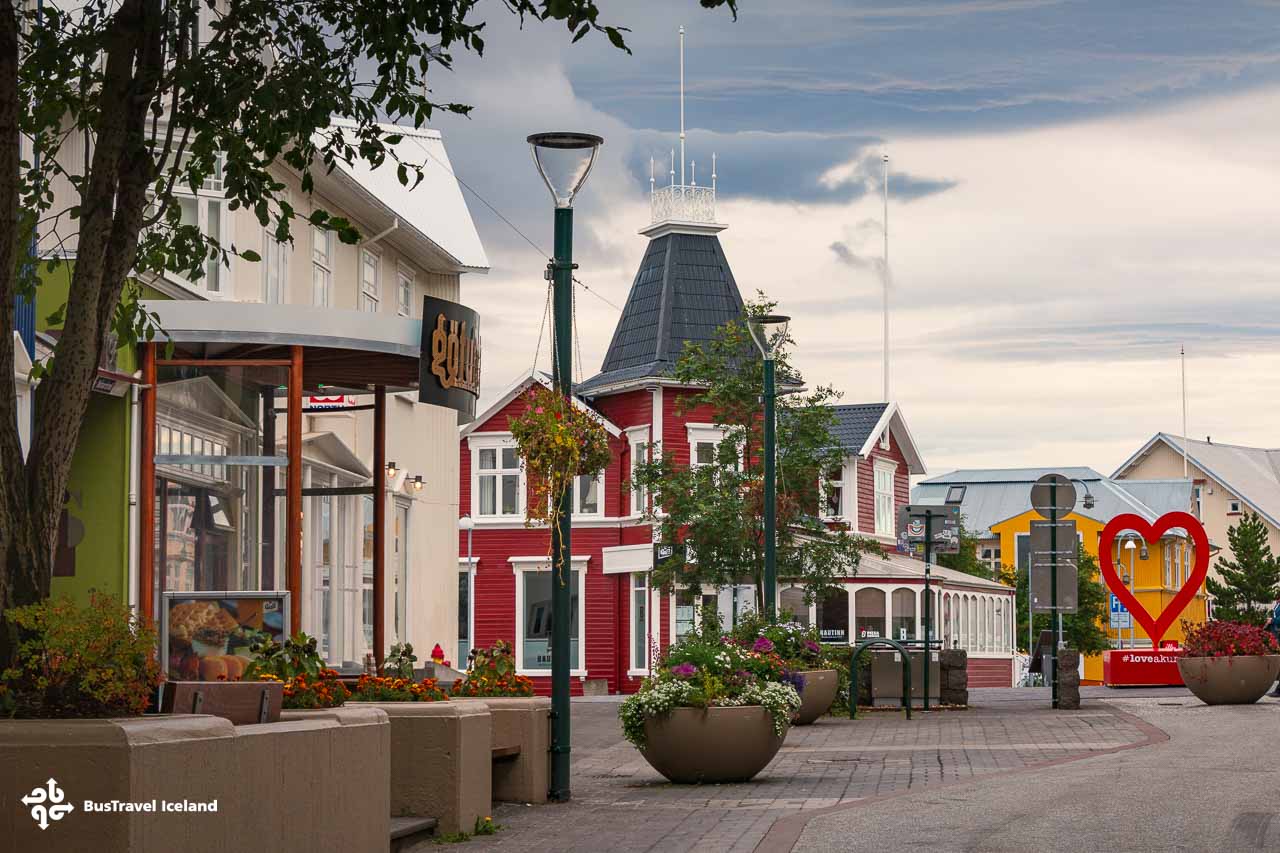
North Iceland is often one of the warmest and sunniest regions during summer. Areas around Akureyri and Lake Mývatn frequently enjoy clearer skies, lower rainfall, and temperatures that can exceed the national average. The region’s relatively dry climate makes July an excellent time for hiking, whale watching, and exploring volcanic landscapes.
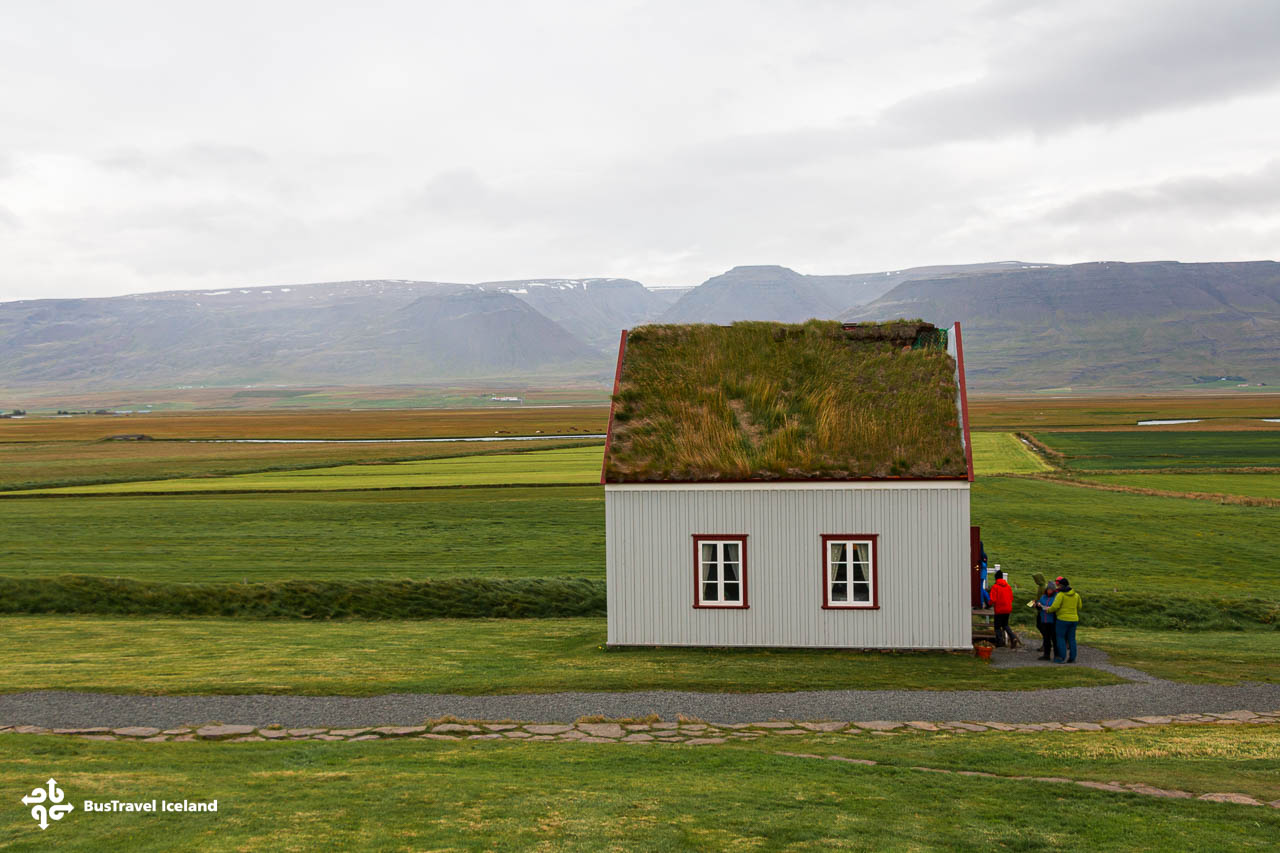
The Eastfjords typically enjoy calm summer weather with mild temperatures and long periods of sunshine. Sheltered by dramatic mountains and fjords, the region often feels warmer than visitors expect.
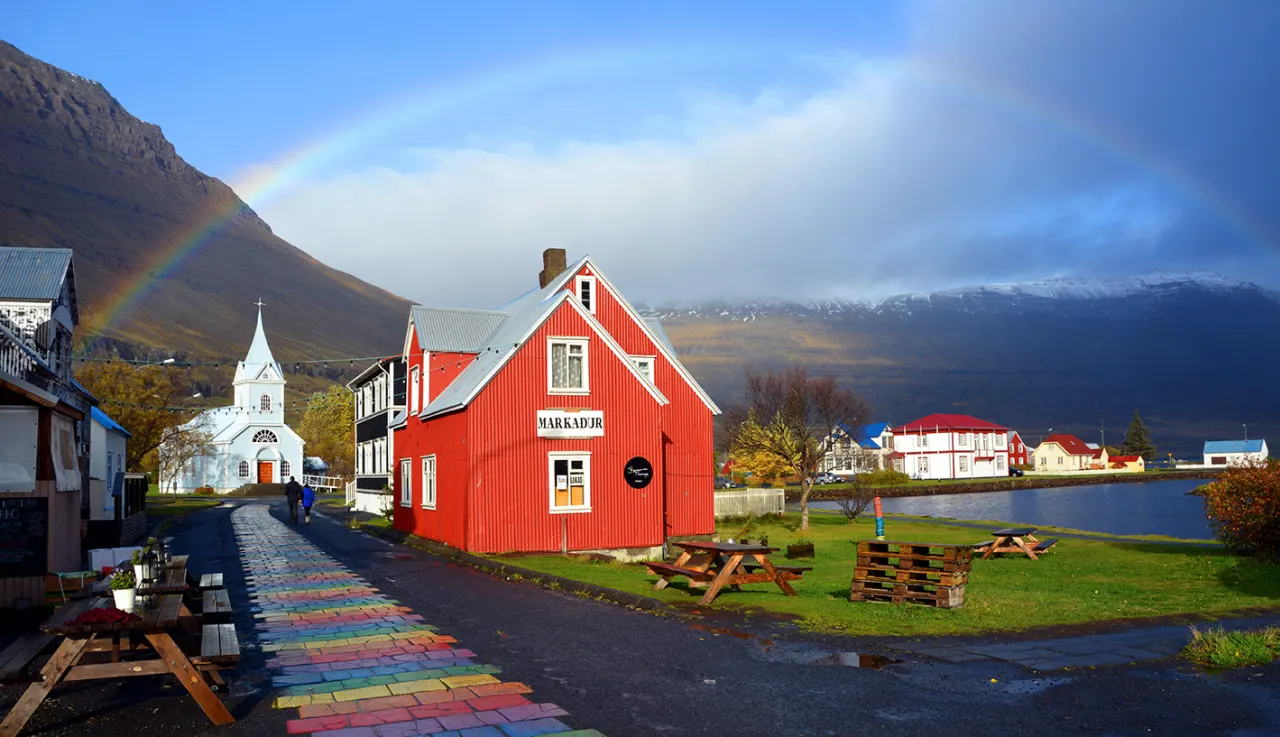
The Westfjords remain cooler and more unpredictable than other parts of Iceland. Temperatures are usually slightly lower, and fog can occasionally roll in from the sea, particularly along the coastline.
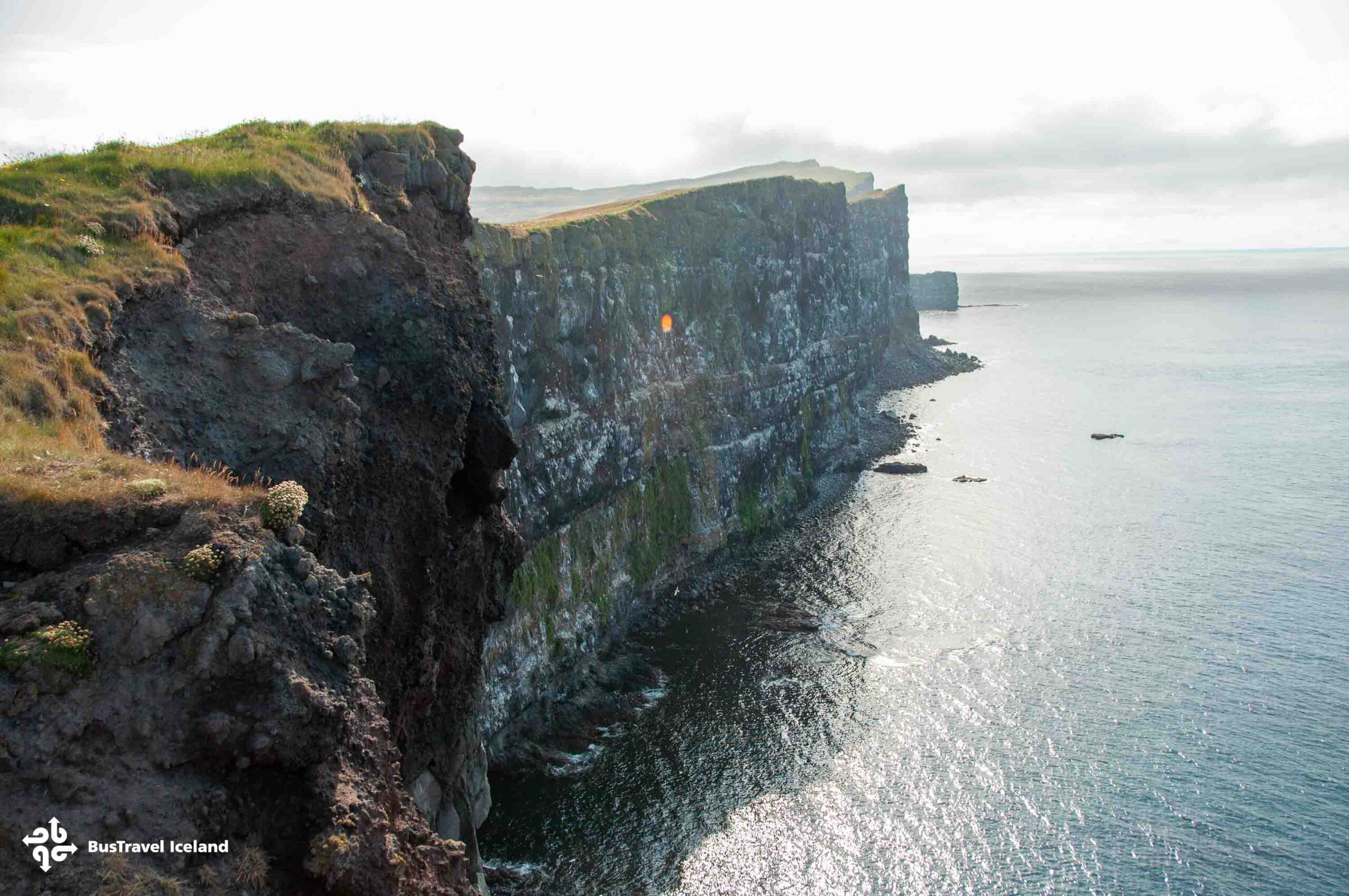
The Highlands experience their most favorable weather during July, though temperatures are noticeably cooler than in coastal regions. Daytime temperatures often range between 5°C and 12°C (41°F–54°F), and conditions can change quickly due to elevation. Sunshine, wind, rain, and even occasional snow patches are all possible, making layered clothing essential for anyone venturing into Iceland’s interior.
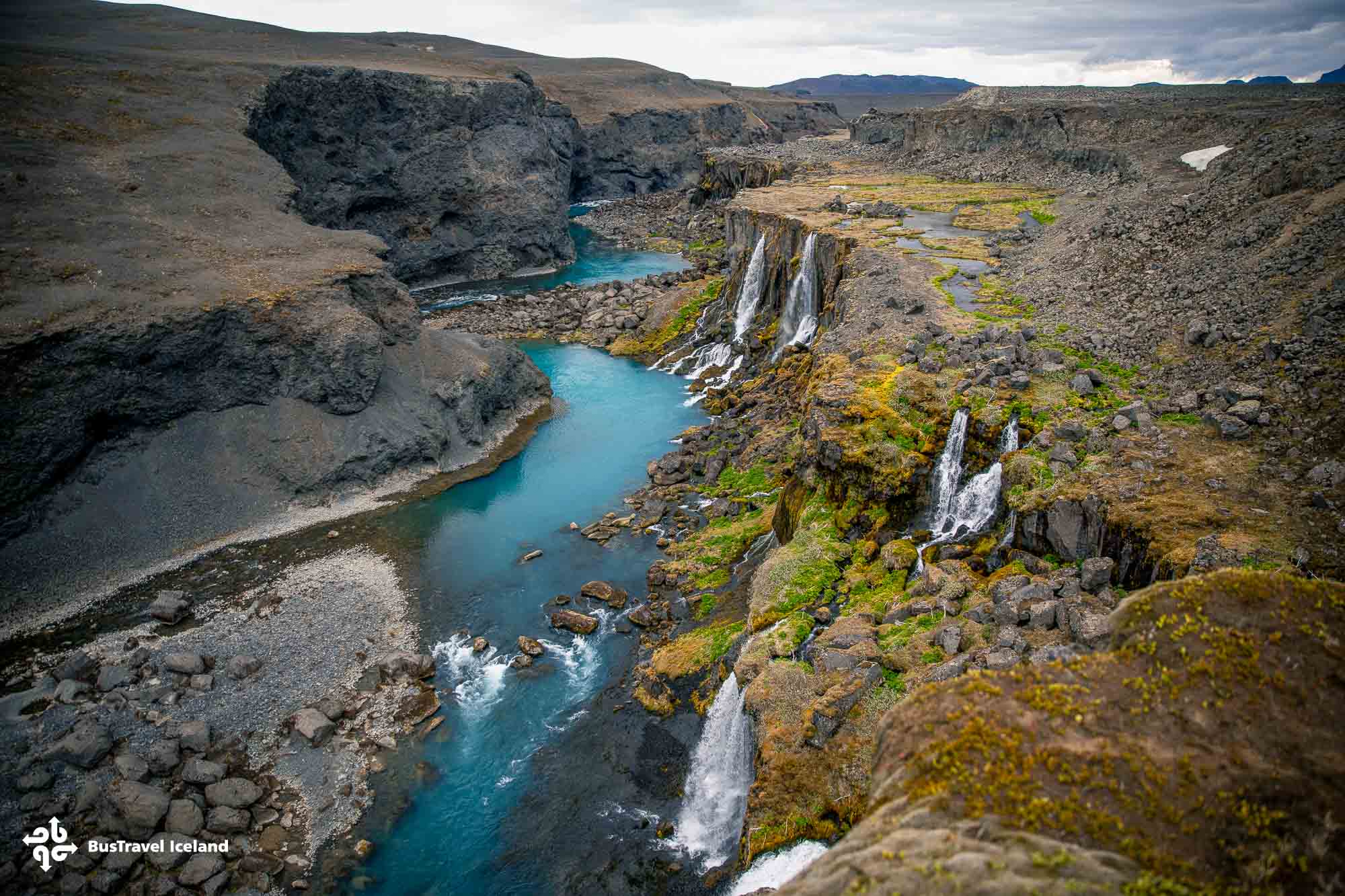
The combination of mild temperatures, extended daylight, and generally reliable conditions is what is expected as July weather in Iceland, making the month one of the most enjoyable ones to experience Iceland’s diverse landscapes from coast to coast.
Daylight in Iceland in July?
Iceland experiences some of its longest days of the year in July, with between 18 and 21 hours of daylight and only a few hours of twilight. Although the summer solstice occurs in June, Iceland continues to enjoy exceptionally long days throughout July, making it one of the best times of year for sightseeing and outdoor activities.
In Reykjavík, daylight hours in Iceland in July typically begin around 3:30–4:00 AM, with sunset occurring close to 11:00 PM at the beginning of the month. Even after the sun sets, true darkness never fully arrives, and the sky remains illuminated by a prolonged twilight.
![Sunset hours at Perlan, Reykjavik. [Photo credit to Yanshu Li]](https://bustravel.is/wp-content/uploads/2024/02/Perlan-in-sunset-hours-Reykjavik.jpg "Perlan in sunset hours Reykjavik [Photo credit to Yanshu Li]")
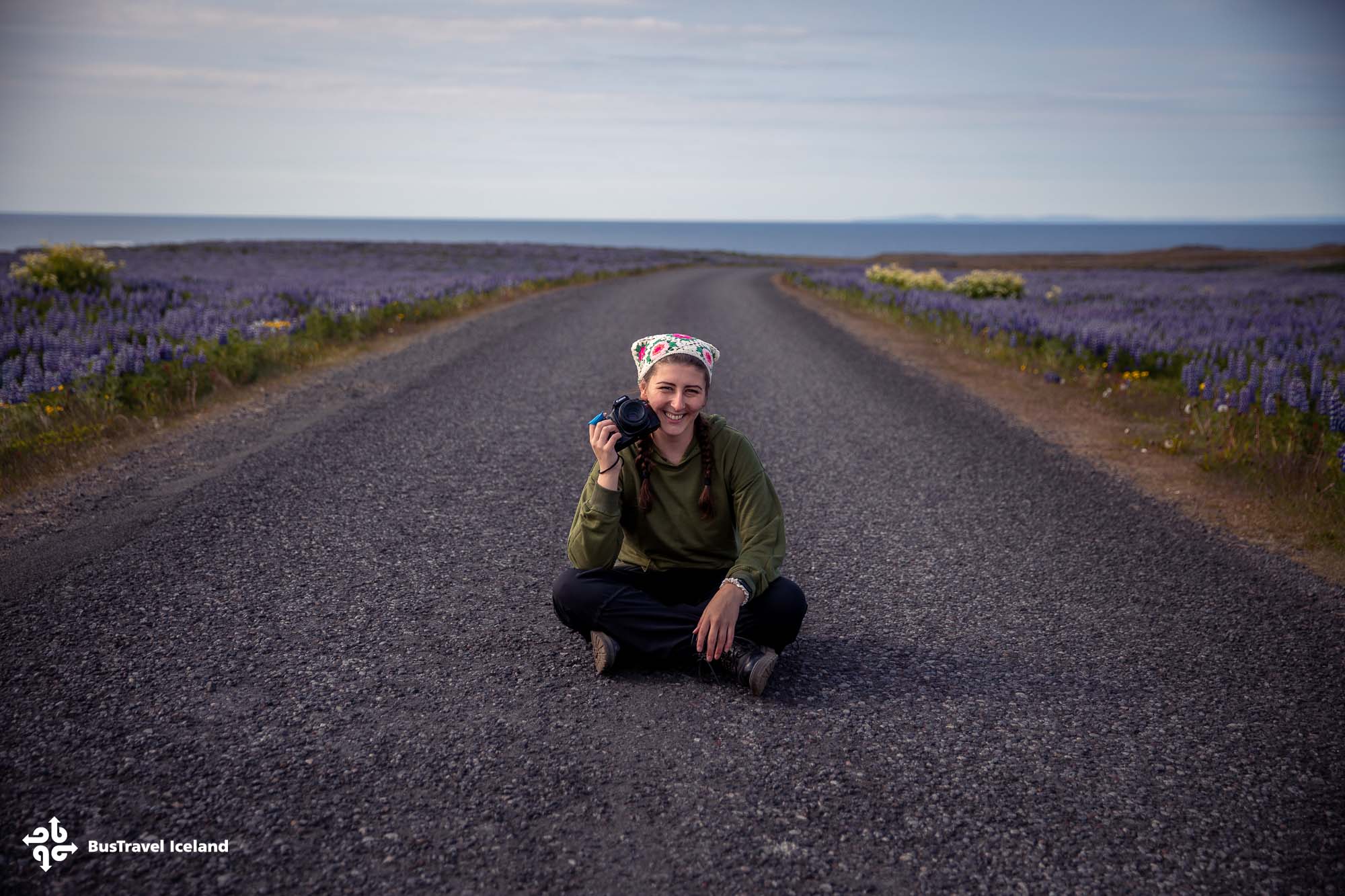
Further north, daylight in July in Iceland becomes even more dramatic. Around Akureyri and the Arctic Circle, the sun barely dips below the horizon, creating the famous Midnight Sun in Iceland in July. The landscape remains bathed in soft golden light late into the evening, offering exceptional conditions for photography, hiking, and exploring Iceland’s natural attractions.
Is July the Best Time to Visit Iceland?
For many travelers, July is the best month to visit Iceland. However, it is also one of the busiest and most expensive times of year to travel.
- Warm summer weather: July is one of Iceland’s warmest months, with average temperatures between 10–15°C (50–59°F).
- Maximum daylight: With up to 21 hours of daylight, you have more time for sightseeing, hiking, and road trips.
- Open roads and easy travel: Most roads, including many Highland routes, are accessible, making it the best time to explore the entire country.
- Peak wildlife season: July offers excellent opportunities for whale watching and is one of the best months to see puffins.
- Ideal hiking conditions: Most hiking trails are snow-free, including popular routes in the Highlands and national parks.
- Full tourism services: Tours, attractions, campsites, and seasonal businesses operate at full capacity throughout the country.
- Higher prices: July falls within Iceland’s peak travel season, meaning flights, accommodations, rental cars, and tours are often at their highest prices of the year.
- Limited accommodation availability: Hotels, guesthouses, and campsites in popular destinations can sell out months in advance, particularly along the South Coast, around Lake Mývatn, and in the Highlands.
- More crowds: Major attractions such as the Golden Circle, South Coast waterfalls, and popular hot springs tend to be busier than during spring or autumn.
- Advance planning required: Last-minute travel is more challenging in July, as the most desirable accommodations, tours, and rental vehicles are often booked well ahead of time.
If your goal is to experience Iceland at its most accessible, vibrant, and adventure-friendly, July is hard to beat. If you prioritize lower costs, fewer crowds, and greater flexibility when booking accommodations, shoulder-season months such as May, early June, or September may be a better fit.

What Are the Best Things to Do in Iceland in July?
July is the only month when you can experience virtually everything Iceland has to offer in a single trip.
Drive the Ring Road Around Iceland
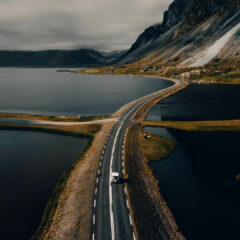
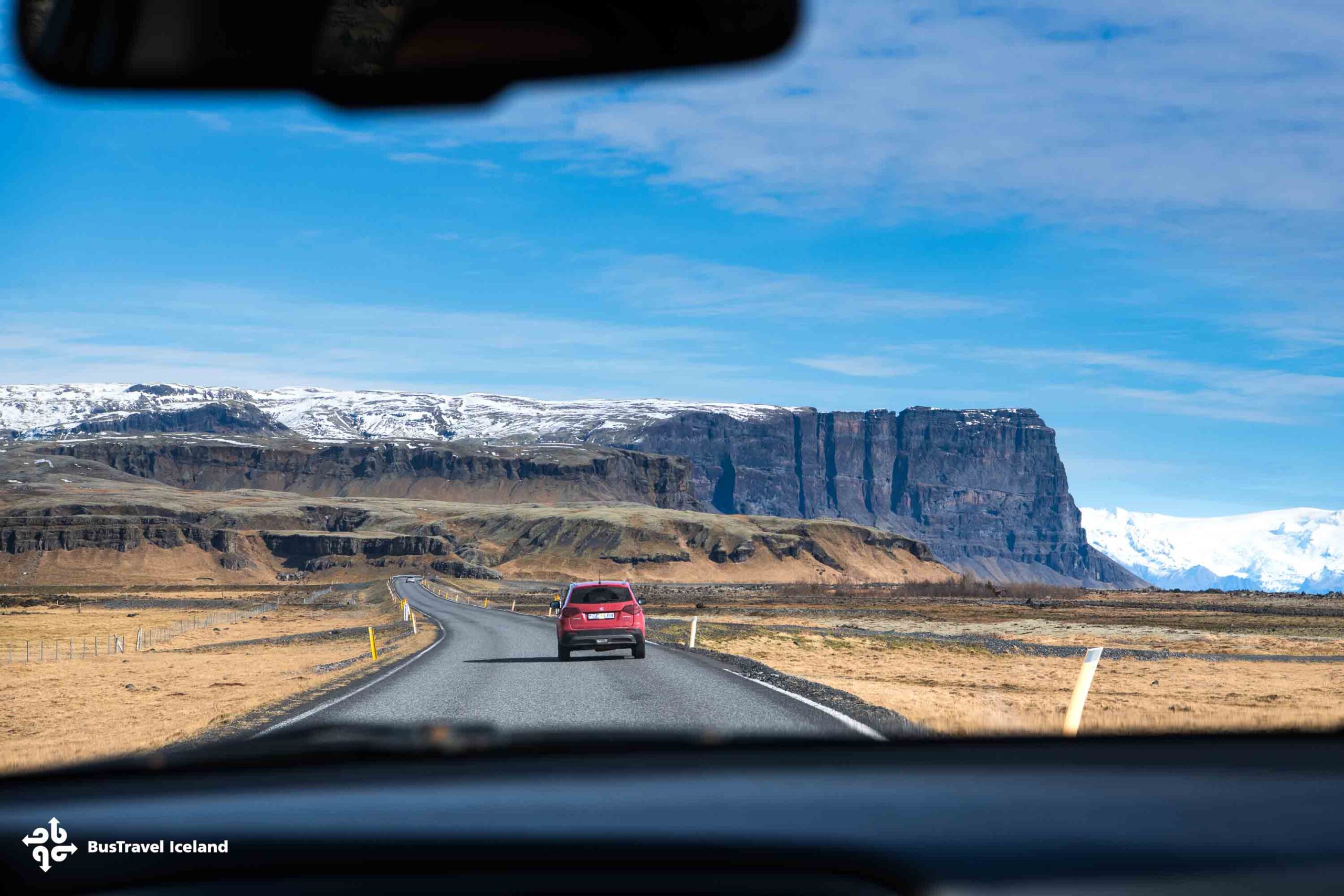
For many travelers, a Ring Road trip in Iceland in July is the ultimate summer adventure. The 1,332-kilometer (828-mile) route circles the entire island, connecting waterfalls, glaciers, black sand beaches, volcanic landscapes, fishing villages, and geothermal areas.
July provides some of the best driving conditions of the year. Roads are generally clear, daylight extends well into the evening, and weather disruptions are less common than during winter. With up to 21 hours of A complete Ring Road journey is one of the best ways to experience Iceland in July beyond the busiest tourist regions.
Explore the Golden Circle
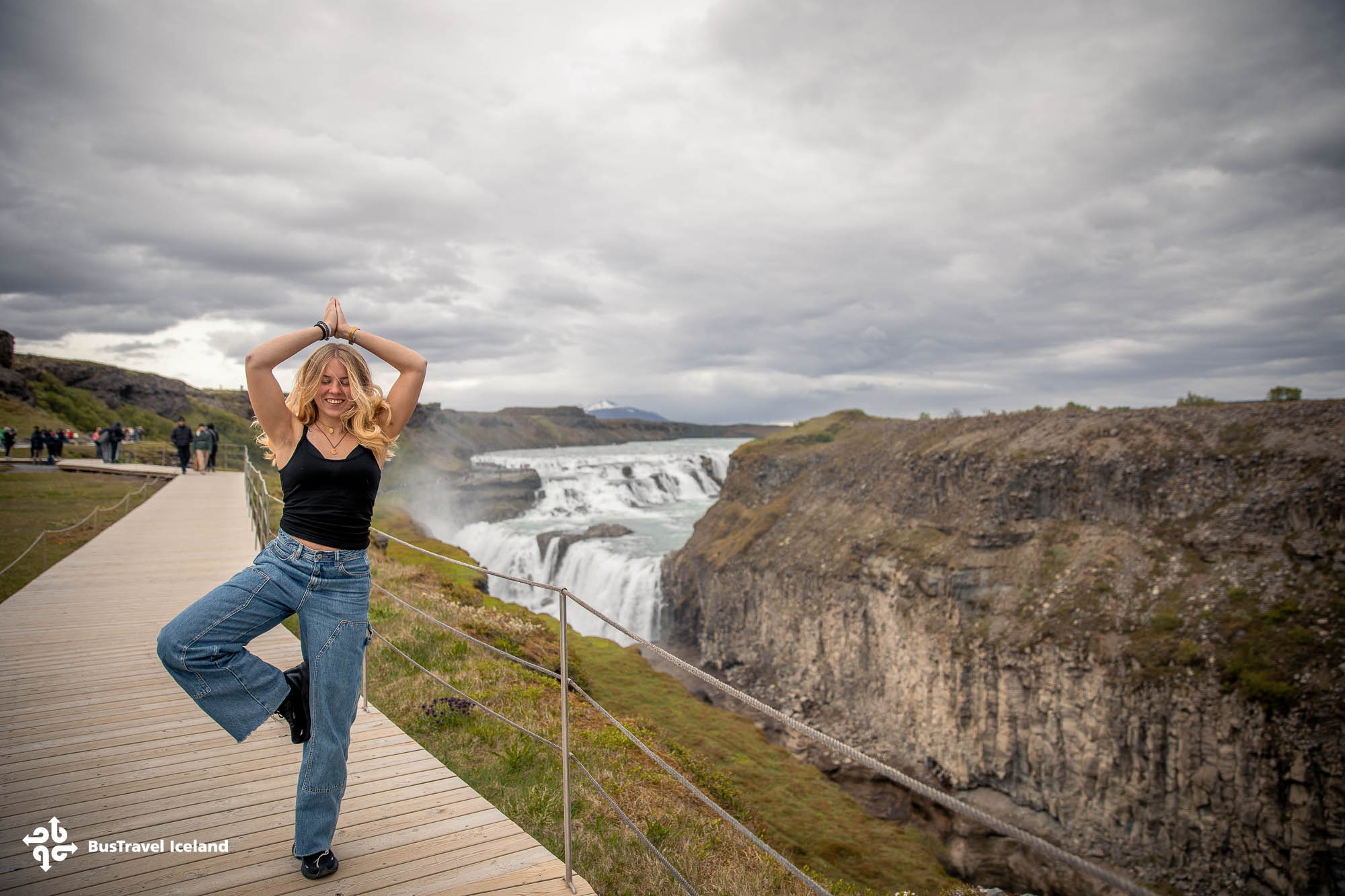
The Golden Circle in July remains one of Iceland’s most popular sightseeing routes and is often the first stop for visitors staying in Reykjavík. Located less than two hours from the capital, it combines some of Iceland’s most significant natural and historical attractions into a single day trip.
You can witness the erupting Strokkur geyser in the Geysir geothermal area, stand beside the powerful Gullfoss waterfall, and walk through Þingvellir National Park, where the North American and Eurasian tectonic plates slowly drift apart.
Because of its proximity to Reykjavík, the Golden Circle is also one of the busiest regions in Iceland during July. Visitor numbers are typically highest between 10 AM and 4 PM. The advantage of visiting Iceland in July is that the long daylight hours allow you to explore these iconic attractions early in the morning or late in the evening when the experience feels far more relaxed.
Discover Iceland’s South Coast
Few regions showcase Iceland’s dramatic landscapes better than the spectacular South Coast of Iceland in July. During summer, clear roads and favorable weather make it easy to explore some of the country’s most photographed attractions.
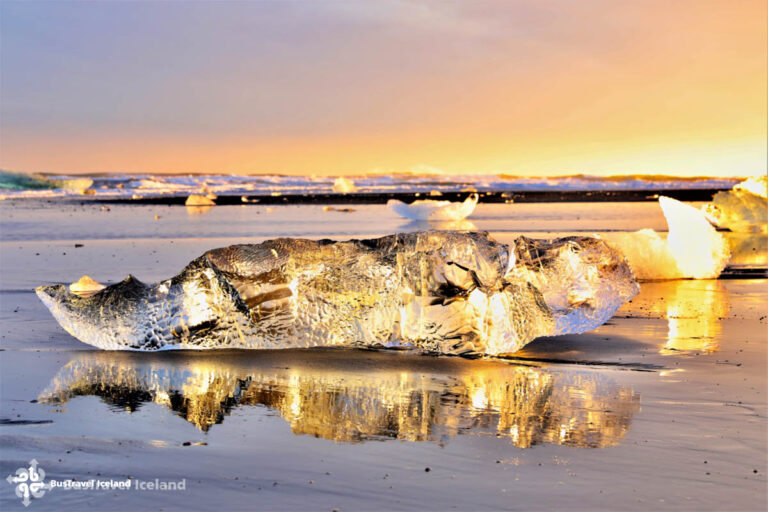
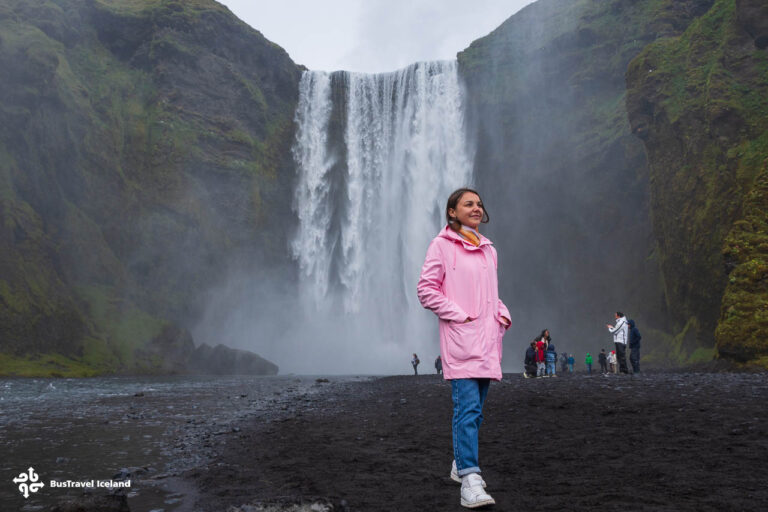
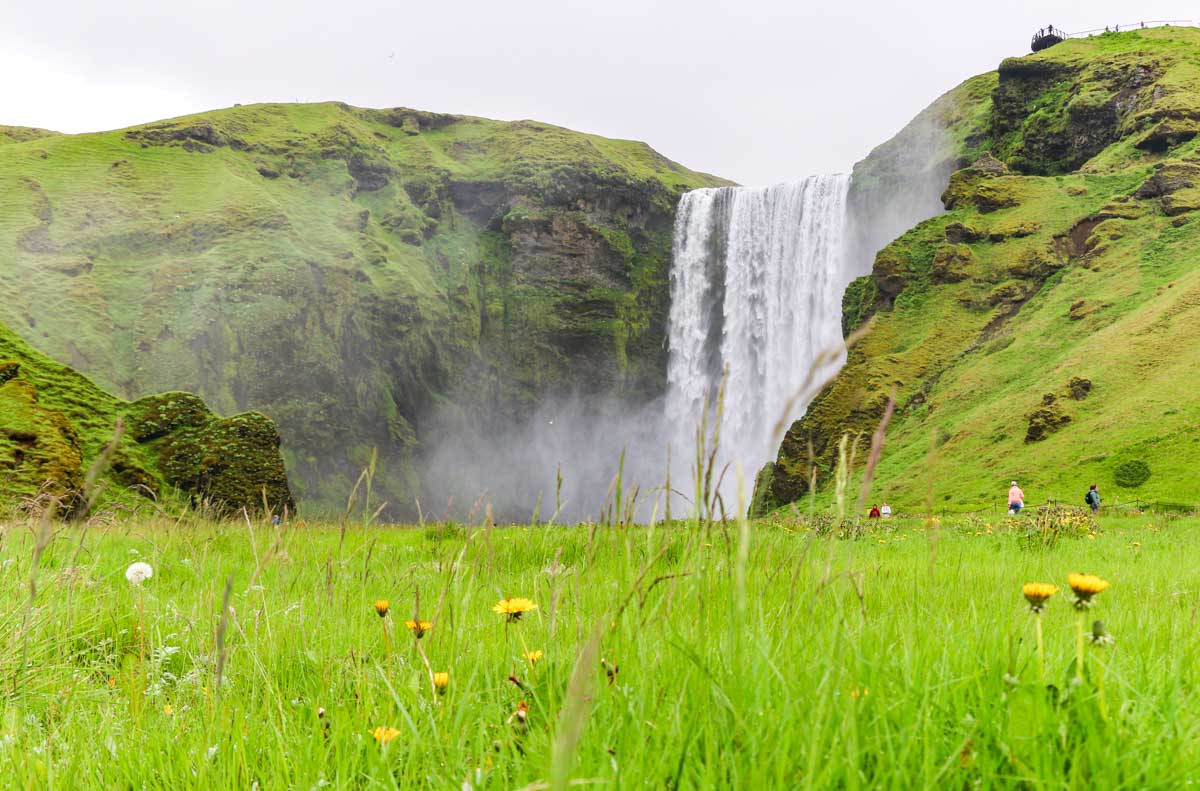
The route stretches from Reykjavík toward the southeast, passing waterfalls, glaciers, lava fields, and black sand beaches. Highlights include Seljalandsfoss, where you can walk behind the waterfall, Skógafoss, Reynisfjara Beach, Dyrhólaey Peninsula, Fjaðrárgljúfur Canyon, and the stunning Jökulsárlón Glacier Lagoon.
The South Coast is one of the most visited areas in Iceland during peak season, and attractions can become busy throughout the day. It’s recommended to visit many of these locations during quieter evening hours while enjoying beautiful golden light for photography.
Venture Into Iceland’s Highlands
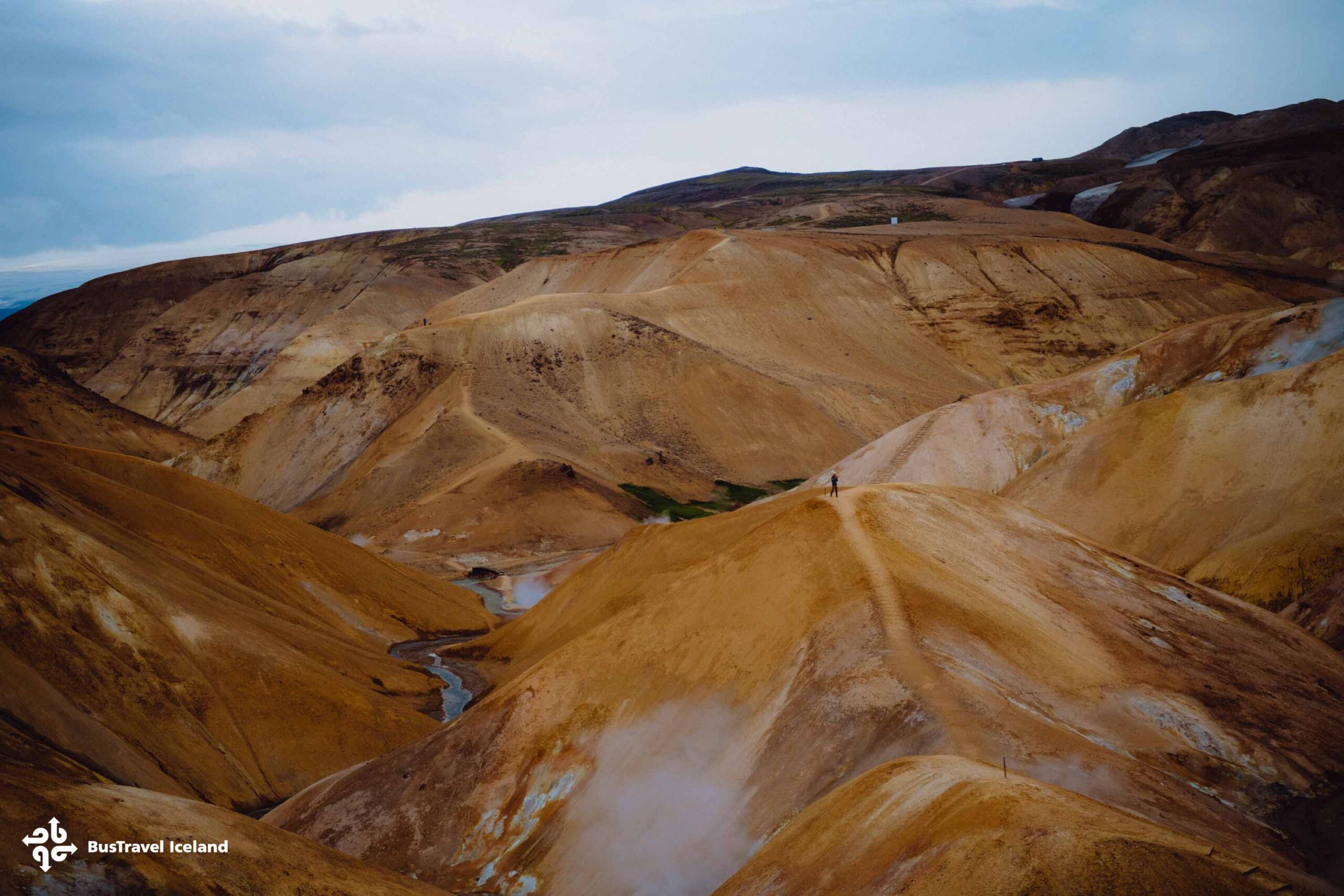
One of the biggest reasons many travelers choose Iceland in July is access to the Icelandic Highlands. Much of this remote interior region remains inaccessible for most of the year due to snow and challenging road conditions. By July, many Highland roads have opened, revealing some of Iceland’s most extraordinary scenery.
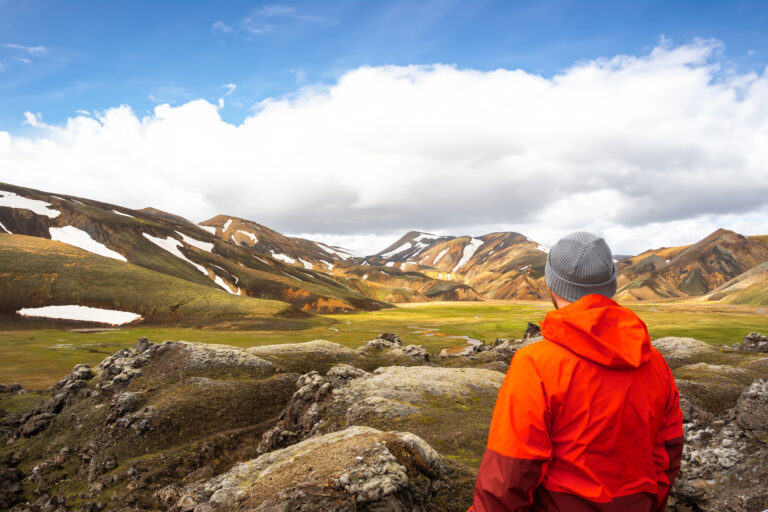
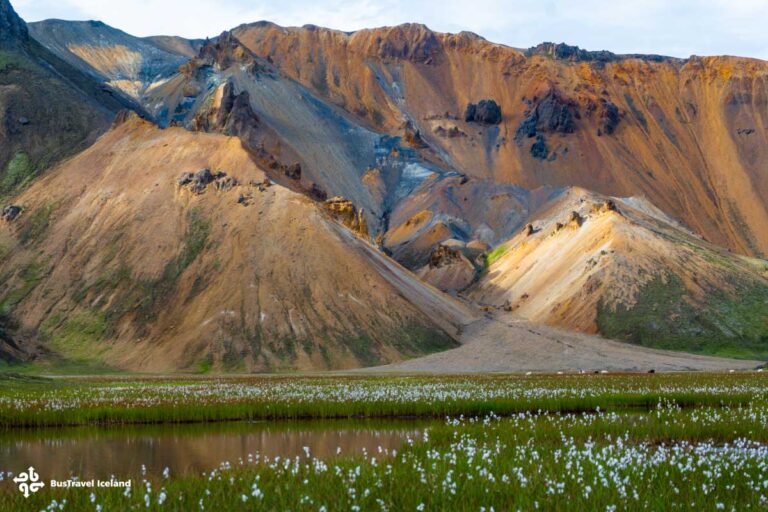
Landmannalaugar is perhaps the most famous destination, known for its colorful rhyolite mountains, lava fields, geothermal hot springs, and world-class hiking trails. Other popular Highland destinations include Þórsmörk, Kerlingarfjöll, and Askja, each offering landscapes that feel almost otherworldly. It is one of the highlights of a summer visit.
Go Whale Watching
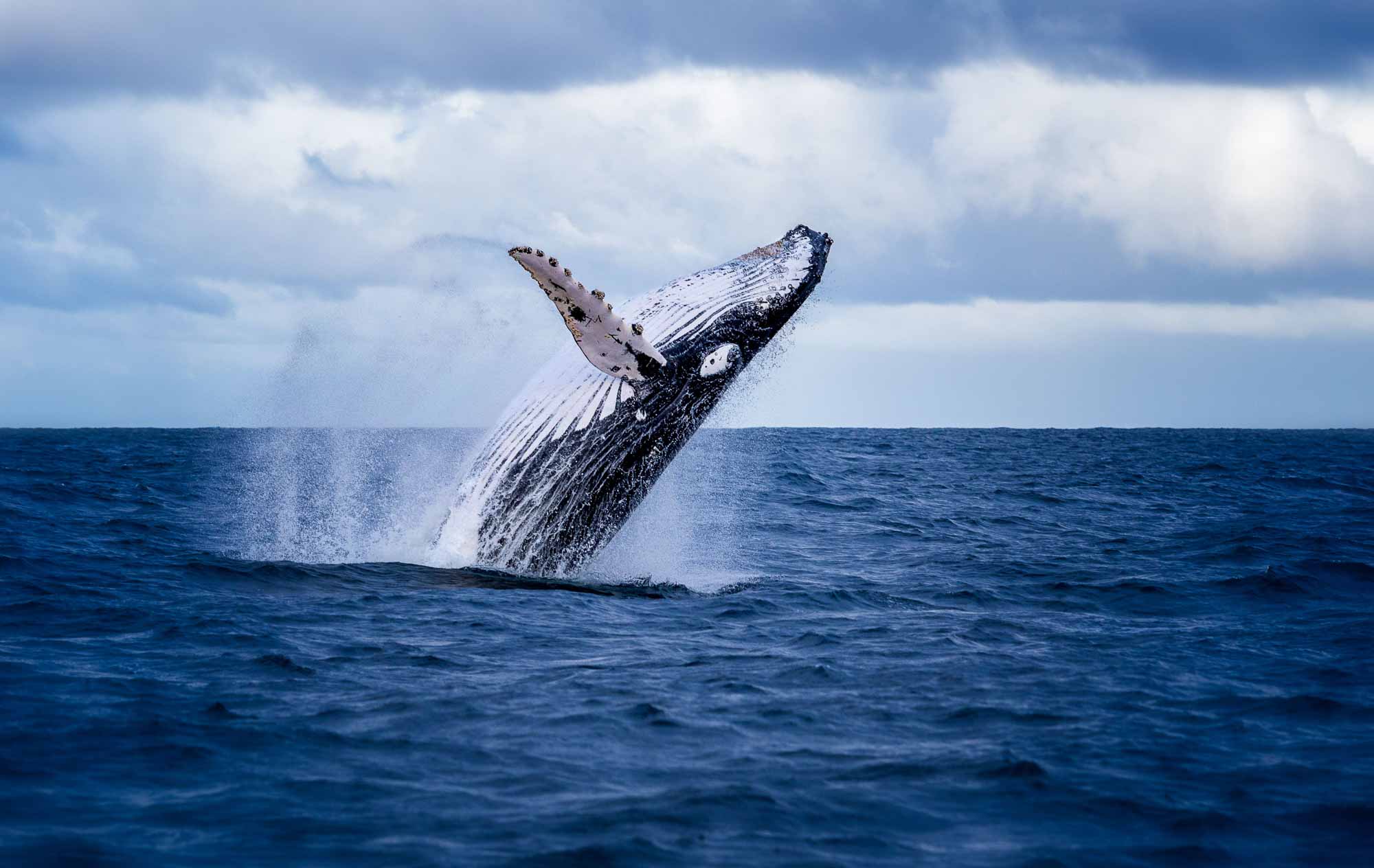
July is one of the best months for whale watching in Iceland. Summer feeding grounds attract a variety of species to Icelandic waters, and sightings are among the highest of the year.
Húsavík, often referred to as Europe’s whale-watching capital, is one of the country’s top destinations for marine wildlife encounters. Tours departing from Húsavík, Akureyri, Reykjavík, and Dalvík regularly encounter humpback whales, minke whales, white-beaked dolphins, and harbor porpoises. Lucky visitors may even spot blue whales, the largest animals on Earth.
Calm summer seas make whale watching in Iceland in July particularly rewarding.
Experience Glacier Hiking and Ice Caving
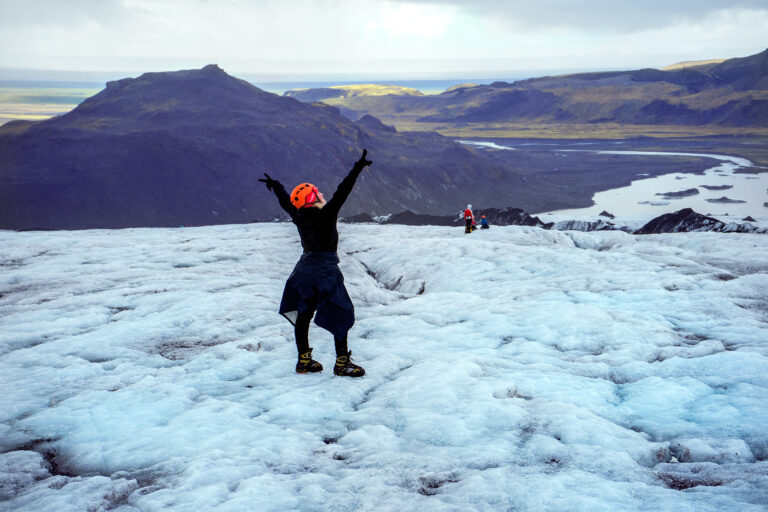
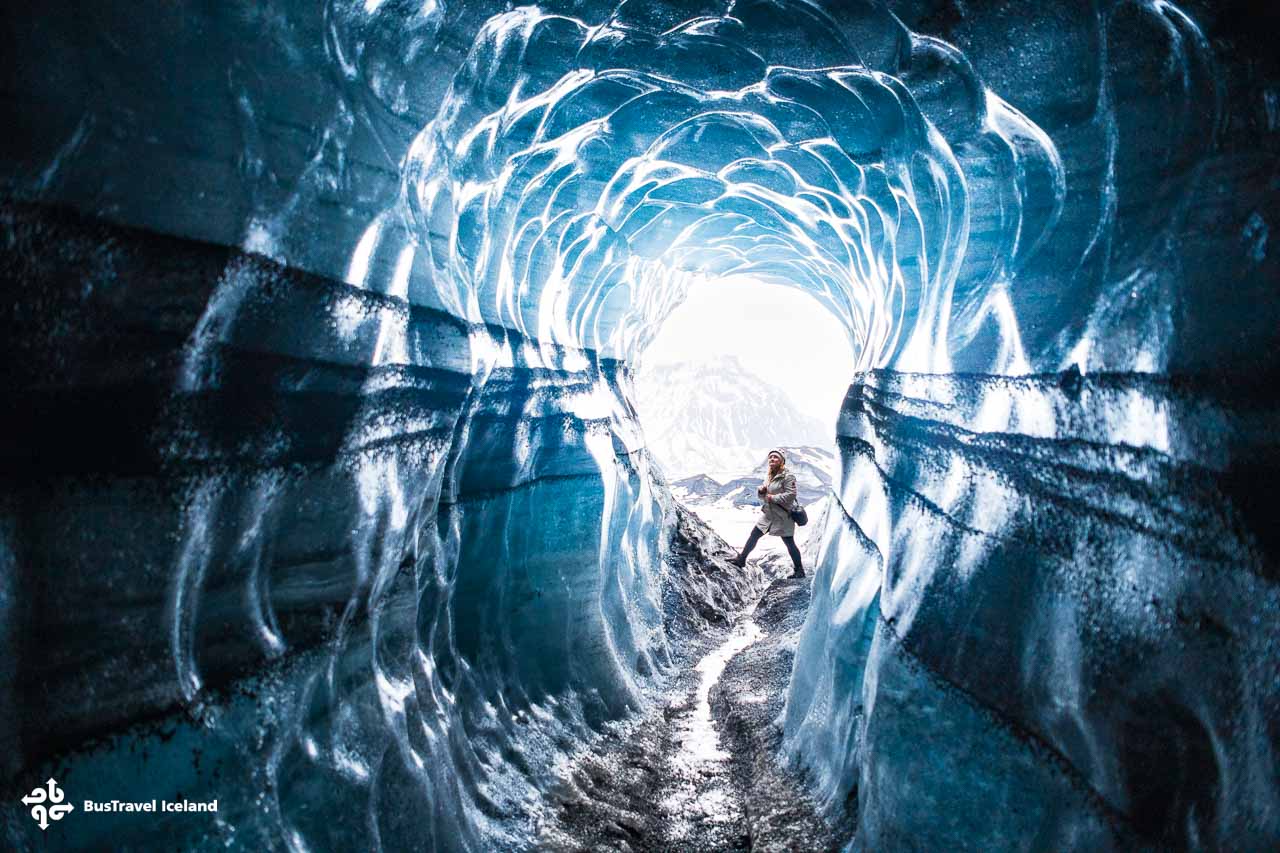
Glacier hiking in Iceland in July offers a unique opportunity to explore one of the country’s most iconic natural features. Summer conditions and long daylight hours in Iceland make July an excellent time to hike on glaciers such as Sólheimajökull and Falljökull, where guided tours take you across ancient ice formations, crevasses, and dramatic glacier landscapes.
While most natural ice caves are only accessible during winter, the Katla Ice Cave near Vík can be visited year-round. Located beneath the Mýrdalsjökull glacier, it offers a rare chance to experience an ice cave in Iceland during the summer months.
See Puffins During Peak Season
For wildlife enthusiasts, July is the ideal time to see puffins in Iceland. Millions of Atlantic puffins arrive along Iceland’s coastline during the breeding season, and July falls at the height of their nesting activity.
Popular puffin-viewing locations include the Westman Islands, Dyrhólaey, Borgarfjörður Eystri, and the dramatic cliffs of Látrabjarg in the Westfjords. During this period, puffins can often be seen flying between the ocean and their nesting burrows, creating unforgettable wildlife viewing and photography opportunities.

Hike Under the Midnight Sun
Few experiences capture the magic of an Icelandic summer better than hiking beneath the Midnight Sun in Iceland in July. With daylight lingering late into the evening, July allows you to explore trails at hours that would be impossible in most destinations.
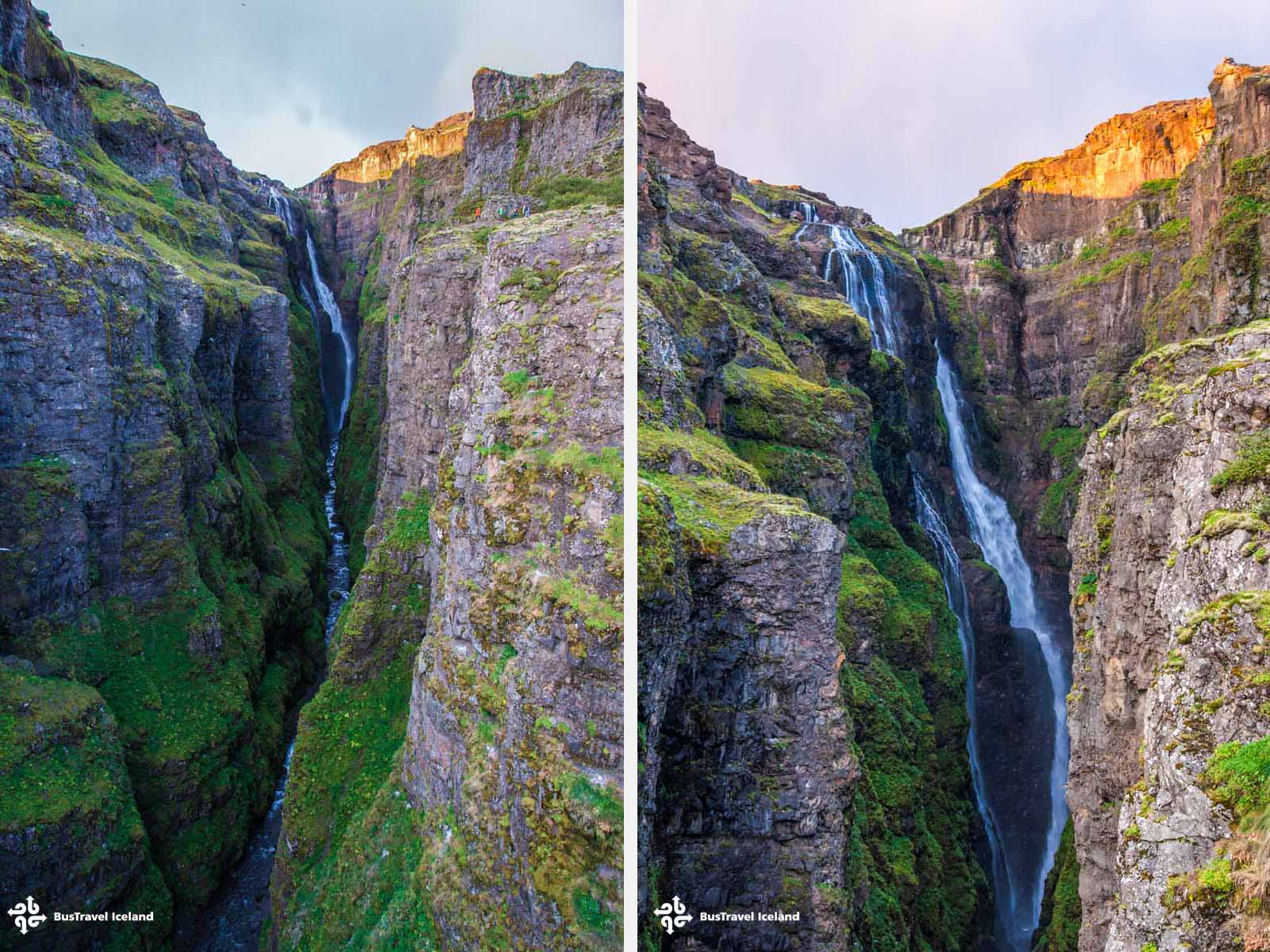
Some of Iceland’s most famous and accessible hiking trails are at their best during July. Popular options include the Reykjadalur Hot Spring Trail near Reykjavík, where you can hike to a naturally heated river; the Glymur Waterfall Trail, which leads to one of Iceland’s tallest waterfalls; the Fimmvörðuháls Trail between Skógar and Þórsmörk; the colorful rhyolite trails of Landmannalaugar; and the dramatic coastal paths around Arnarstapi and Hellnar on the Snæfellsnes Peninsula. In North Iceland, the volcanic landscapes around Lake Mývatn offer several easy-to-moderate hikes, while the Stórurð (The Giant Boulders) Trail in the Eastfjords rewards hikers with one of Iceland’s most spectacular mountain settings.
Evening hikes often provide some of the most beautiful lighting conditions of the day, with golden sunlight stretching across mountains, glaciers, waterfalls, and volcanic landscapes. Thanks to Iceland’s extended daylight hours in July, you can begin a hike after dinner and still enjoy daylight well into the evening, creating a uniquely Icelandic summer experience.
Relax in Iceland’s Geothermal Pools and Hot Springs
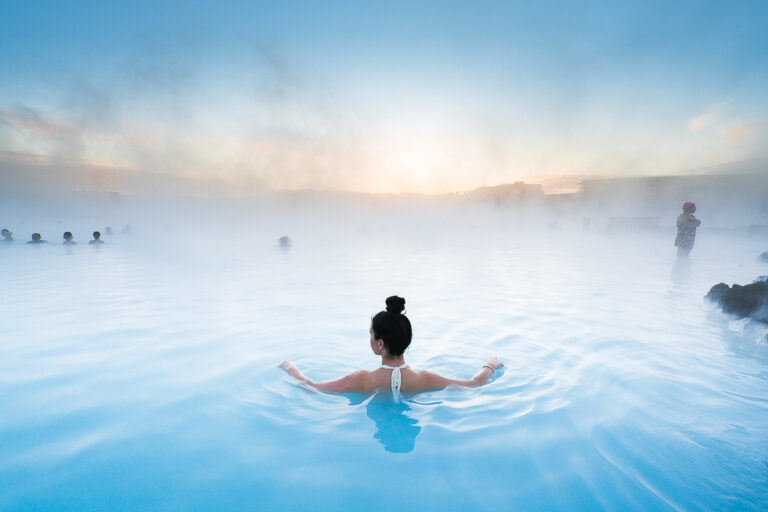
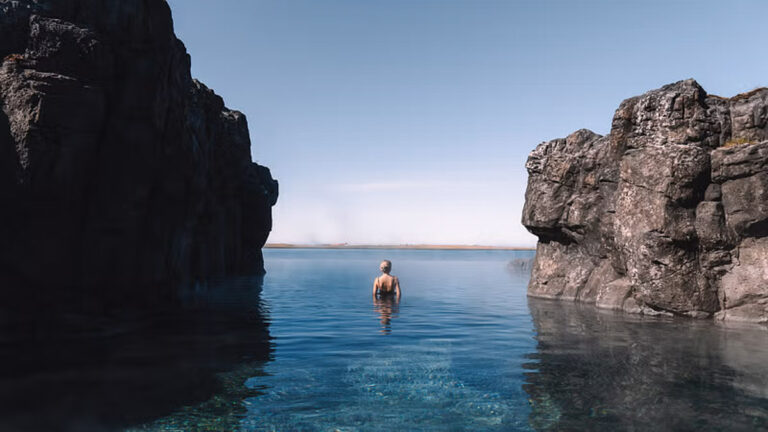
No trip to Iceland is complete without experiencing the country’s geothermal bathing culture. After a day of exploring waterfalls, glaciers, volcanoes, and black sand beaches, there’s nothing quite like sinking into naturally heated waters surrounded by some of Iceland’s most spectacular landscapes. July’s mild weather and long daylight hours make it the perfect time to enjoy both luxury geothermal spas and natural hot springs.
Iceland’s most famous geothermal spas include the Blue Lagoon near Keflavík Airport, the oceanside Sky Lagoon in the Reykjavík area, the Forest Lagoon and GeoSea Geothermal Sea Baths in North Iceland, the luxurious Hvammsvík Hot Springs in Hvalfjörður, the Laugarás Lagoon in the Golden Circle, the geothermal Vök Baths in East Iceland, the scenic Hofsós Swimming Pool overlooking Skagafjörður, the historic Secret Lagoon in Flúðir, and the stunning Earth Lagoon Myvatn (Myvatn Nature Baths) near Lake Mývatn.
If you prefer a more natural experience, Iceland is also home to countless hot springs and geothermal bathing areas. Some of the most popular include the Reykjadalur Hot Spring River, where you can bathe in a naturally heated stream after a short hike; Landmannalaugar Hot Spring in the Highlands; the geothermal pools at Hveravellir; Hellulaug in the Westfjords; Seljavallalaug, one of Iceland’s oldest swimming pools; Krossneslaug on the edge of the Arctic Ocean; and the secluded geothermal pools found throughout the Westfjords, North Iceland, and the Highlands.

What Should You Pack for Iceland in July?
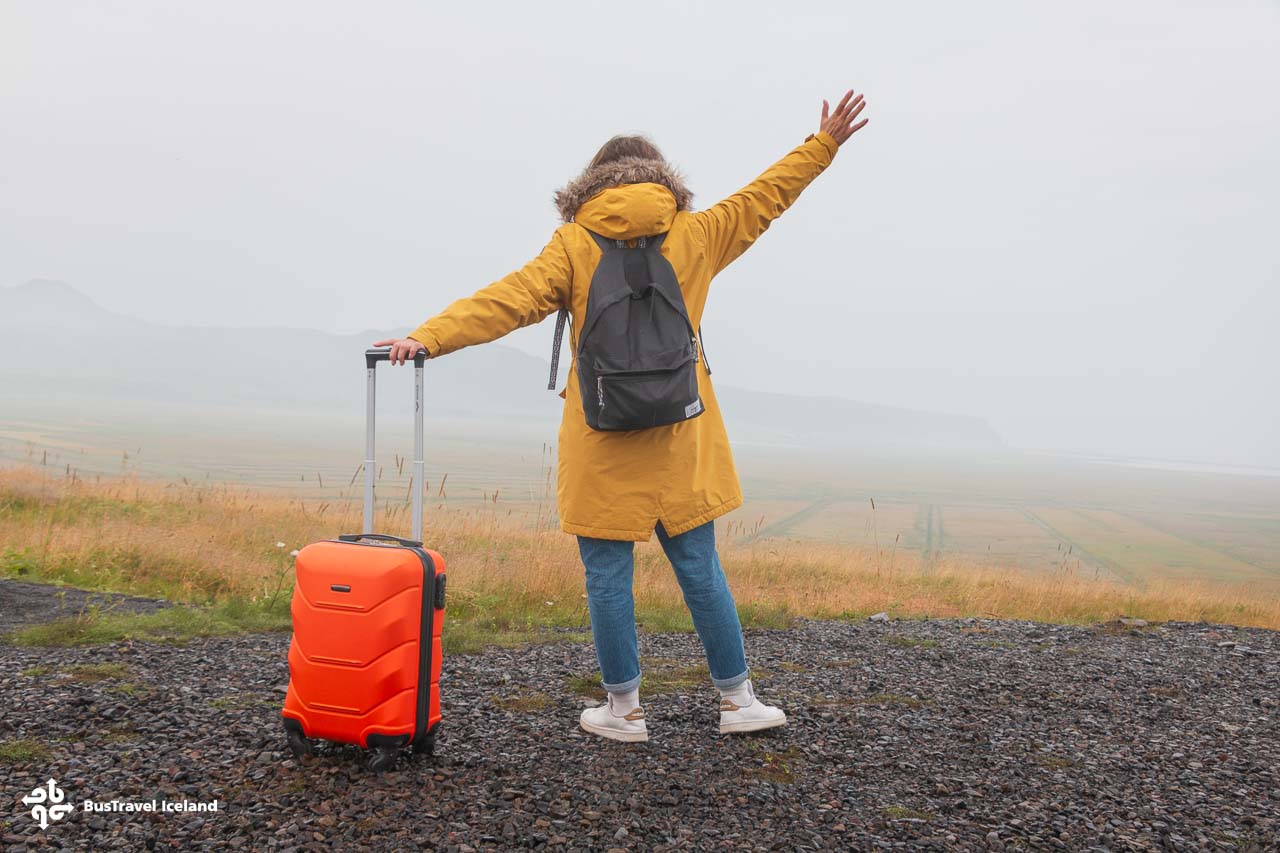
Packing for Iceland in July is more about preparing for changing weather than extreme cold. While July is one of the warmest months of the year, it’s common to experience sunshine, wind, rain, and cool temperatures all in the same day. Dressing in layers is the best way to stay comfortable throughout your trip.
A waterproof and windproof jacket should be at the top of your packing list. Summer weather can change quickly, especially along the coast, where rain showers and strong winds are common. Pair your jacket with a warm mid-layer, such as a fleece or lightweight insulated jacket, and breathable base layers that are easy to add or remove as conditions change.
Comfortable walking shoes are essential, as many of Iceland’s most famous attractions require short walks over uneven ground. If you plan to hike in places such as Landmannalaugar, Þórsmörk, or the Eastfjords, waterproof hiking boots are highly recommended. Trails can be muddy, rocky, and wet, even during summer.
Many visitors are surprised to find that a warm sweater, lightweight hat, and gloves can still be useful in July. Temperatures often drop in the evening, especially in North Iceland, the Westfjords, the Highlands, and around glaciers.
The long daylight hours also make sun protection important. Sunglasses, sunscreen, and lip balm with SPF can be useful during long days of hiking, driving in Iceland, and sightseeing.
Bring a reusable water bottle as well. Iceland’s tap water is safe to drink and is known for being some of the cleanest water in the world. Refilling your bottle throughout the day is easy and helps reduce plastic waste.
Don’t forget to pack swimwear. Whether you’re visiting the Blue Lagoon, Sky Lagoon, Mývatn Nature Baths, or a natural hot spring, a swimsuit is a must. A quick-dry towel and a small waterproof bag can also be useful for carrying wet items.
The key to what to pack in July for Iceland is versatility. By preparing for sunshine, rain, wind, and cool evenings, you’ll be ready for everything from road trips and wildlife tours to hiking adventures across Iceland’s diverse landscapes.
Is July a Good Time to Visit Iceland’s Highlands?
Absolutely. July is one of the few months when much of Iceland’s Highlands become accessible.
The Highlands offer some of the country’s most extraordinary landscapes, including colorful rhyolite mountains, volcanic craters, lava fields, and geothermal valleys. Roads leading into these remote areas generally open between late June and July depending on snow conditions.
Popular destinations include Landmannalaugar, famous for its colorful rhyolite mountains, lava fields, geothermal hot springs, and some of Iceland’s most celebrated hiking trails; Þórsmörk, a lush mountain valley surrounded by glaciers and rugged peaks that is often considered one of the country’s premier hiking destinations; Askja, a remote volcanic caldera in the central Highlands known for its dramatic landscapes and geothermal crater lake; and Kerlingarfjöll, where steaming geothermal valleys, vibrant red mountains, and winding hiking trails create some of the most unique scenery in Iceland.

Frequently Asked Questions About Visiting Iceland in July
Is July the warmest month in Iceland?
July is typically one of the warmest months of the year, with average temperatures ranging from 10°C to 15°C (50°F–59°F).
Can you see the Northern Lights in Iceland in July?
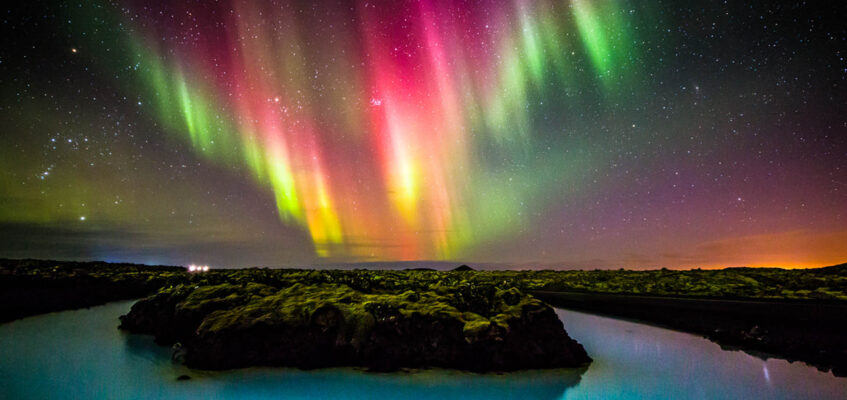
No. The Midnight Sun creates too much daylight for Northern Lights viewing during July.
Is Iceland expensive in July?
July is part of the peak travel season, so flights, accommodations, rental cars, and tours are generally more expensive than during spring or autumn.
Do I need a 4×4 vehicle in Iceland in July?
A standard vehicle is sufficient for the Ring Road and most major attractions. However, a 4×4 is required for many Highland roads and remote mountain routes.
Is July a good month for whale watching?
Yes. July is one of the best months for whale watching, with high chances of seeing humpback whales, minke whales, dolphins, and other marine wildlife.
How many days do you need in Iceland in July?
Most visitors spend between 7 and 10 days exploring Iceland. Those wanting to drive the Ring Road comfortably often choose 10 to 14 days.
Can you swim in Iceland in July?
Yes. July is an excellent time to enjoy geothermal pools, hot springs, and Iceland’s famous lagoons.