



Látrabjarg Cliffs, Iceland: A Complete Guide to the Wild Edge of the Westfjords
- Westfjords
- 20 May 2026
Discover the wild edge of Iceland at the Látrabjarg cliffs in the remote Westfjords, where dramatic coastal views meet one of the country’s richest seabird habitats. This guide takes you through what to expect, how to get there, and why this quiet, windswept landscape—home to puffins and endless ocean horizons—is one of Iceland’s most rewarding places to explore.
Key Takeaways
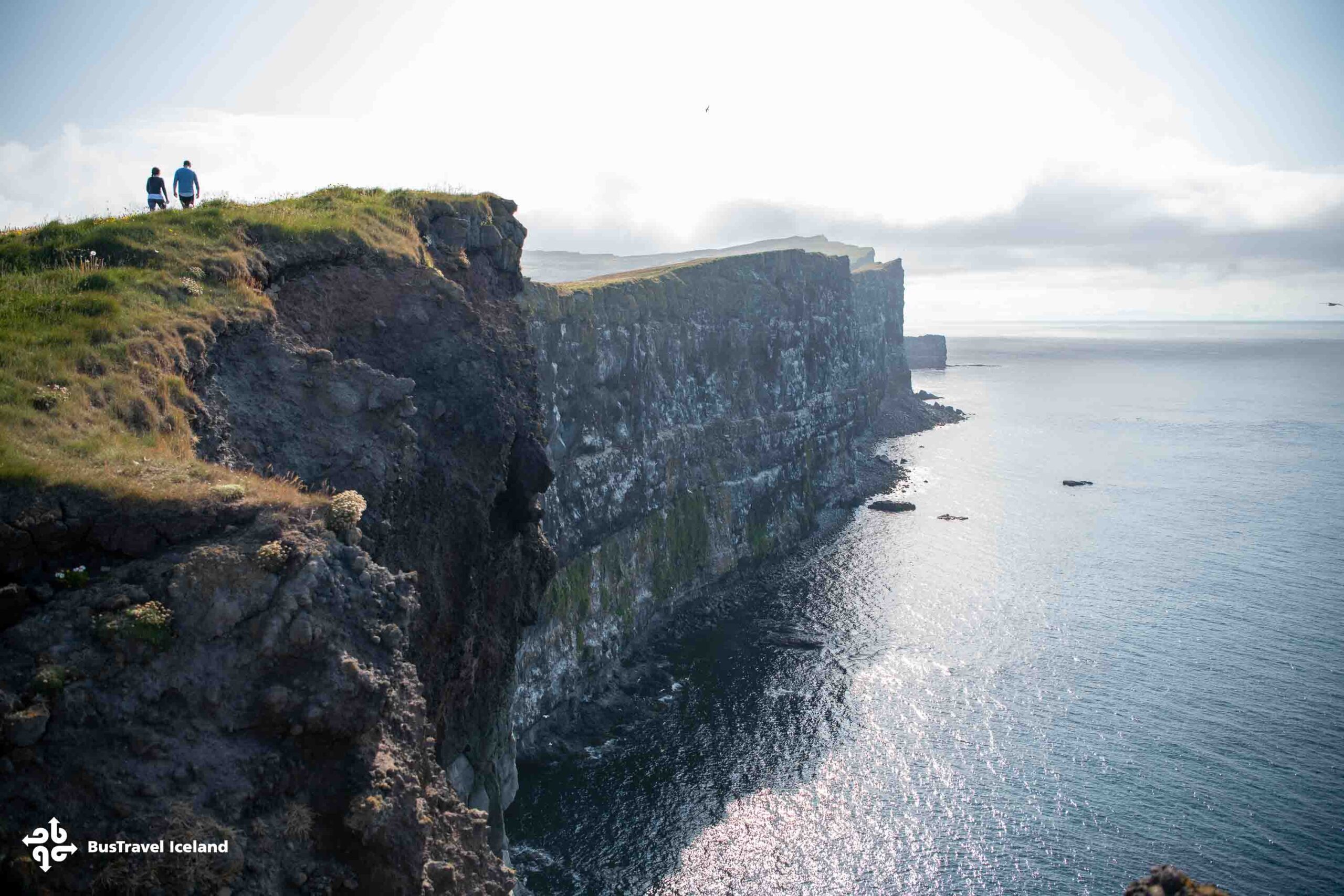
Látrabjarg cliffs are the largest seabird cliffs in Iceland, extending approximately 14 kilometers in length and reaching heights of up to 440 meters.
Located in the Westfjords, they mark the westernmost point of Iceland and are one of the country’s most important bird habitats.
The area is best visited between June and August, when access roads are open and puffin populations are at their peak.
It’s not recommended to visit in the winter months due to impassable roads and harsh conditions.
Visitors should expect gravel roads, strong winds, and minimal infrastructure.
About Látrabjarg Cliffs
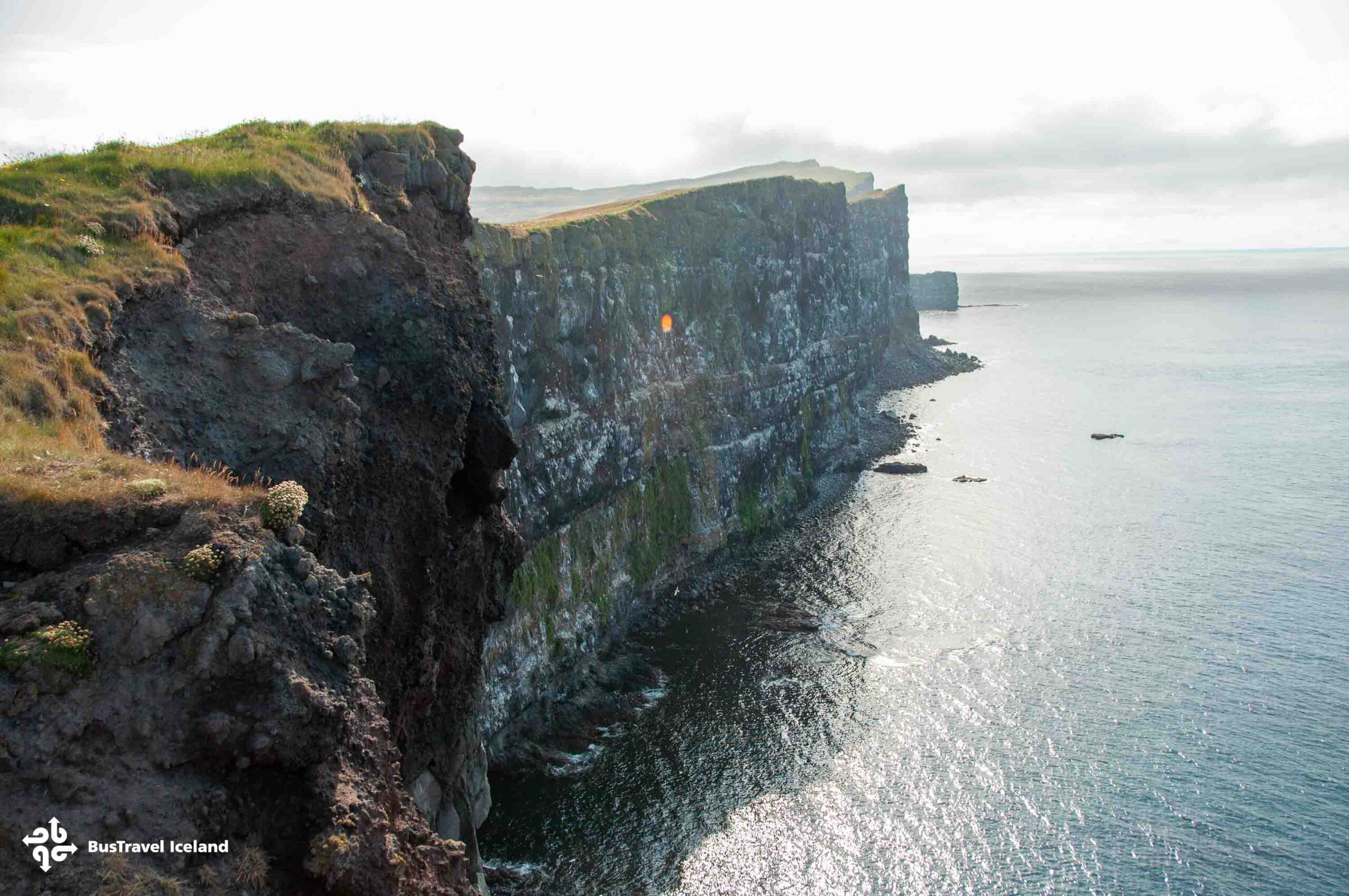
Látrabjarg is a coastal cliff system in the Westfjords region of northwestern Iceland. It is recognized for its scale, ecological importance, and geographic position at the western edge of the country. The cliffs form a continuous stretch along the Atlantic Ocean and are classified as one of Europe’s largest bird cliffs.
Due to its remote location, Látrabjarg receives significantly fewer visitors than Iceland’s main tourist sites, making it a key destination for travelers seeking less crowded environments.
Where Are the Látrabjarg Cliffs and How Do You Get There?
Látrabjarg is located approximately 60 kilometers from the town of Patreksfjörður, the nearest service center in the southern Westfjords.
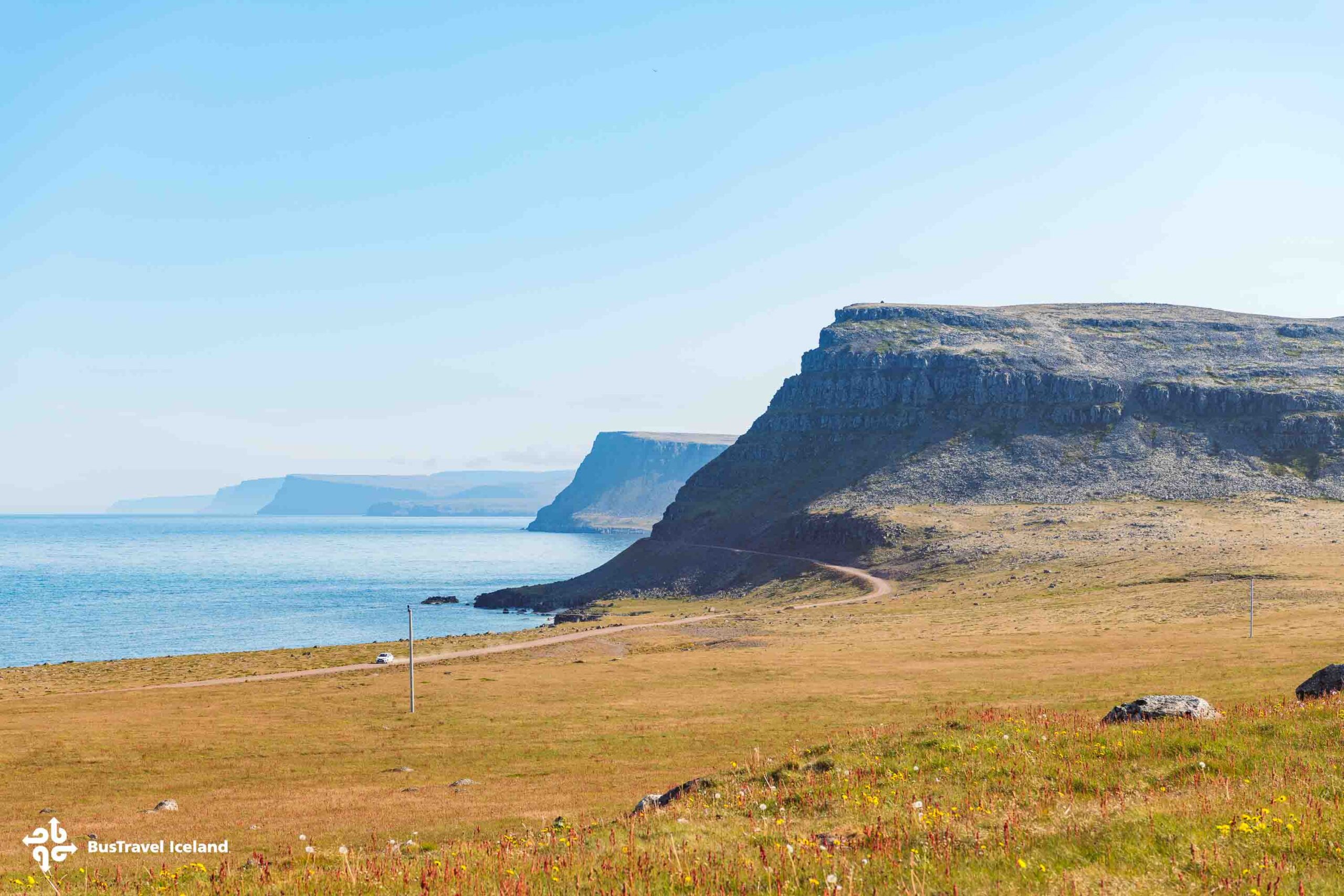
Access is via Route 612, a gravel road that connects to the regional road network. The final section of the route is unpaved and can be uneven, particularly after rainfall. During summer, most vehicles can complete the journey, although a four-wheel-drive vehicle is recommended for comfort and stability.
Driving times in the Westfjords are longer than distances suggest due to terrain and road conditions. Fuel stations and services are limited, so advance planning is required. There are no large visitor centers, no built-up viewpoints—just open land, ocean air, and the sense of standing somewhere few people reach.
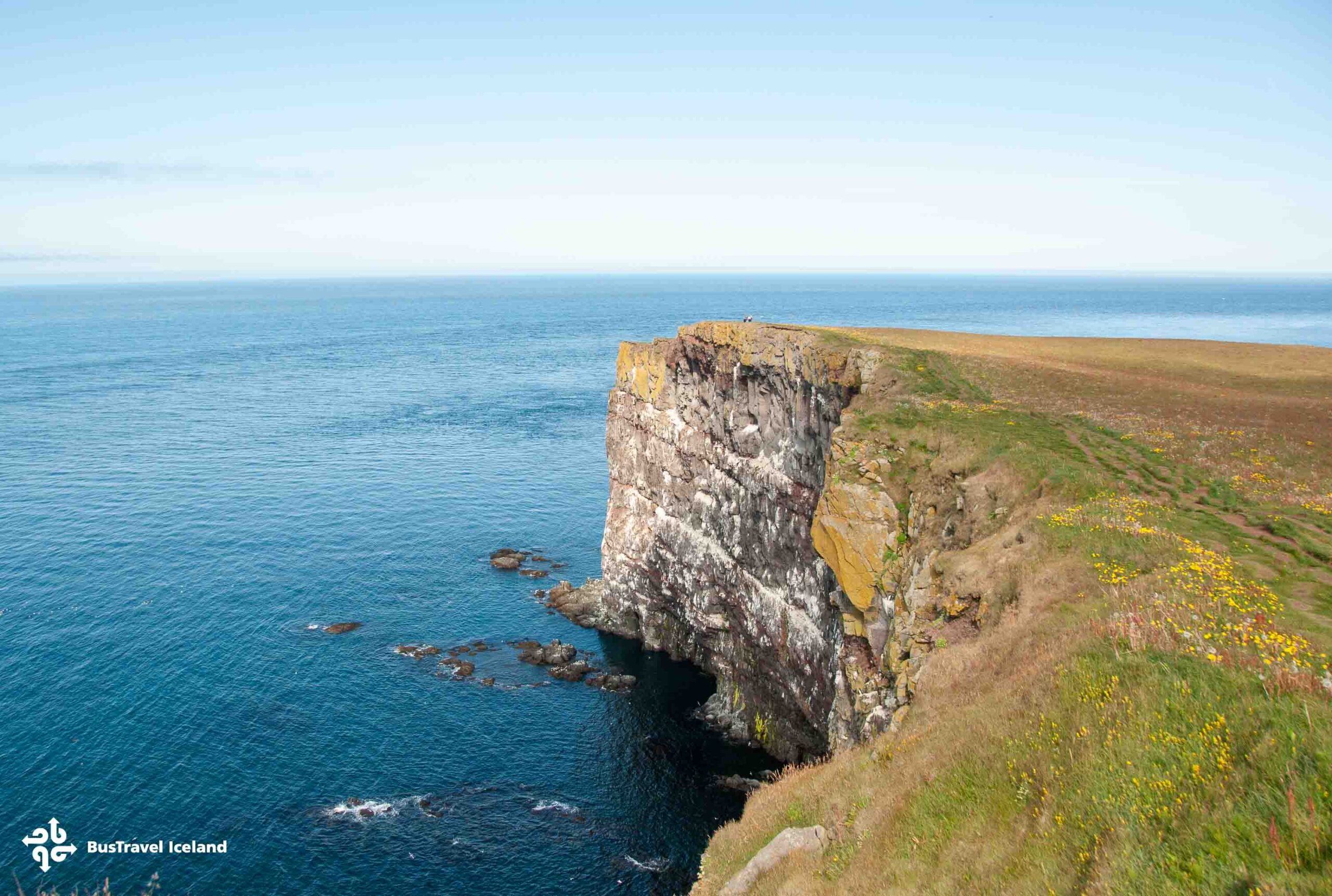
Geographically, this is Iceland’s westernmost point, a place that feels defined as much by its remoteness as by its physical features.
What Makes the Landscape of Látrabjarg Unique?
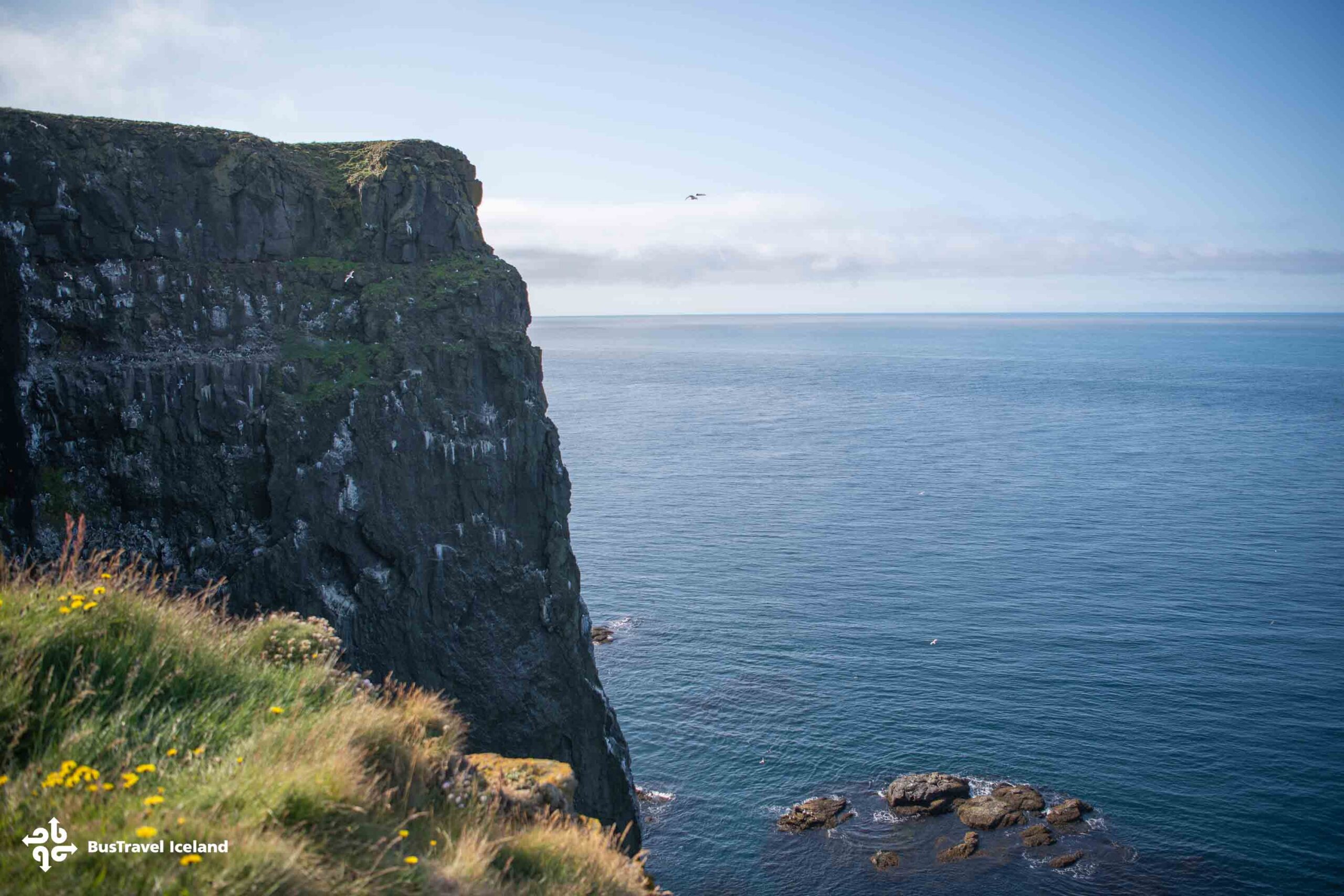
The Látrabjarg cliffs extend for approximately 14 kilometers along the coastline. Their maximum height reaches around 440 meters above sea level, placing them among the tallest sea cliffs in Iceland.
The upper surface consists mainly of grass-covered terrain, while the cliff faces are composed of layered rock formations shaped by long-term coastal erosion. The combination of vertical drop and ocean exposure creates strong updrafts, which are essential for seabird nesting.
Standing at the brink, the perspective shifts dramatically. The ocean stretches outward in every direction, while waves break far below in a constant, distant rhythm. The wind is nearly always present, sometimes soft and steady, other times forceful enough to remind you how exposed this place truly is. It is a landscape that feels both vast and quiet, shaped by time and left largely untouched.
Which Birds Can You See at Látrabjarg Cliffs?
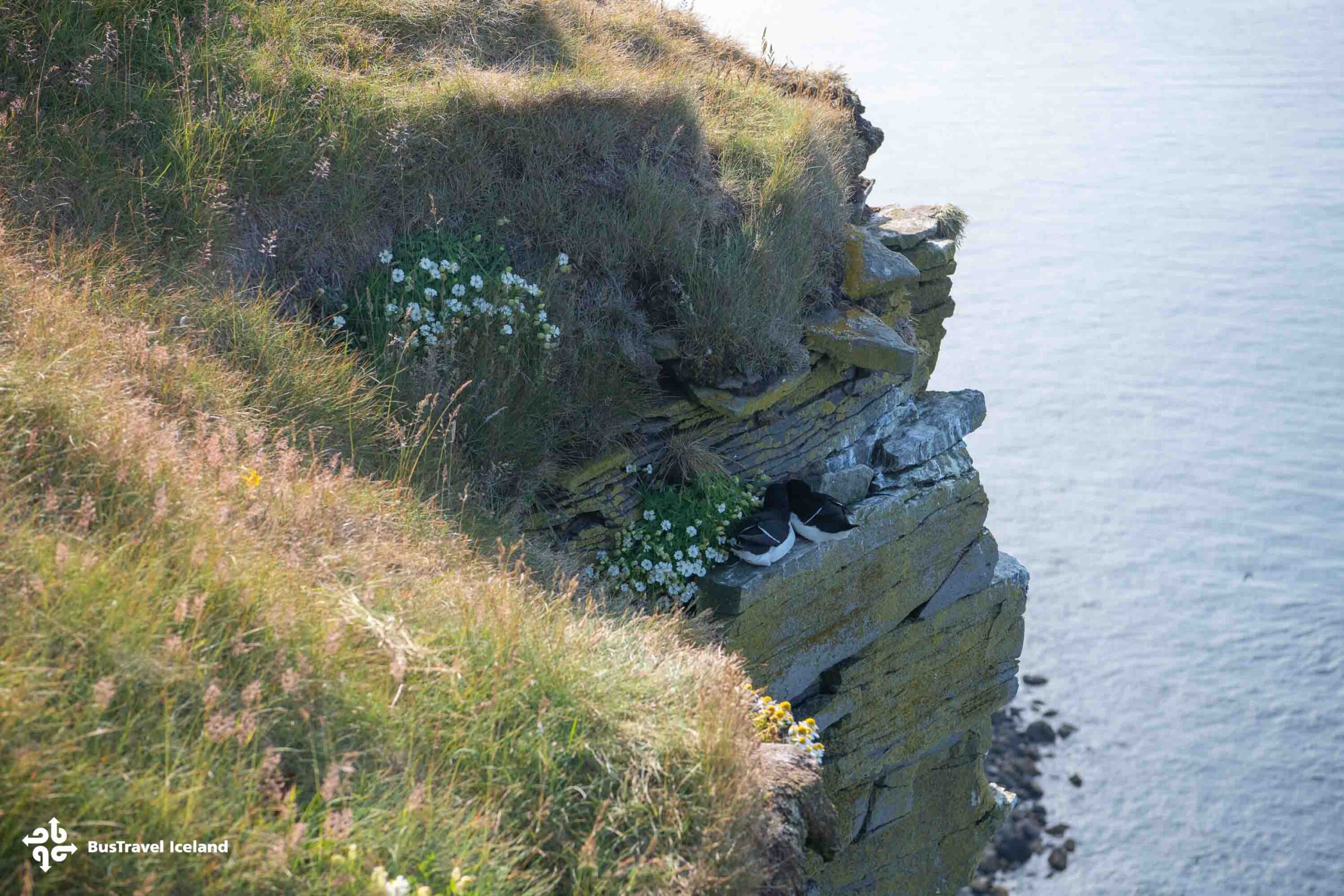
Látrabjarg is one of Iceland’s most significant seabird colonies, supporting millions of birds during the breeding season.
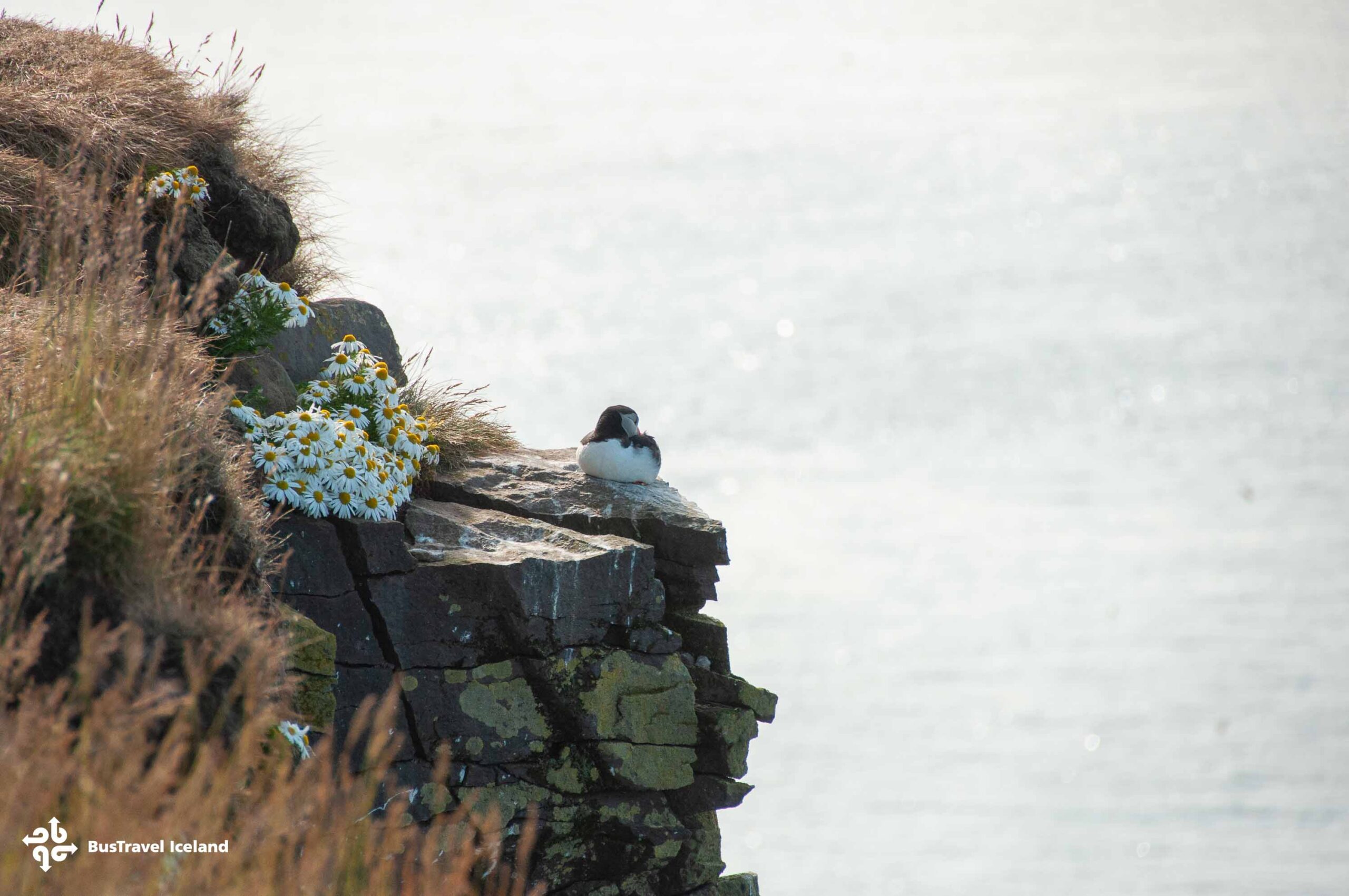
Key species include Atlantic puffins, guillemots, razorbills, fulmars, and kittiwakes. The cliffs provide nesting ledges and burrowing areas, making them a critical habitat within the North Atlantic ecosystem.
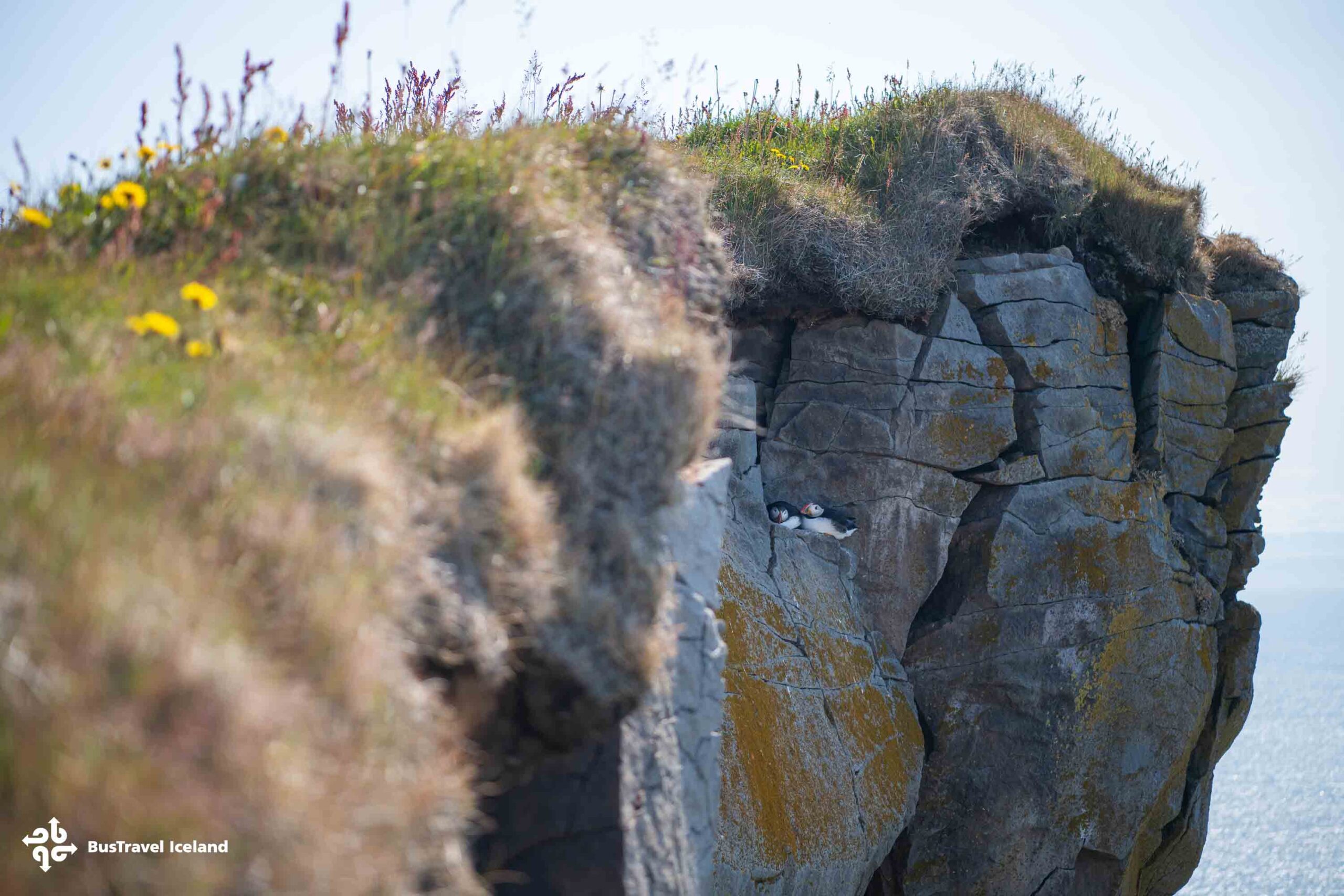
Puffins are typically present from May through August, with peak activity in June and July. Compared to other locations in Iceland, puffins at Látrabjarg are known for their relatively low sensitivity to human presence, allowing for closer observation under controlled conditions.
What Is the Weather Like at Látrabjarg Cliffs?
Weather in the Westfjords is variable and can change rapidly within short periods.
During summer months, average temperatures range between 8°C and 12°C. Wind is a constant factor due to the exposed coastal location, and fog is common, particularly in the early morning and evening.
In winter, conditions are significantly more severe, with snow, ice, and limited road access. Many routes, including Road 612, may become impassable depending on weather conditions.
Visitors should monitor forecasts and road updates before traveling.
What Can You Expect When Visiting Látrabjarg?
Látrabjarg does not have extensive built infrastructure. There are no large visitor centers or developed trail systems along the cliffs.
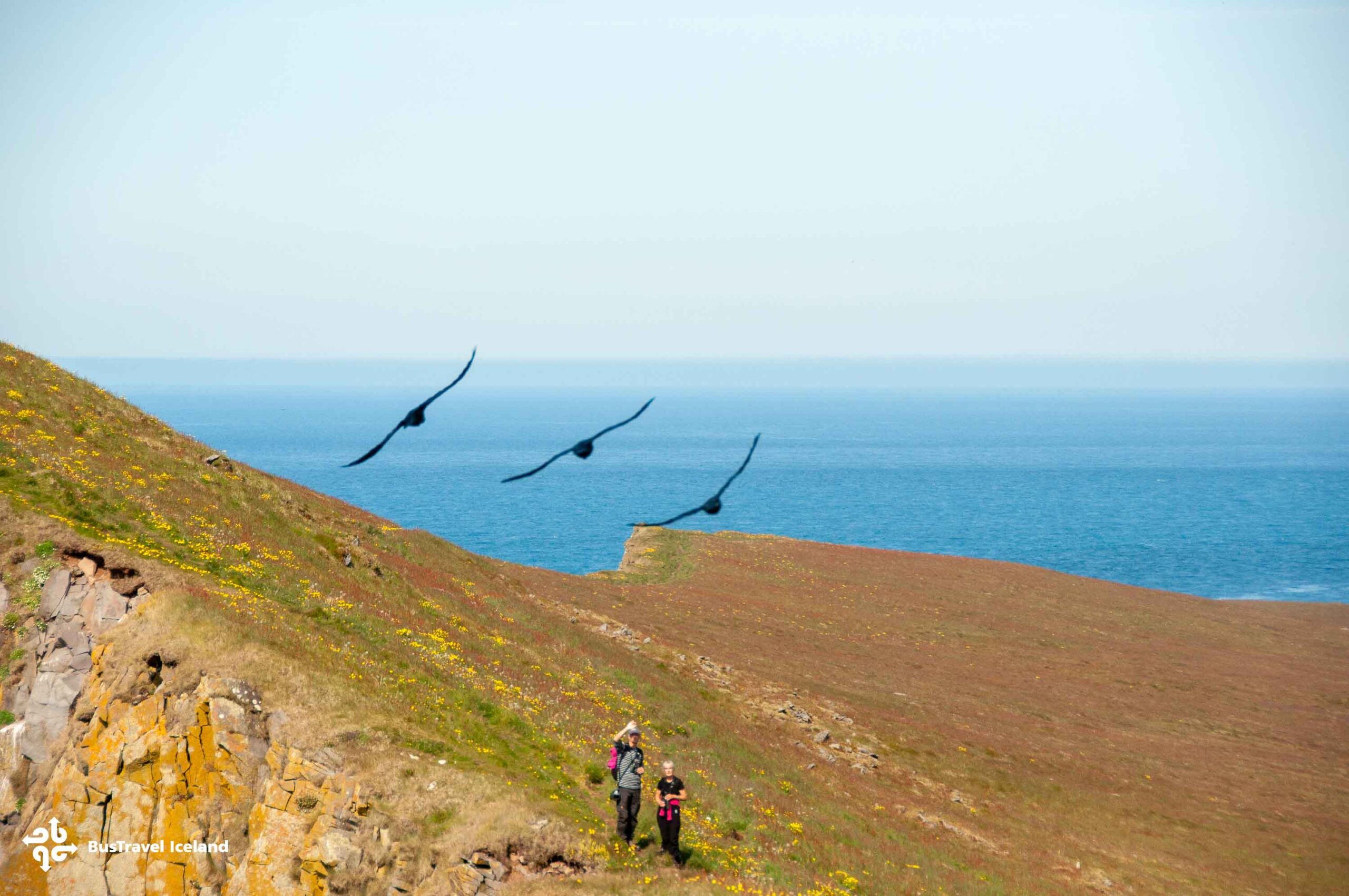
Visitors typically explore by walking along the cliff edge, with distances ranging from short stops near parking areas to several kilometers of continuous walking. The terrain is uneven in places, and the ground near the edge can be unstable due to erosion.
The absence of barriers in many sections means that safety depends largely on individual awareness and environmental conditions.
What Should You Know About Safety at Látrabjarg?
The primary risks at Látrabjarg are related to cliff proximity and weather exposure. Sections of the ground near the edge may be unstable, and strong winds can affect balance.
Maintaining a safe distance from the edge is essential. Visitors should avoid placing weight on overhanging sections of soil and remain alert in windy conditions.
Wildlife should not be disturbed, particularly during nesting season.
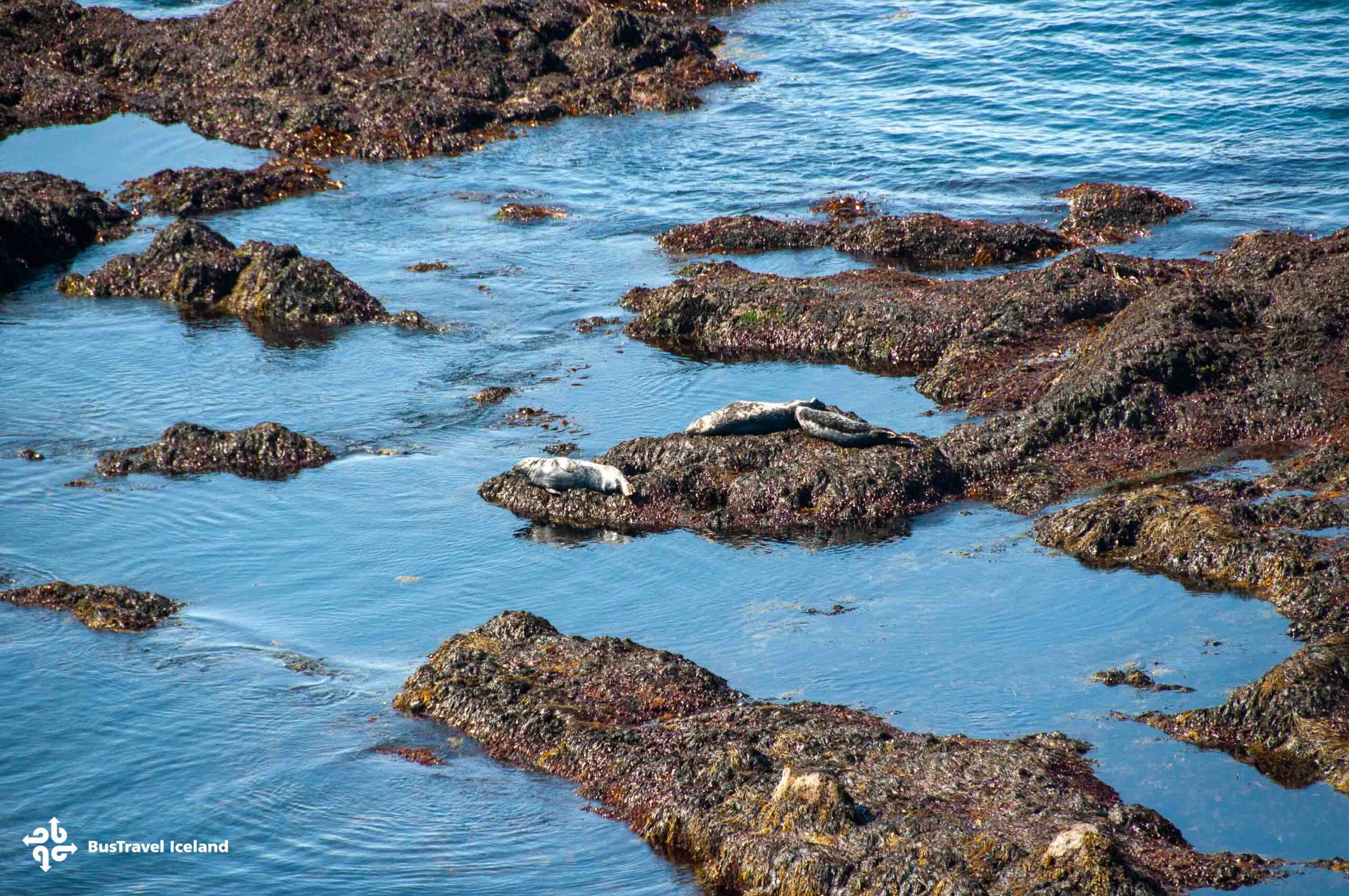
Nearby Attractions in Westfjords
The surrounding Westfjords region includes several notable sites within driving distance. Rauðasandur beach, known for its red-toned sand, is located nearby and offers a contrasting landscape to the cliffs. Patreksfjörður serves as the main local hub for accommodation and supplies.
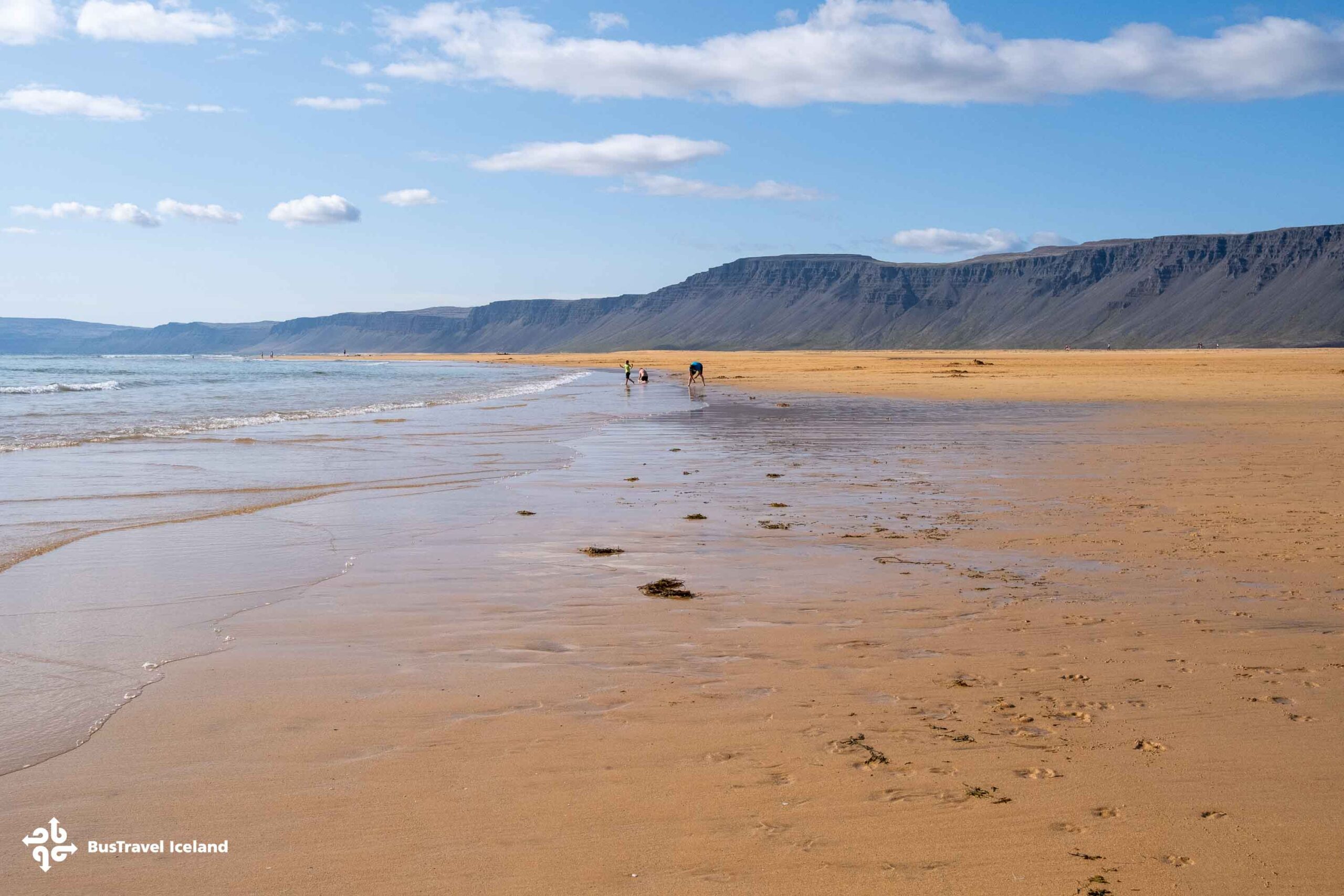
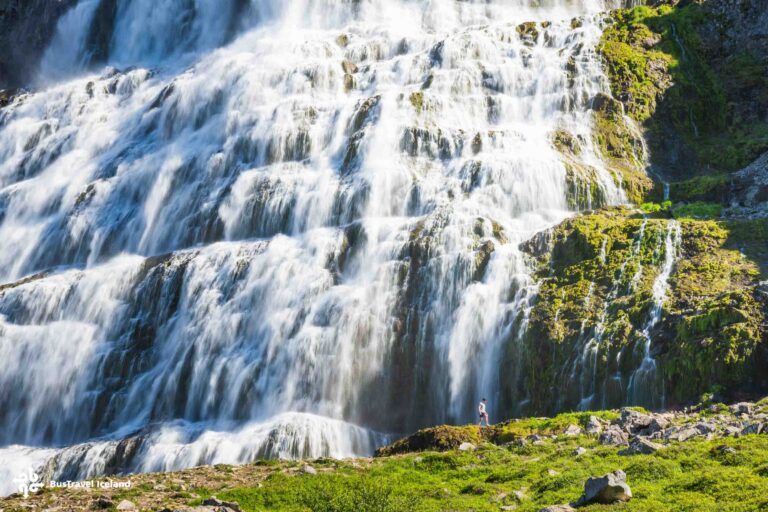
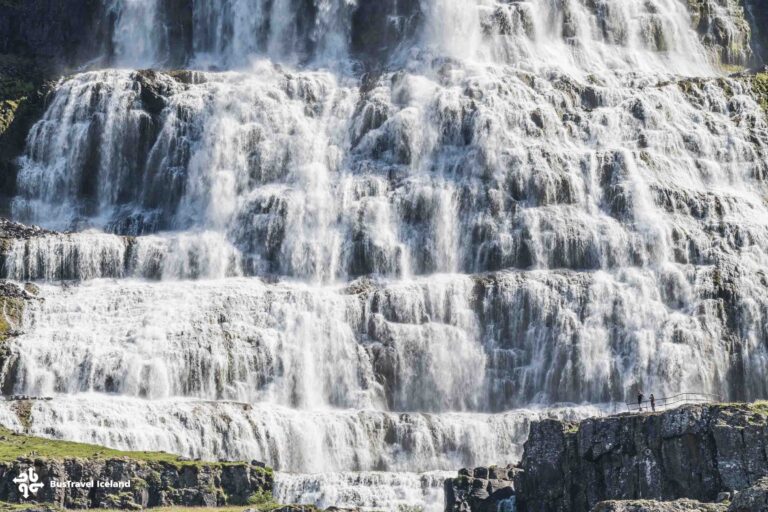
From Ísafjörður, the drive to Látrabjarg covers roughly 180 kilometers and takes around 3 to 5 hours in practice, depending on road conditions, weather, and route choices. Dynjandi waterfall, one of the region’s most recognized natural features, is also accessible as part of a broader Westfjords itinerary.

Best Time to Visit
The most suitable period to visit Látrabjarg is between June and August. During this time, road access is generally reliable, weather conditions are more stable, and seabird populations are at their highest.
Outside of this window, travel becomes more difficult due to weather and road limitations.
FAQ: Látrabjarg Cliffs, Iceland
Is Látrabjarg worth visiting?
Látrabjarg is absolutely worth visiting for those exploring the Westfjords, especially if you value dramatic landscapes, wildlife, and a sense of remoteness that is hard to find elsewhere in Iceland.
Can you see puffins at Látrabjarg?
Yes, Látrabjarg is one of the best places in Iceland to see puffins, particularly between May and August, with peak activity in early to mid-summer.
How long should you spend at Látrabjarg?
Most visitors spend between two and four hours at the cliffs, although those interested in photography or longer walks may choose to stay longer.
Is it safe to visit the cliffs?
It is generally safe if you remain cautious. Visitors should keep a safe distance from the edge, be mindful of unstable ground, and take care in windy conditions.
Do you need a 4×4 vehicle to get there?
A 4×4 vehicle is recommended but not strictly necessary during summer months, provided road conditions are stable.
Are there facilities at Látrabjarg?
Facilities are minimal, so it is important to bring food, water, and fuel before making the journey.
Can you visit Látrabjarg in winter?
Winter visits are possible but challenging due to harsh weather and potentially inaccessible roads, making summer the preferred season for most travelers.