



The Truth About Hunting the Northern Lights in Iceland
- Northern Lights
- 7 Jul 2026
Key Takeaways
- The aurora is a solar phenomenon, not weather, but cloud cover decides whether it is visible from the ground.
- Three conditions must align: darkness, clear sky, and active solar wind.
- The KP index alone is not enough to predict a strong night.
- BusTravel Iceland’s free rebooking covers guests who do not see the lights on the standard bus tour and is valid for up to 3 years from the original tour date.
- A patient guide and realistic expectations beat any forecast app or marketing photo.
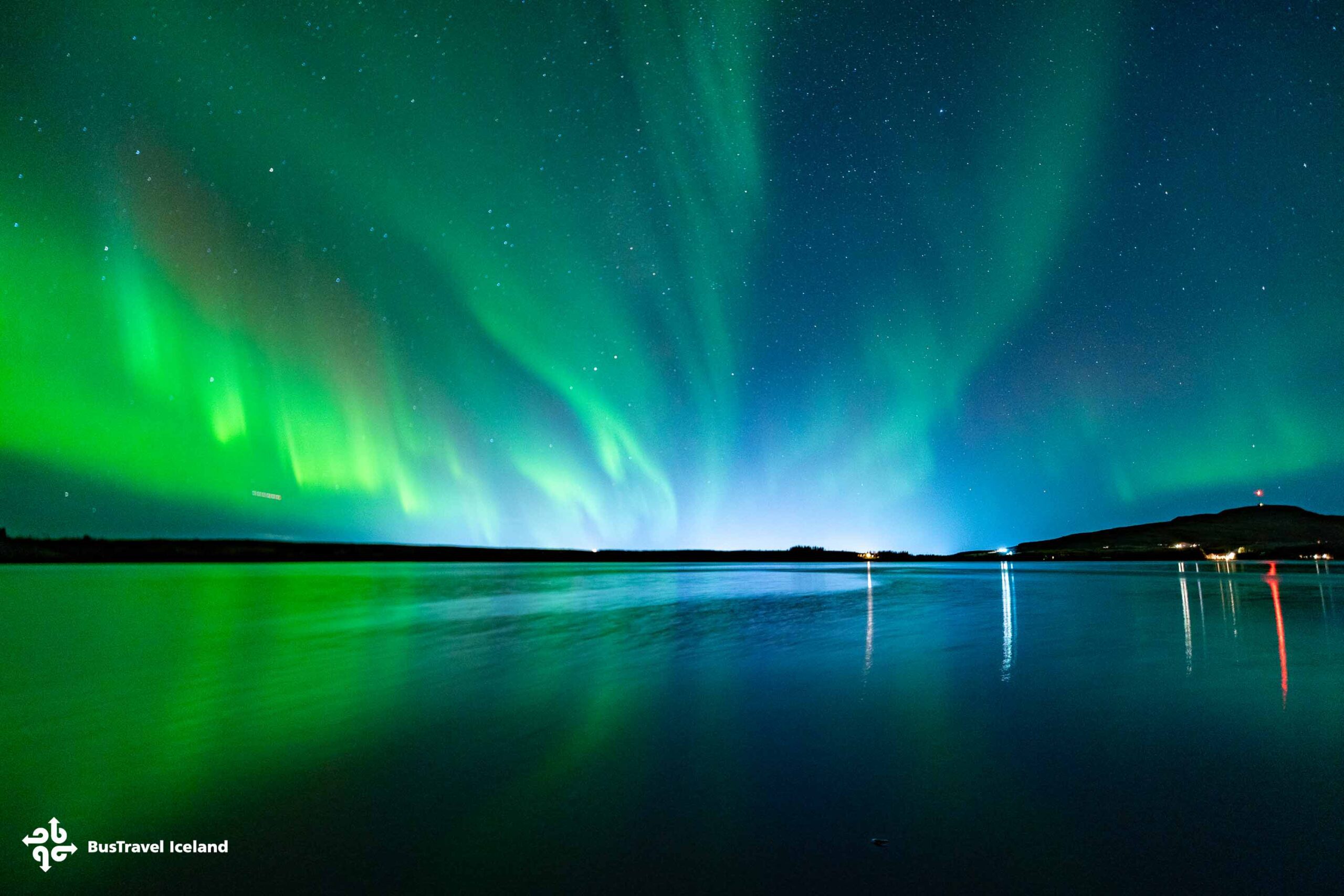
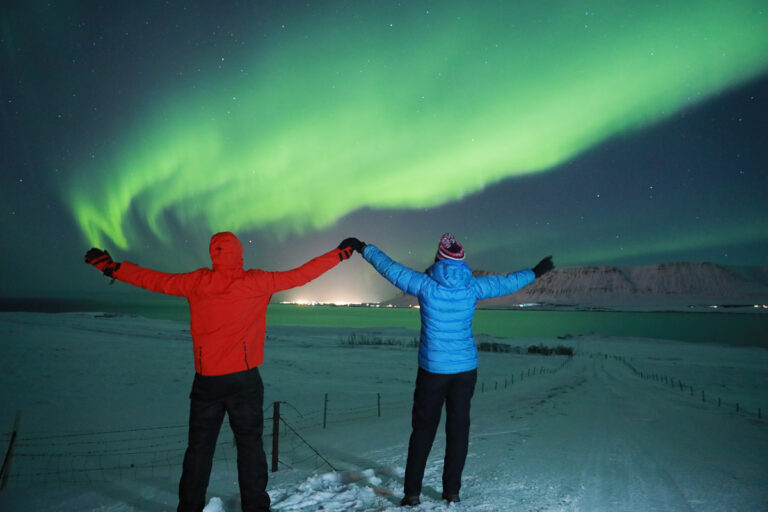
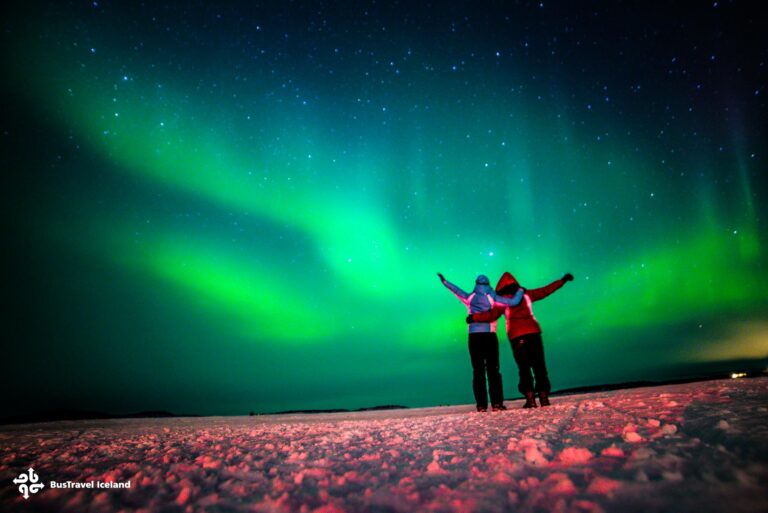
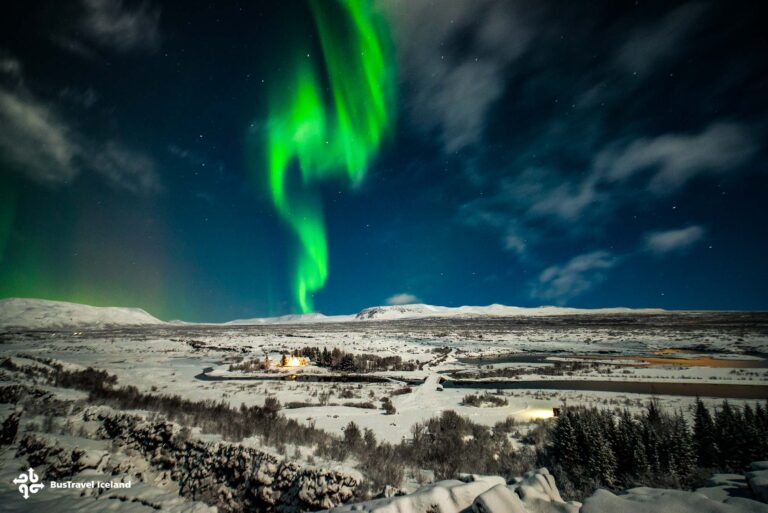
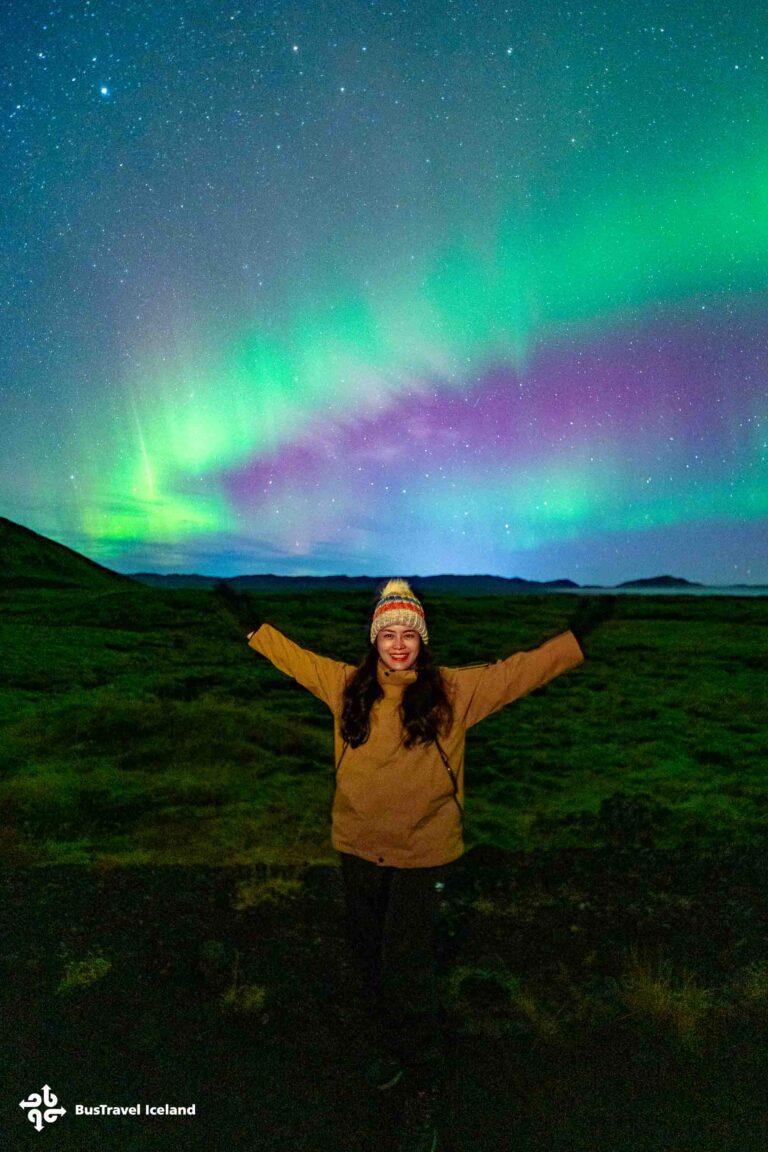
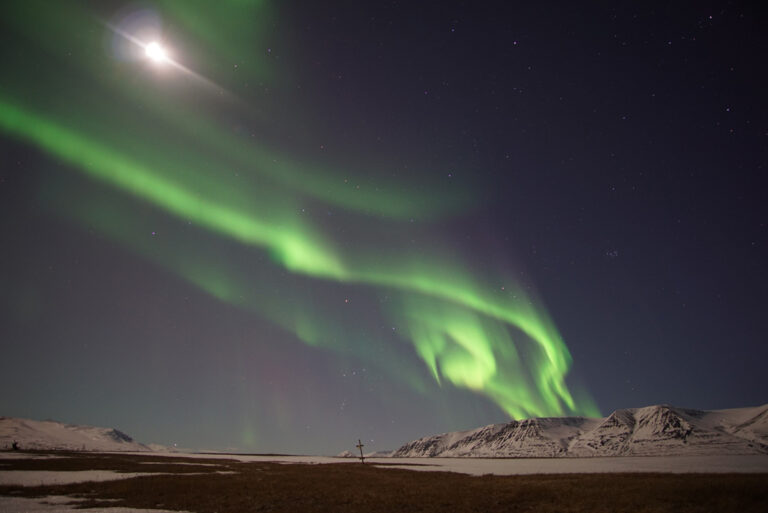
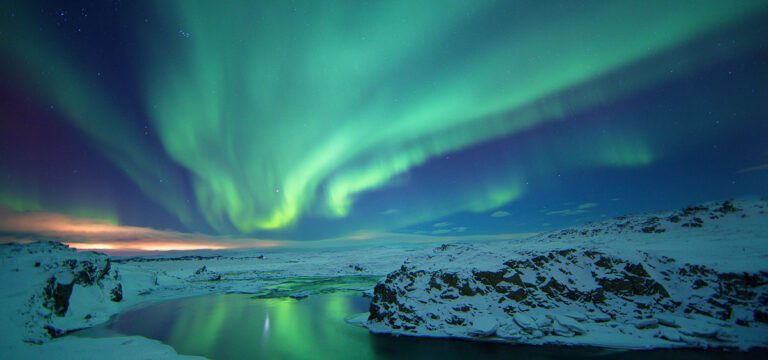
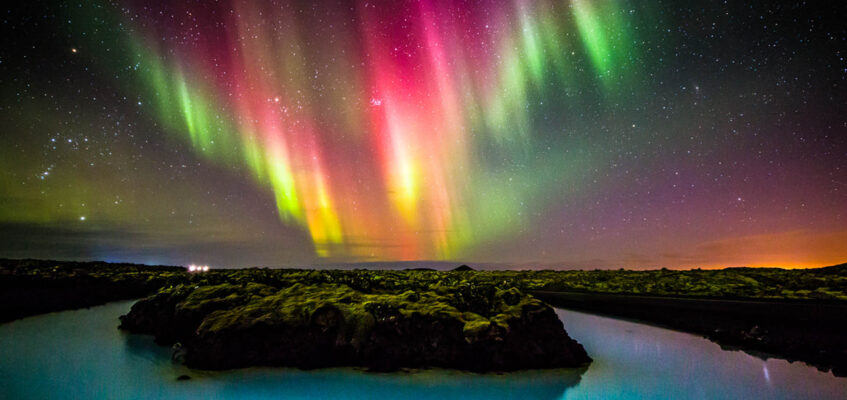
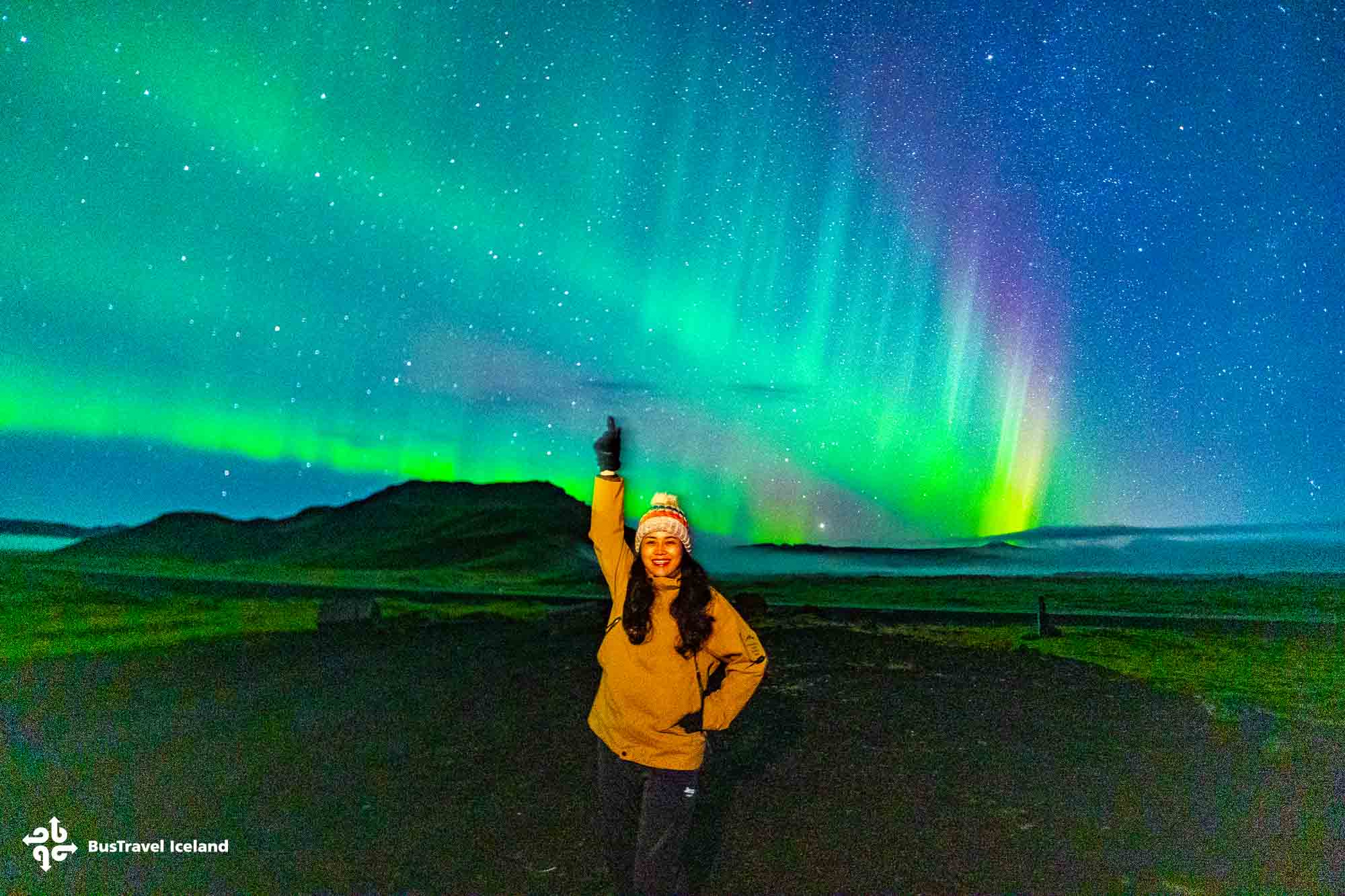
Marketing photos show neon-green skies framing a single mountain. Forecast apps promise a guaranteed display tonight. Real nights in Iceland often look nothing like either. This is the honest version of how the northern lights actually work, what your tour operator can promise, and how to give yourself the best chance of a result.
How the Aurora Actually Works
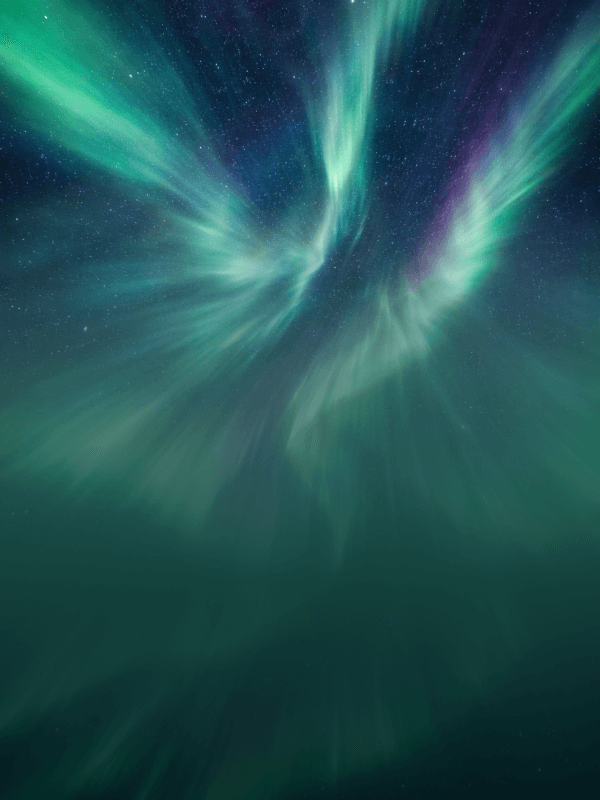
The northern lights are not a weather event. They are the visible result of charged particles from the sun colliding with gases in the upper atmosphere. Oxygen produces the familiar green and occasional red. Nitrogen produces blue and violet.
Solar activity peaks roughly every 11 years, and Solar Cycle 25 has now reached its maximum, with high activity expected to continue through 2026. A strong solar storm pushes the aurora oval south, which is why Iceland sees activity even on relatively quiet nights, though cloud cover can still block all of it from view.
The Three Conditions You Need
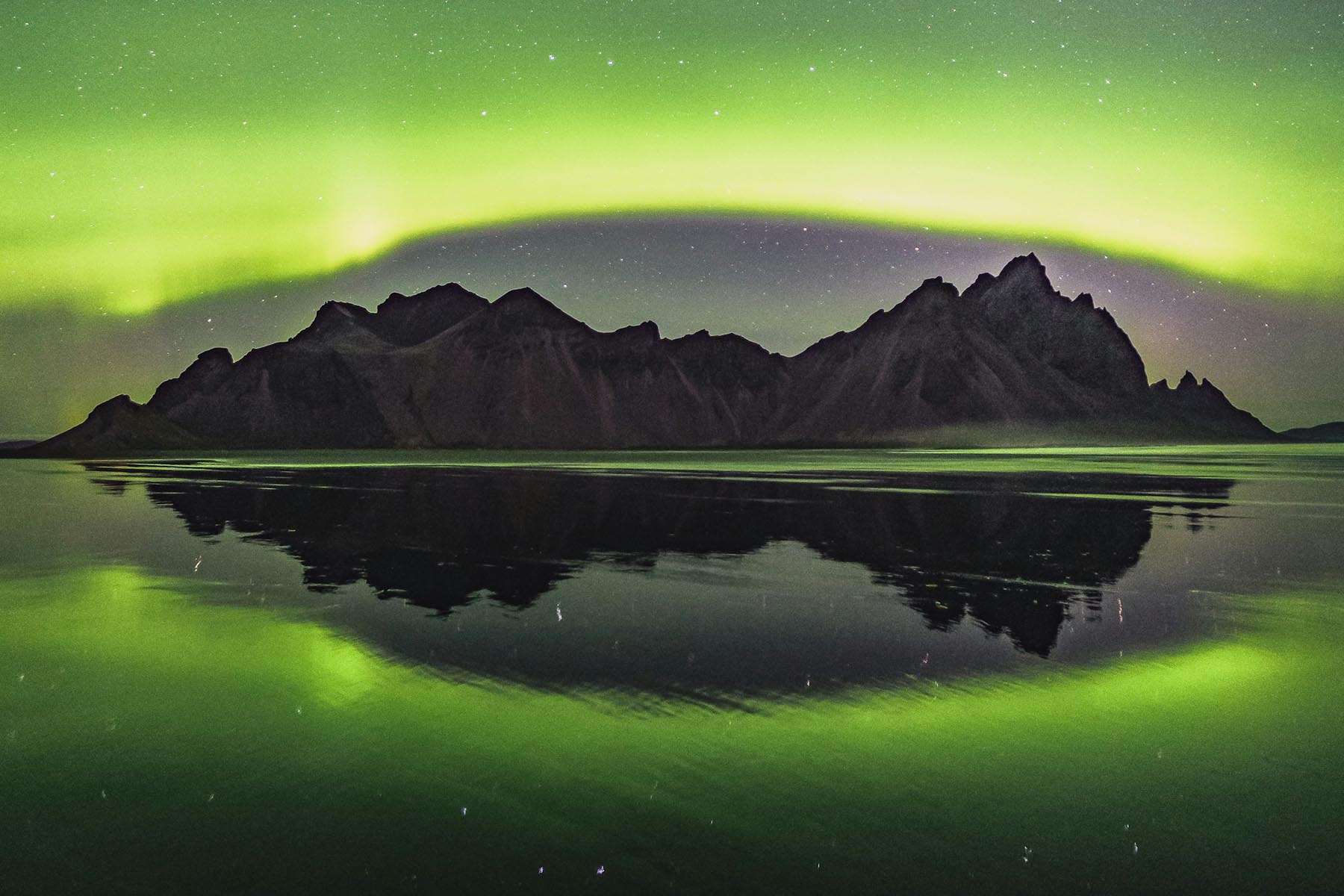
Darkness comes first. The aurora season runs from late August to mid-April, when Iceland gets enough true night to see anything. Outside that window, the sky never darkens enough.
The second condition is clear sky. A perfect aurora storm under thick cloud is invisible from the ground, which is why guides spend the afternoon watching weather radar rather than just the aurora forecast. Even partial breaks in the cloud, in the right place, are usually enough for a viewing.
The third is an active solar wind. This is the variable everyone tries to predict, and it is the one nobody controls. Forecasts grow more accurate within a 24-hour window, but they continue to shift hourly until the actual night.
Why the KP Index Is Not Enough on Its Own
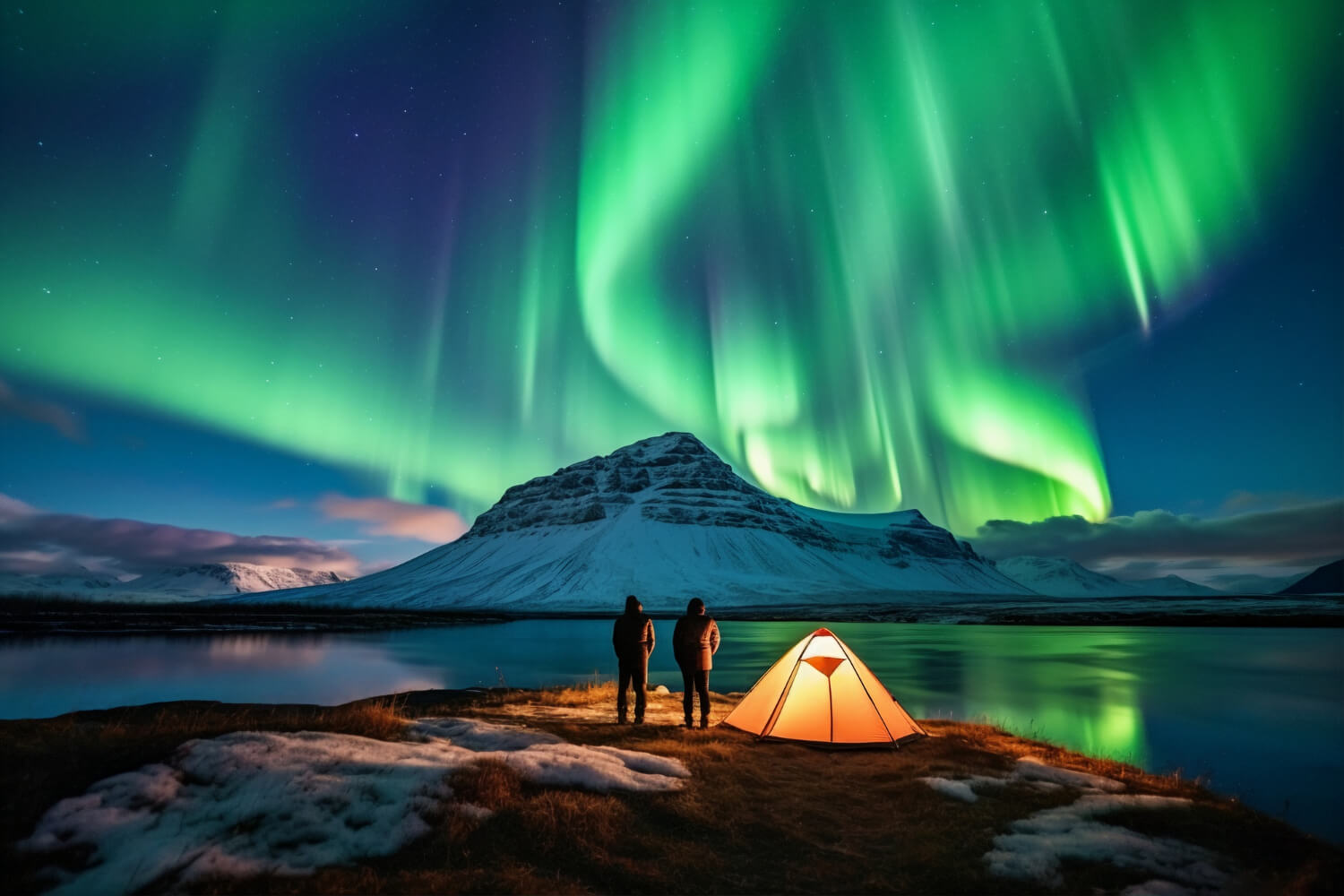
The KP index is a 0–9 scale measuring geomagnetic activity, and it is often quoted as the aurora number. The truth is messier. KP 2 nights in Iceland can produce strong displays directly overhead because the country lies within the auroral oval at most KP levels.
The variable that matters more is the Bz component of the solar wind. When Bz turns south, the aurora becomes far more likely, and a moderate KP with a strongly negative Bz often outperforms a higher KP with positive Bz. Read our deeper note on how to find the lights using the Bz value for the full picture.
How a Good Guide Finds the Lights
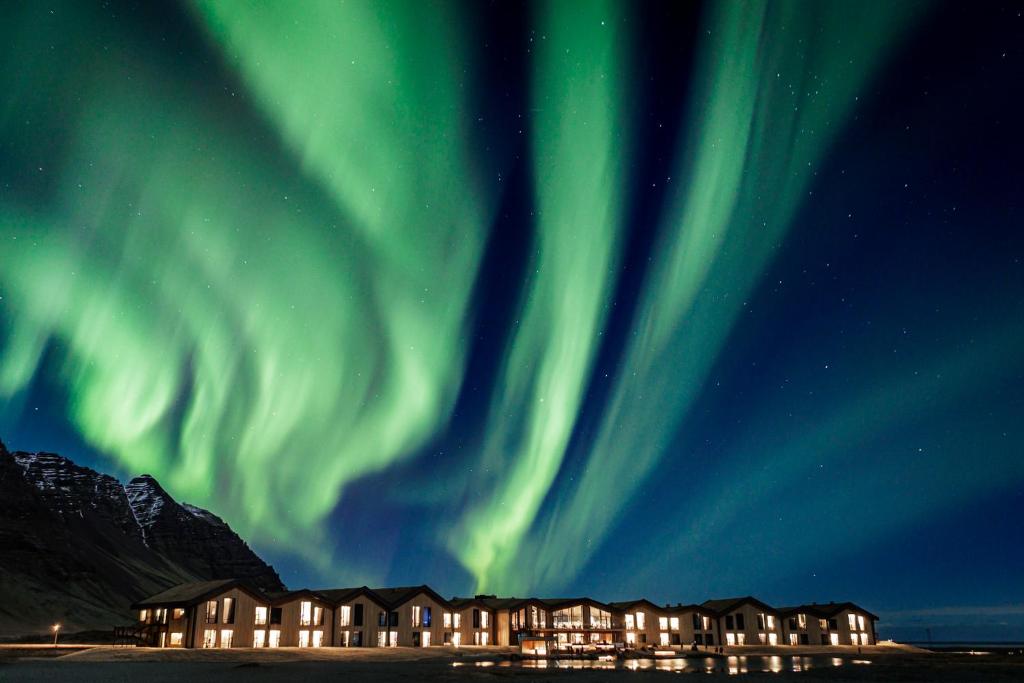
A coach guide working a northern lights tour is doing three things at once: reading cloud radar to find a clear pocket of sky, watching solar wind data for activity windows, and routing the bus to put both into the same picture.
This is why pickups are sometimes delayed, and routes are rarely fixed in advance. A guide who promises a specific viewpoint hours in advance is selling certainty that the sky does not offer, and the better guides will reroute mid-tour the moment a sky map updates.

What a Realistic Hunt Looks Like
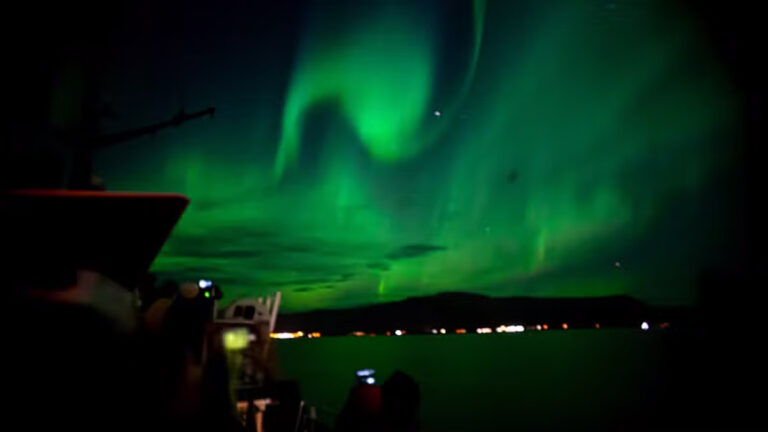
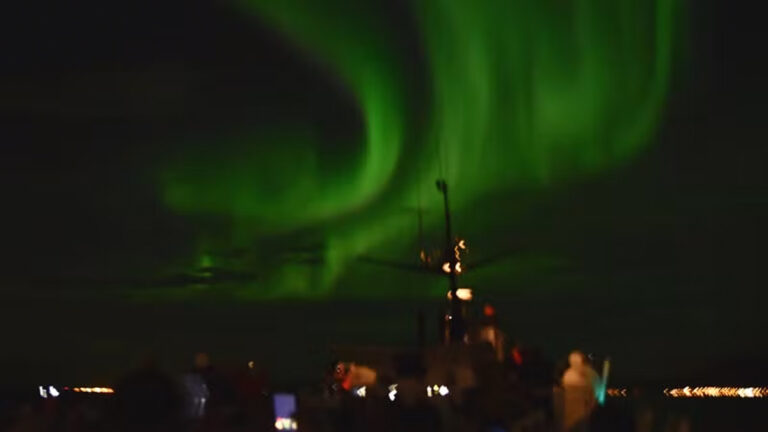
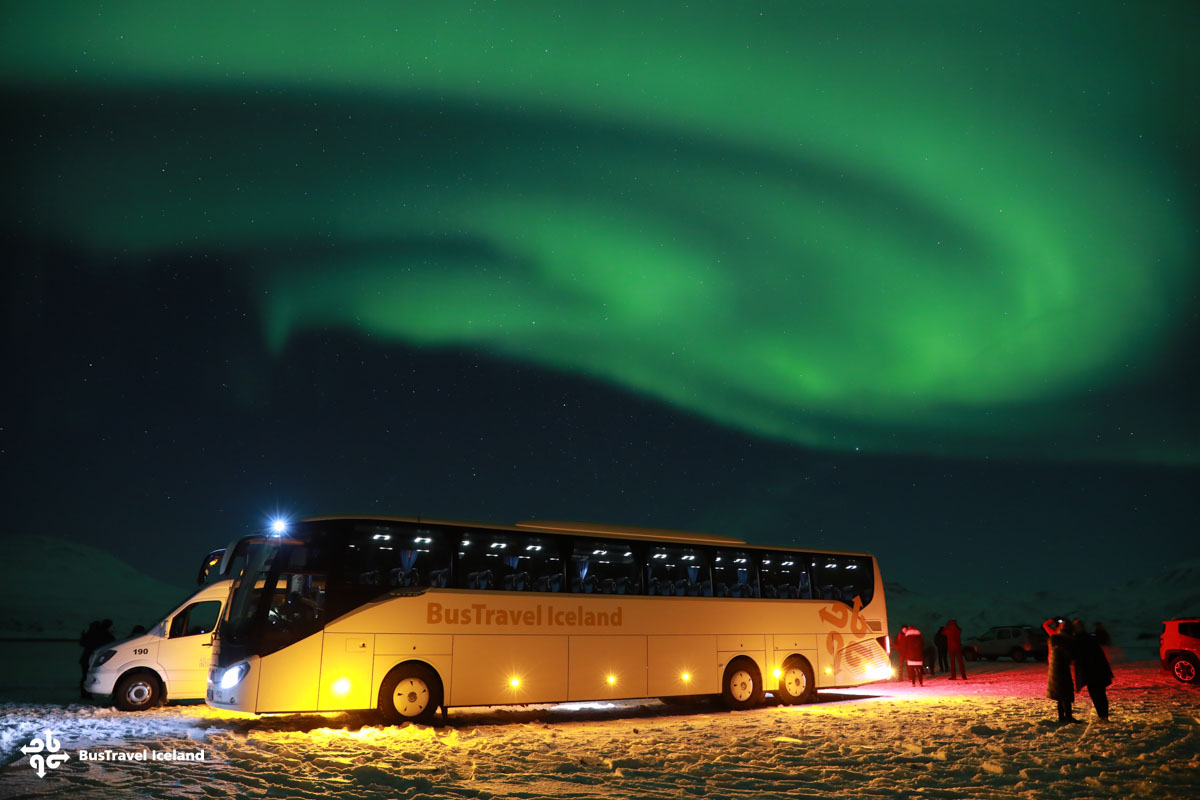
Expect a long evening. Most tours run three to five hours, often with at least an hour of driving to escape cloud cover. The bus stops in a dark, often cold location, and passengers stand outside while the guide watches the sky.
Some nights, the aurora arrives in the first ten minutes. Some nights it builds slowly across an hour. Some nights nothing comes, the bus heads home, and that is the precise scenario the rebooking policy was built for.

The Rebooking Policy Explained
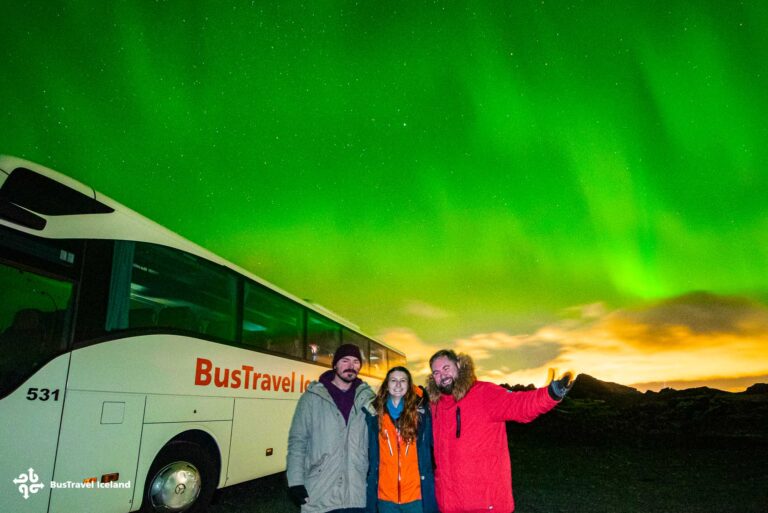
A no-show aurora night is not a lost booking with BusTravel Iceland. Guests on the standard Northern Lights Bus Tour from Reykjavik who do not see the aurora can rebook on another large bus tour at no cost, on any later night. The offer remains valid for up to 3 years from the original tour date, which is useful for anyone planning a return visit.
If you would prefer a smaller bus and a slower pace, the Northern Lights Small Group Tour and the Photography Tour with free photos are both worth a look. Pick your tour early in your trip, give yourself room to rebook, and treat each night as one attempt rather than the only one. Browse BusTravel Iceland’s northern lights tours to see the full range.
Frequently Asked Questions
What KP index is best for seeing the aurora in Iceland?
Iceland’s location means anything from KP 2 upwards can produce visible aurora. Higher KP makes a display more likely and more intense, but a clear sky matters more than the index number.
How many nights should I plan for aurora hunting?
At least three. Two nights leave no room for clouds, and three to four give you enough flexibility to reschedule or rebook and still hit a clear-sky window during your trip.
Can I see the aurora from Reykjavik?
Sometimes, on strong solar nights, the aurora is visible right over the city. Most of the time, light pollution washes it out, and you need to drive at least 30 minutes outside town to get a clear view of the sky.