



Witness the Magic of the Northern Lights
Catching a glimpse of the Northern Lights is a once-in-a-lifetime experience. You’ve made it to Iceland—right place, right season—and now it’s time to chase the shimmering colors that dance across our Arctic skies. But how likely are you to see them? Where should you go for the best chance? And what exactly causes this breathtaking display of light and color?
In this guide, you’ll uncover everything you need to know about the Aurora Borealis—and how BusTravel Iceland turns the Northern Lights hunt into an unforgettable adventure under the stars.
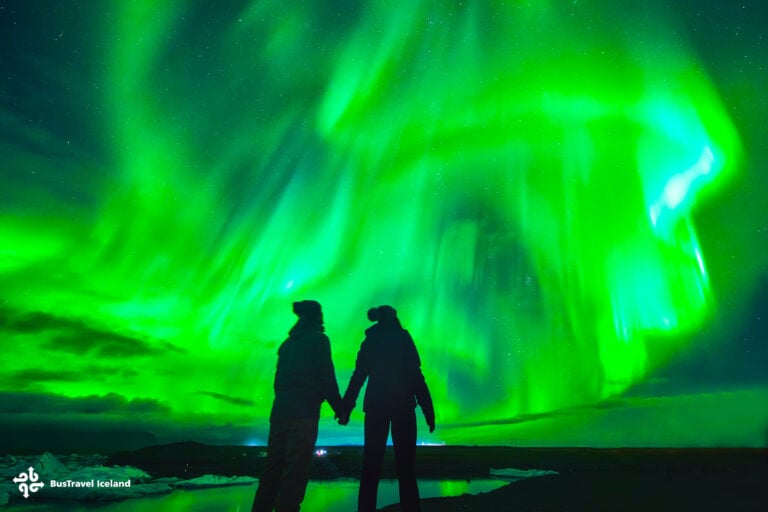
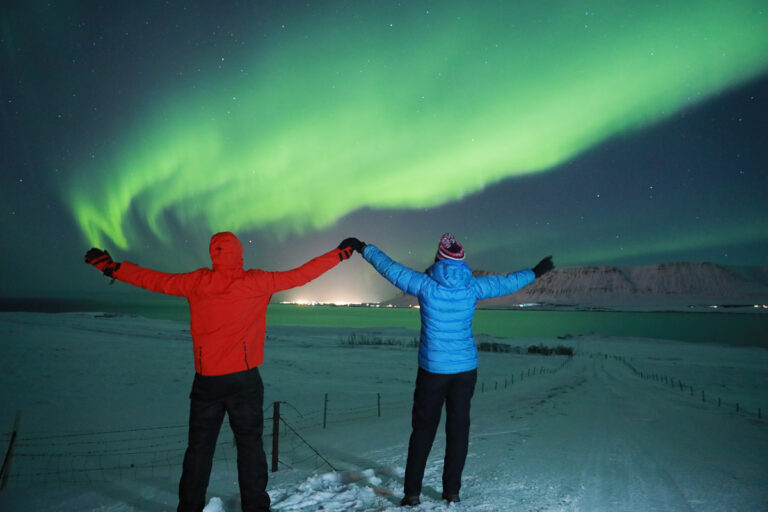
The Northern Lights Tours in Iceland
Reading the Skies
As Iceland’s most experienced and highly-rated Northern Lights tour operator, our operations team and expert guides track real-time weather, cloud cover, and aurora forecasts to pinpoint locations with the highest chance of witnessing the lights. Every decision is backed by years of local knowledge and scientific data, so you can focus on the magic above.
Secret Spots
Our Northern Lights guides are seasoned Icelandic explorers with intimate knowledge of the country’s remote landscapes. From secluded lakes and hidden hills to dark-sky valleys untouched by light pollution, they know exactly where to take you for the clearest, most breathtaking views.

On the Move
If clouds drift in, our guides don’t wait and hope—they monitor conditions in real time and swiftly relocate to areas with clear skies. Traveling in our modern, heated buses, you can relax in comfort while we navigate Iceland’s winter terrain, ensuring you never miss a moment of the aurora’s dance.
The Perfect Experience
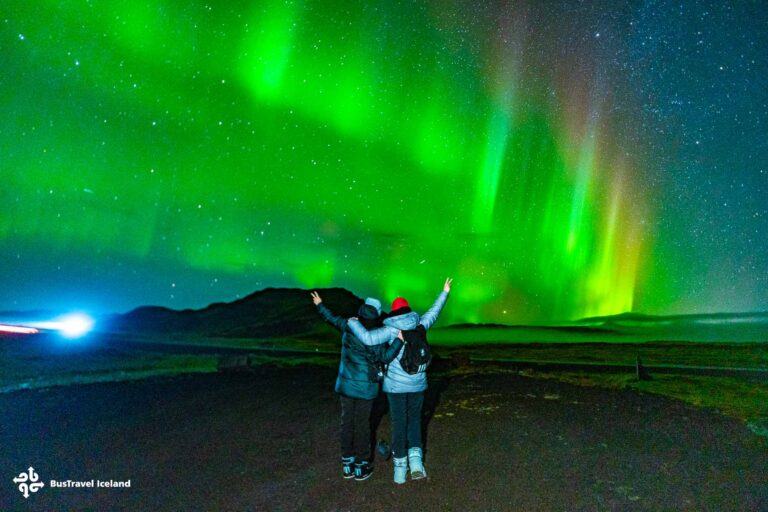
Once you arrive at the viewing spot, settle in and enjoy the serene Icelandic surroundings. Sip hot chocolate and savor authentic Icelandic chocolate wafers while capturing photos and watching the Northern Lights unfold above—a stunning display of color and motion that turns a cold night into an unforgettable adventure.
──────────────────────────────────────────────────────────
Learn about Why Iceland is the Best Place in the World to Chase the Northern Lights
──────────────────────────────────────────────────────────
Live Cloud Forecast
BusTravel Iceland’s Aurora Hunting Strategy
Across all the countries where the Northern Lights can be seen, each destination has its own special way of chasing, hunting, and experiencing them. In Iceland, beyond the magic and mystery of this natural phenomenon, it’s important to understand our ever-changing microclimate — a key factor that shapes every Northern Lights adventure here.

Why We Use Real-time Forecast
Because of Iceland’s varied landscape — with its mountains, glaciers, and coastlines — the country has many microclimates, meaning the weather can be very different from one area to another, even over short distances. This also means that clouds and weather conditions can change quickly, which is why checking conditions in real time is so important when searching for the Northern Lights.
How Do We Utilize Multi-Source Research Approach
To give our guests the best chance of seeing the Northern Lights, we use several methods to keep an eye on weather conditions across Iceland:
- Multiple Forecasts: We don’t rely on just one weather report. Our team checks several trusted sources — including Veður.is, Belgingur, and others — to get the most accurate and up-to-date information.
- Understanding the Wind: Wind direction and strength play a big role in predicting visibility. When the wind blows from the south, clouds tend to move quickly, making timing trickier. Northern winds, on the other hand, bring calmer and clearer conditions (though often colder!), which help us track cloud movements more easily.
- Monitoring During the Day: Throughout the day, we keep an eye on changing weather patterns so we can better predict what the evening will look like for Northern Lights viewing.
- Local Updates: We also stay in touch with local farmers and residents in rural areas who share real-time updates about clouds, wind, and sky conditions — helping us choose the best possible locations for the night’s hunt.
How We Choose the Best Spots to See the Northern Lights
Our Northern Lights tours are flexible and guided by real-time data, experience, and teamwork. Here’s how we decide where to go each night:
- Using the Kp Index: The Kp index measures solar activity and helps us predict how strong the Northern Lights might be. When the Kp level is low (0–2), the lights usually appear low on the northern horizon, so we look for wide-open areas with clear northern views. When it’s higher (Kp 3–5), the auroras can stretch overhead, so we can choose more scenic locations — like lakesides with mountains — that make for stunning reflections and photos.
- Using the Bz value: The Bz value is part of Earth’s magnetic field in space, and when it’s negative (southward) it acts like a ‘green light’ allowing solar particles in to create strong, colorful Northern Lights, while positive (northward) values make auroras weak or unlikely.
- Watching the Clouds: We always balance the Kp index with cloud coverage. Our guides constantly adjust the plan to find the clearest skies and the best viewing angles for the expected position of the aurora.
- Knowing the Microclimates: After years of experience, we’ve discovered special “sweet spots” around Iceland — areas where local geography creates small microclimates. These locations often stay clear even when nearby regions are cloudy, giving us a better chance to catch the lights.
- Adapting Our Route: We don’t stick to a fixed path. Instead, we drive toward the most promising areas and stop at several points along the way to check sky conditions and adjust our route as needed.
- Teamwork Across Buses: On nights when multiple buses are out, our guides share real-time updates about weather and aurora activity. This teamwork helps us cover a much larger area and find the best possible viewing spots for everyone.

─────────────────────────────────────────
Learn more about KP Index for the Northern Lights forecast
─────────────────────────────────────────
Auroral Activity Scale (Kp Index)
The Kp index measures how strong the Northern Lights are on a scale from 0 to 9. In general, the higher the number, the brighter and more active the display — but nature doesn’t always follow the rules!
- Kp 0–2:
Faint activity — the lights usually appear low on the horizon and can be seen only under very dark, clear skies.
- Kp 3–5:
Moderate activity — bright, colorful lights often appear overhead and can fill much of the sky.
- Kp 6–9:
Strong activity — a truly spectacular show with vivid colors, fast movement, and wide coverage across the sky.
However, there are always exceptions. We’ve witnessed brilliant, colorful auroras even at Kp 4, and other times, the lights have been surprisingly weak or faint even when the Kp index was 7 or 8. Many local factors — like cloud cover, light pollution, and your viewing location — can make a big difference in what you see.

How Space Weather Shapes the Northern Lights
The Bz value is a key part of space weather, which is how the Sun interacts with Earth’s magnetic field. Solar wind—a stream of charged particles from the Sun—carries the interplanetary magnetic field (IMF) through space. The Bz component of this field tells us its direction:
- When Bz is negative (southward), it opposes Earth’s magnetic field, allowing solar particles to flow into our magnetosphere more easily. This interaction triggers stronger and more colorful auroras.
- When Bz is positive (northward), it aligns with Earth’s magnetic field, blocking solar particles and making auroras weaker or absent.
In short, Bz is like a “gatekeeper” in space weather: its direction determines how much solar energy enters Earth’s magnetic field, directly affecting the intensity and visibility of the Northern Lights.
We keep a close eye on the Bz value to decide whether to run a Northern Lights tour, ensuring you have the best chance to witness a truly spectacular aurora.
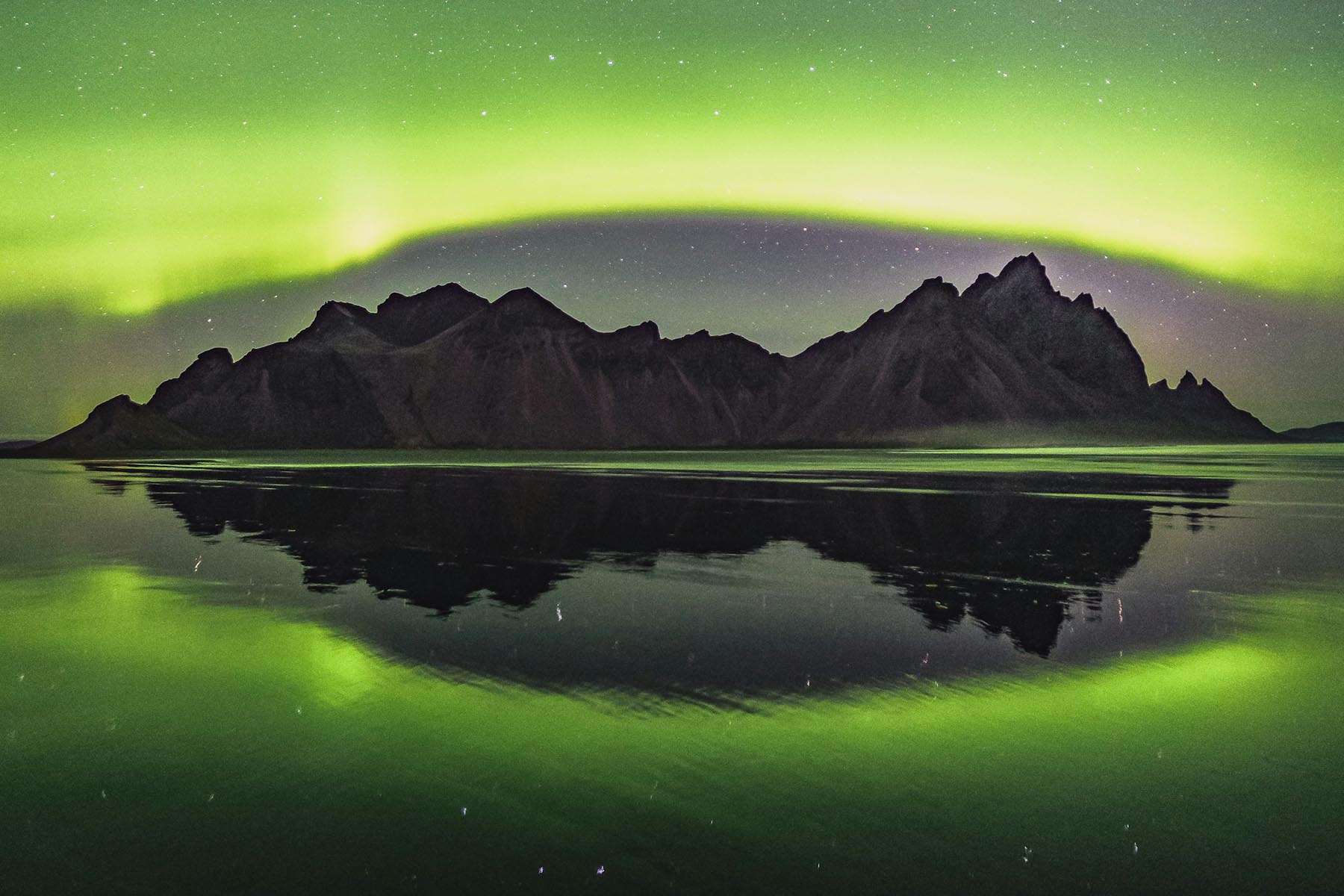
The Science Behind the Magic
How the Northern Lights Form
The Northern Lights appear when tiny charged particles from the sun travel to Earth and bump into gases high up in our atmosphere. These collisions create colorful, dancing lights in the sky — mostly glowing green, but sometimes shining red, purple, or blue. It’s nature’s own light show!
Why Iceland?
Iceland is one of the best places on Earth to see the Northern Lights. The country sits just below the Arctic Circle, right in what’s known as the auroral oval — the sweet spot for aurora activity. With little light pollution and plenty of dark, clear winter nights, Iceland offers ideal conditions for catching this magical display.
Best Time to See Them
The Northern Lights season runs from September to April, when nights are long and dark. The best chances to see them are usually between November and February, from around 9 PM to 2 AM. Still, the aurora can surprise you anytime during the night — all it takes are clear skies and the right conditions.
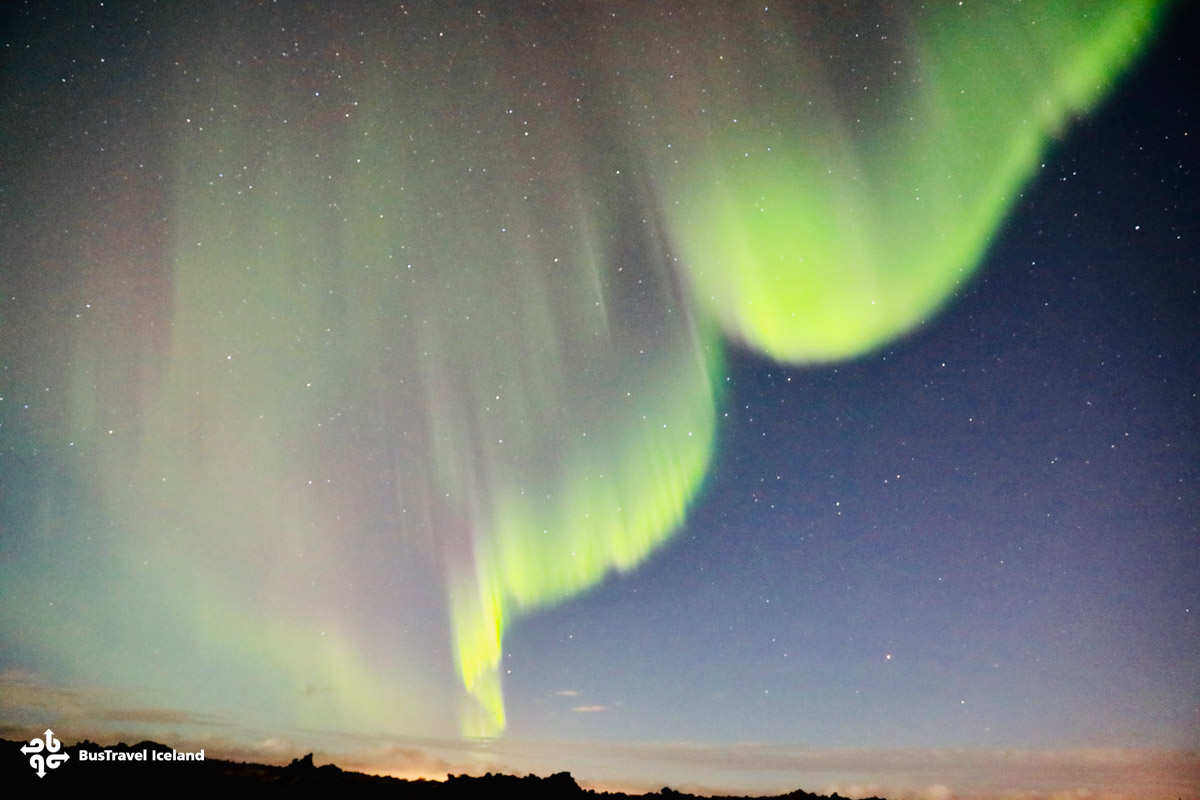
Colors of the Aurora
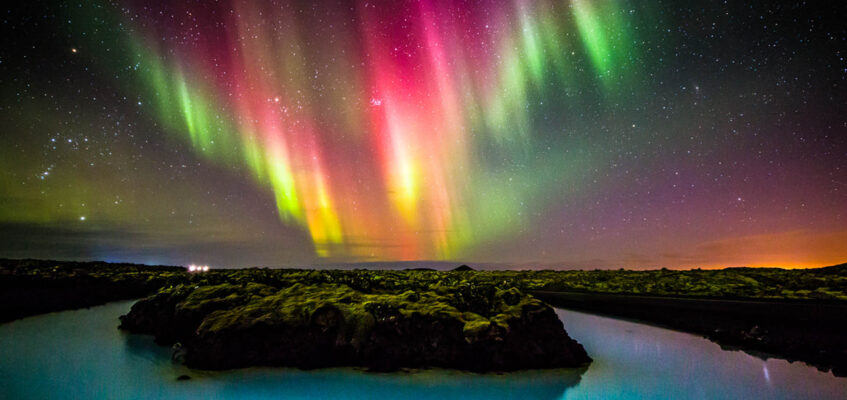
The most common color of the Northern Lights is green, which is why it appears in most of the stunning photos you’ll see. In reality, though, the aurora can appear in many different colors — including pink, purple, red, and blue — making this natural phenomenon even more magical and captivating to witness in person.
Green Aurora (100–250 km – Oxygen atoms)
The green aurora is the one most people recognize — those glowing emerald curtains that fill the sky in photos. It happens when particles from the sun collide with oxygen in Earth’s atmosphere at mid-altitudes. To the naked eye, this often looks like a soft, pale green shimmer, but through a camera lens, it bursts into brilliant shades of emerald and yellow-green.

Red Aurora (Above 250 km – Oxygen atoms)
The red aurora is the rarest and most mysterious of all. It appears high above other aurora colors, glowing in deep crimson or ruby tones. Red auroras form when solar particles reach oxygen at the very highest altitudes. They usually occur only during strong solar storms — and while they can be faint to the naked eye, cameras reveal their striking, otherworldly beauty.

Purple & Blue Aurora (Below 100 km – Nitrogen molecules)
At the lower edges of powerful aurora displays, the lights can take on beautiful purple and blue tones. These colors appear when solar particles collide with nitrogen closer to Earth’s surface. Often blending with green, they create dazzling, multicolored skies. These shades can be hard for human eyes to see clearly, but cameras capture them in stunning detail.
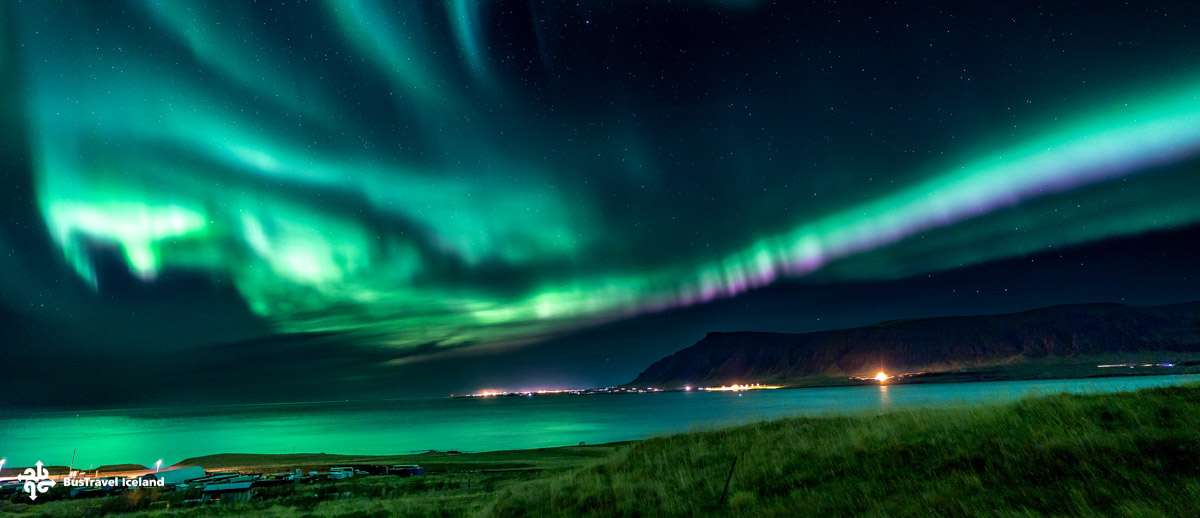
Why Cameras See More Colors Than Our Eyes
When you look up at the Northern Lights, you might see a soft, pale green glow — but then your camera captures a sky bursting with vivid greens, purples, and reds. So, what’s going on?
Our eyes aren’t very good at seeing color in the dark. At night, they rely on special “rod” cells that are great at detecting movement and light, but not color. That’s why the aurora often looks faint or whitish to us, even when it’s quite bright.
Your camera, however, works differently. With a long exposure of just a few seconds, it can collect light over time — something our eyes can’t do. This allows the camera sensor to reveal the aurora’s true colors and richness, turning what you see as a gentle glow into a dazzling, multicolored masterpiece.

────────────────────────────────────────
Read more about how to take photos of the Northern Lights
────────────────────────────────────────
Types of the Northern Lights
The Northern Lights dance across the Arctic sky in dazzling shapes and patterns, each telling its own story about the sun’s activity. Discover how to recognize these formations and see the aurora like never before.
Rays & Curtains
The most dramatic aurora display — vertical pillars of light that shoot upward like curtains dancing in the wind. These shapes can move quickly across the sky and usually signal strong auroral activity. Rays form when electrons follow Earth’s magnetic field lines straight toward the planet, creating breathtaking, dynamic patterns.

Arcs
The most common type of aurora, appearing as smooth, horizontal bands stretching across the horizon. Arcs are typically calm and steady, often marking the start of auroral activity. They are easy to photograph and often act as a preview for more energetic displays later in the night.

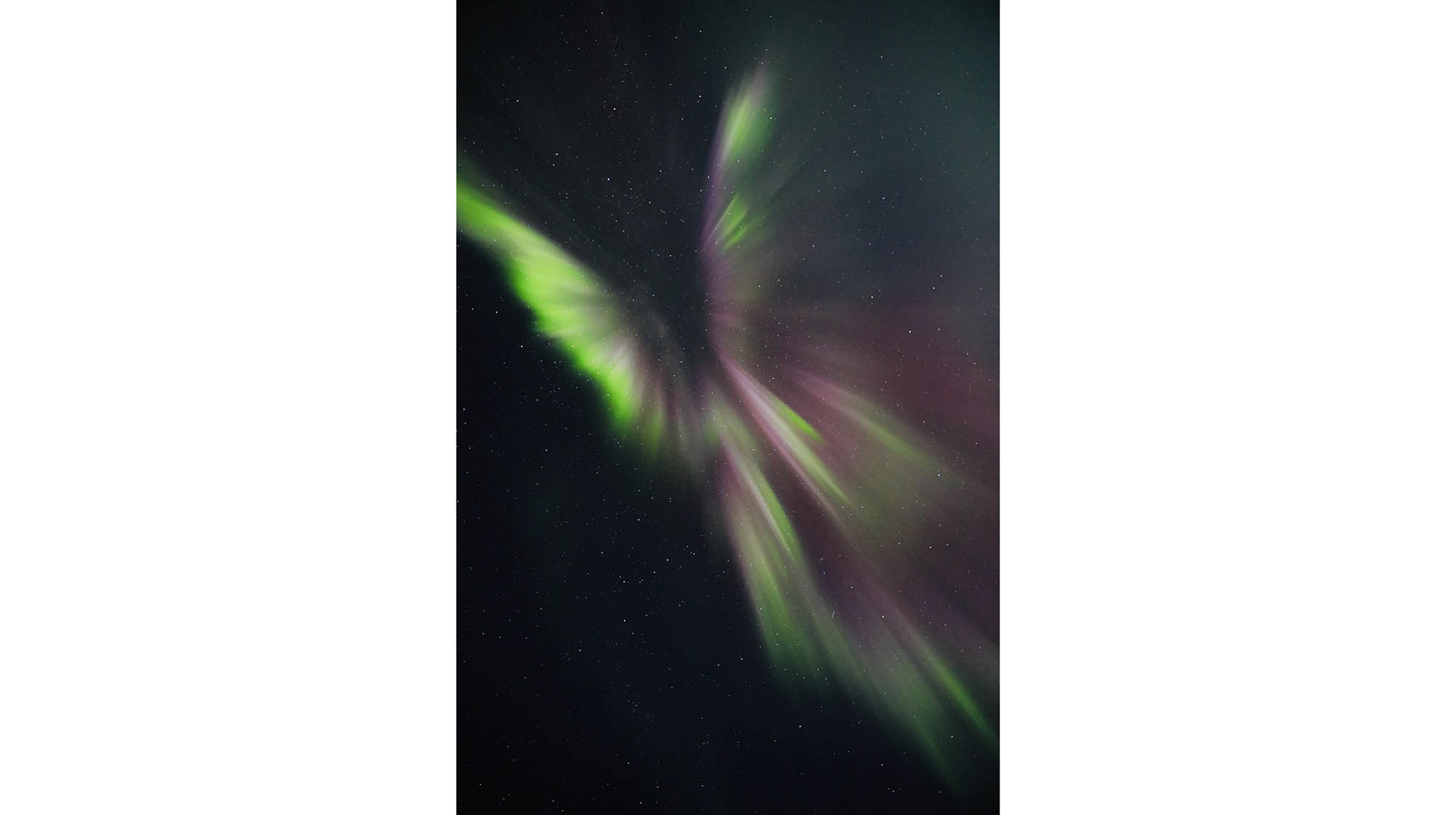
Corona
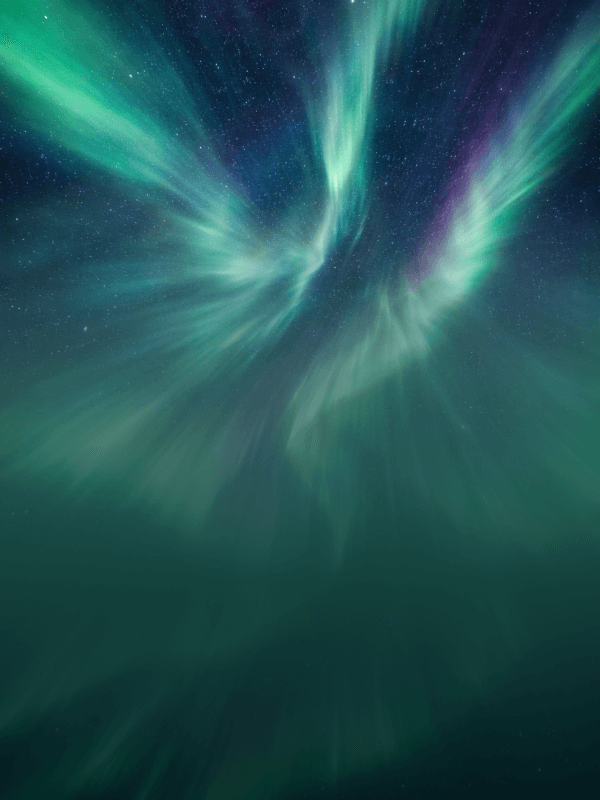
The ultimate aurora experience — a stunning circular formation that seems to radiate from directly overhead. This happens when you’re standing beneath an auroral arc, making all the rays appear to converge at a single point above you. Coronas are rare and indicate you’re in the perfect spot during peak activity — a truly unforgettable sight.
Diffuse Glow
A subtle, soft glow spreading across the sky without defined shapes. Though less dramatic than rays or coronas, diffuse auroras can cover vast areas and sometimes evolve into more active displays. They have a gentle, milky appearance and are common during periods of lower auroral activity.

Watching the Aurora Change
Most aurora displays start as calm arcs and gradually change into different shapes as activity increases. On our tours, we track real-time data to position ourselves in the best spots to witness these transformations. The most breathtaking shows often combine several forms at once, creating a truly unforgettable light performance across the Icelandic sky.
──────────────────────────────────
Good to Know about the Northern Lights in Iceland
──────────────────────────────────
Northern Lights: Myths, Legends, and Living Stories
For centuries, the Northern Lights have captured human imagination, inspiring myths, legends, and stories across cultures. In Norse mythology, the shimmering colors of the aurora were believed to be Bifröst, the glowing rainbow bridge connecting Earth to the home of the gods, or the reflections from Valkyries’ shields guiding fallen warriors to Valhalla. The indigenous Sami people of Northern Scandinavia saw the lights as the souls of the departed, urging quiet respect to avoid attracting the spirits’ attention. In Finnish folklore, the aurora is called revontulet, or “fox fires,” born from a magical arctic fox whose tail sparks the sky as it races across the fells. Inuit communities in Alaska and Canada imagined the lights as ancestral spirits playing ball across the heavens or carrying torches to guide souls between worlds.
Even today, in Iceland, the aurora continues to inspire both tradition and personal stories. Old tales speak of lights reflecting off schools of herring, guiding fishermen to the best catches, while modern travelers describe life-changing moments of awe, sharing first kisses, capturing unforgettable photographs, and connecting with strangers as the sky comes alive with color. Across time and cultures, the Northern Lights remain a bridge between the natural and the mystical, a celestial spectacle that continues to enchant everyone who witnesses it.

──────────────────────────────────────
Learn more about the Northern Lights folklore in Iceland
──────────────────────────────────────
How to Get Ready for the Northern Lights Hunt
Dress warmly
To fully enjoy your Northern Lights adventure, it’s important to dress warmly. Layering is key, so wear multiple layers of thermal clothing with a waterproof outer layer to stay dry. Don’t forget a warm hat, gloves, scarf, and insulated, waterproof boots to keep cozy while spending hours outside in Icelandic winter nights.
Prepare your camera or smart phone
For capturing the experience, modern smartphones take excellent photos, but a sturdy tripod and extra batteries are recommended — the cold can drain them quickly. Your guide is also happy to take photos for you, so you can focus on enjoying the moment.
What to Expect
Expect an evening filled with adventure and fun in Icelandic nature. The tour lasts around four to five hours, with pick-up starting at 8:00 PM for the earliest departures. Guests actively participate in the hunt, learning how to track the lights while enjoying hot chocolate, music, and lively company.
Important to Know
Keep in mind that the Northern Lights are a natural phenomenon, so sightings cannot be guaranteed. Tours are weather-dependent, but in case the aurora doesn’t appear, you’re eligible for one free rebooking. The experience is as much about the journey and the thrill of the hunt as it is about witnessing the lights themselves, creating memories you’ll never forget.

Want to Have Fun Helping Us Chasing the Northern Lights?
On our tours, we encourage everyone to join the hunt. More eyes on the sky greatly improve our chances of spotting the aurora at its earliest stage, giving us extra time to reach the best locations with minimal light pollution. Don’t hesitate to speak up if you notice something unusual — we’d rather check a false alarm than miss the show!
The Northern Lights often start subtly, so the sooner we notice them, the better our chances of finding the perfect viewing spot. Here’s what to watch for while we drive and scan the skies:
Early auroras can look like clouds that don’t move. Unlike ordinary clouds drifting with the wind, these faint formations often stay stationary along the northern horizon, especially on clear nights.
Pay attention to the pale green or gray glow. To the naked eye, the lights may appear as a subtle whitish-gray or very faint green. It can be so delicate that you might doubt what you’re seeing — trust your instincts, and point it out if something looks unusual.
Another clue is stars dimming behind the glow. If stars appear slightly obscured or less bright in one part of the sky while remaining vivid elsewhere, it’s often a sign that the aurora is forming in front of them.
Keep your eyes on the northern horizon. Auroras usually begin as a faint arc along the horizon before gradually intensifying and spreading overhead. Occasionally, early activity may also appear slightly to the east or west, so scanning the full skyline helps.
Using your phone camera can be a helpful trick. Even a short 2–3 second exposure in night mode can reveal aurora activity that your eyes might miss. If your camera shows green where you see gray, you’ve likely spotted it!
Watch for subtle movement or flickering within the glow. While clouds drift uniformly, auroras pulse, shimmer, and have internal structure — even when faint. This dynamic behavior is one of the most reliable indicators of early aurora formation.

Book Your Northern Lights Adventure Now
Share your experience with others.