



Top 10 Must See Waterfalls in Iceland
- Good to Know, Waterfalls
- 3 Mar 2026
Iceland's reputation is built upon the breathtaking waterfalls that adorn this island nation, and in this guide, we invite you on a captivating visual expedition to explore the top 10 must-visit cascades...
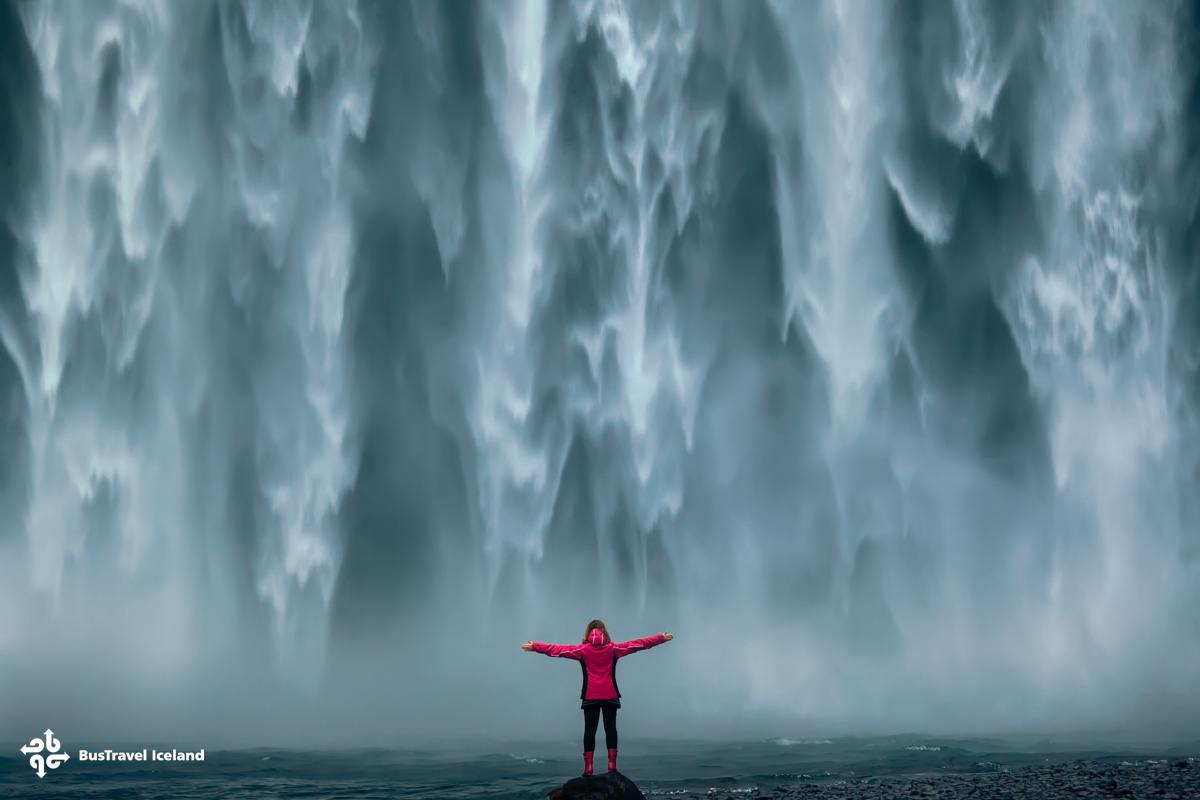
Welcome to Iceland! If you’re visiting this beautiful and magnificent country for the first time, you’re in for an unforgettable experience. To help you make the most of your trip, we’ve created a countdown of the Top 10 must-see waterfalls in Iceland—natural wonders you won’t want to miss during your stay. Whether you’re a devoted waterfall chaser or simply exploring Iceland’s breathtaking landscapes, it’s impossible to deny the tranquility, beauty, and raw power these majestic waterfalls offer.
10. Dettifoss waterfall
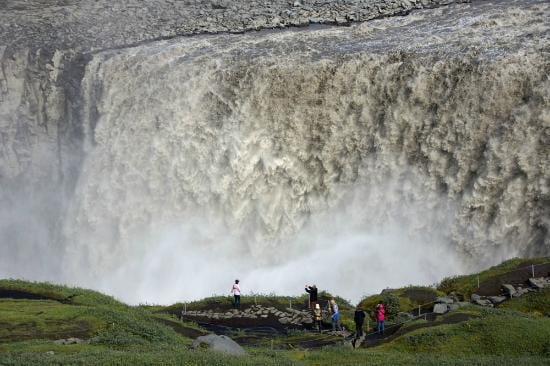
MEANING: Detti (Fall or fall down) Foss (waterfall) ….Not the most creative name choice.
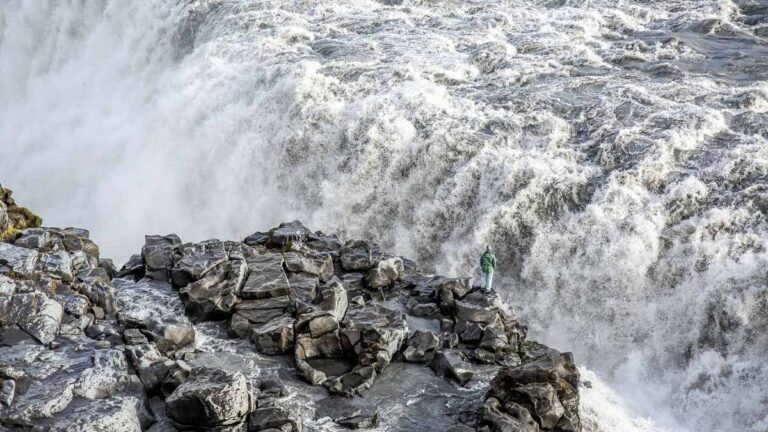
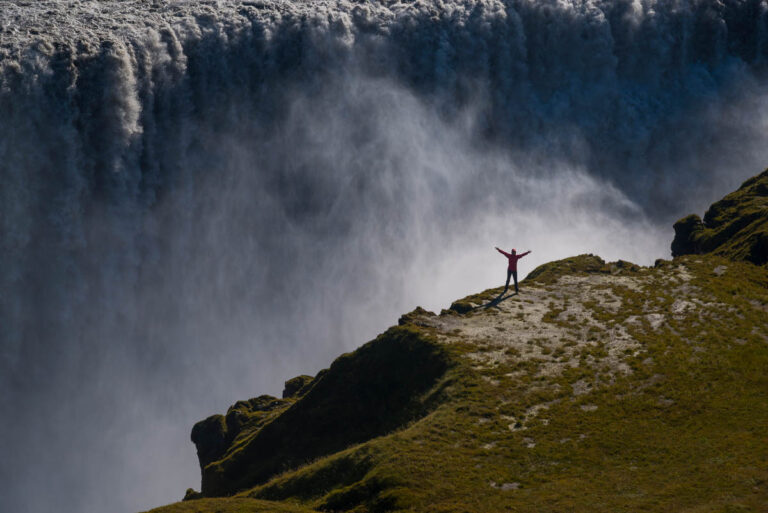
FACT: Dettifoss is Europe’s most powerful waterfall. This waterfall runs from the Vatnajökull glacier.
LOCATION: Vatnajökull National Park in Northeast Iceland
NEED TO KNOW: From the parking lot it’s a 30 minutes walk. By the time you reach the falls, you will be completely drenched by the drops and mist blown away from the waterfall… don’t forget your waterproof!
Tours visiting Dettifoss waterfall
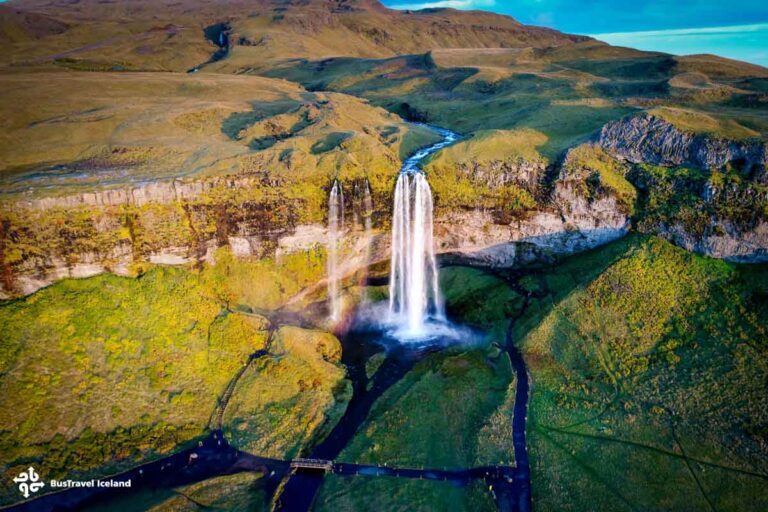
Not far from Dettifoss, there lies Selfoss waterfall, just about one kilometer (0.6 miles) upstream from Dettifoss in northeast Iceland. Both waterfalls are formed by the same glacial river, Jökulsá á Fjöllum, which flows from Selfoss directly into the dramatic drop of Dettifoss through the same canyon. Together, they are part of the same powerful river system within Vatnajökull National Park, creating one of Iceland’s most impressive waterfall landscapes.
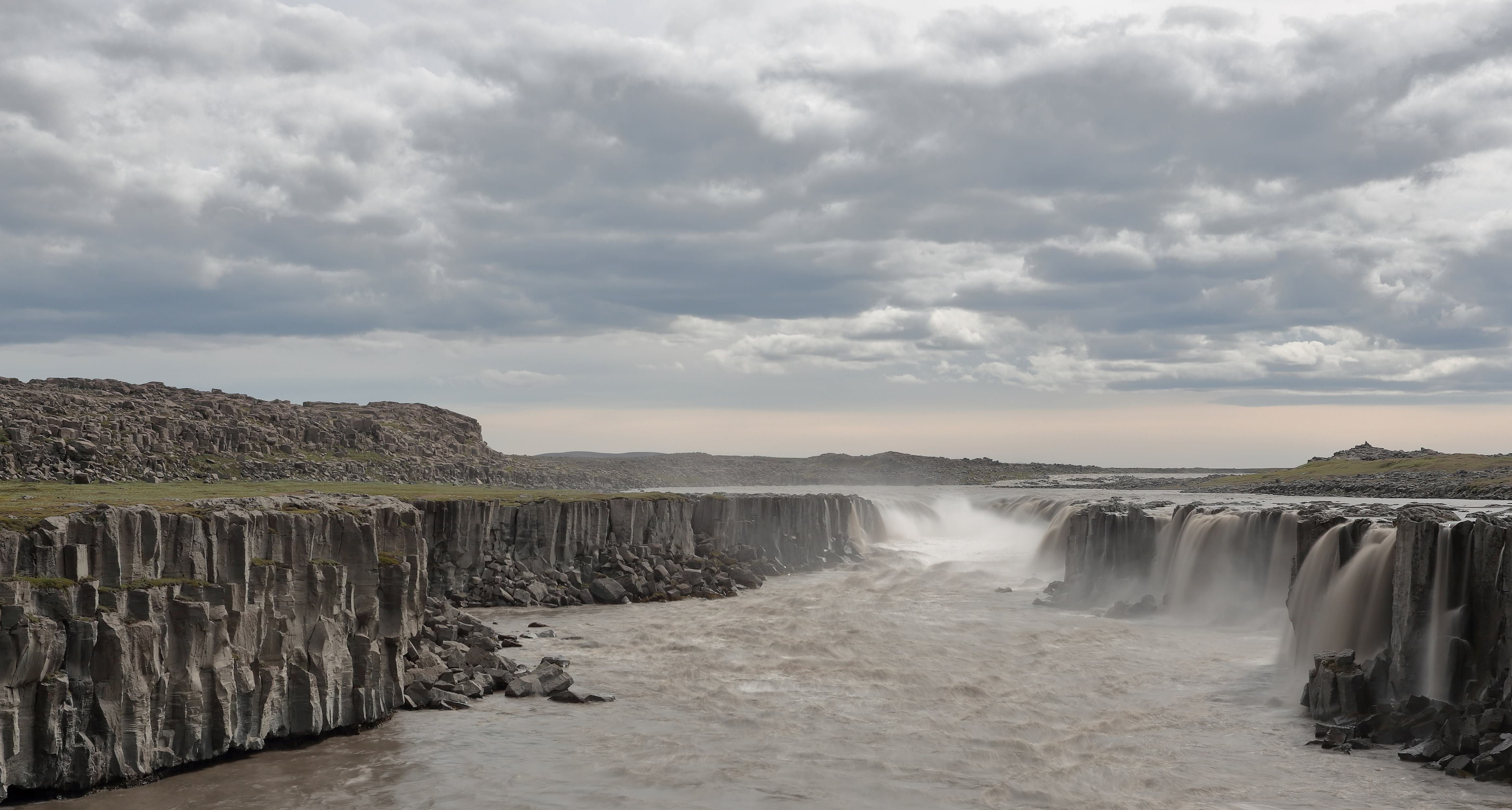
Selfoss waterfall
MEANING: Not a sure meaning behind the name but the Town is named after it.
FACT: It is a horseshoe-shaped waterfall, the falls are not very high (11 meters) but gorgeous.
LOCATION: On the river Jökulsá á Fjöllum in the north of Iceland, inside the Vatnajokull National Park
NEED TO KNOW: There is a short straightforward walking path upstream of Dettifoss. Many people will stop at Dettifoss and go no further …
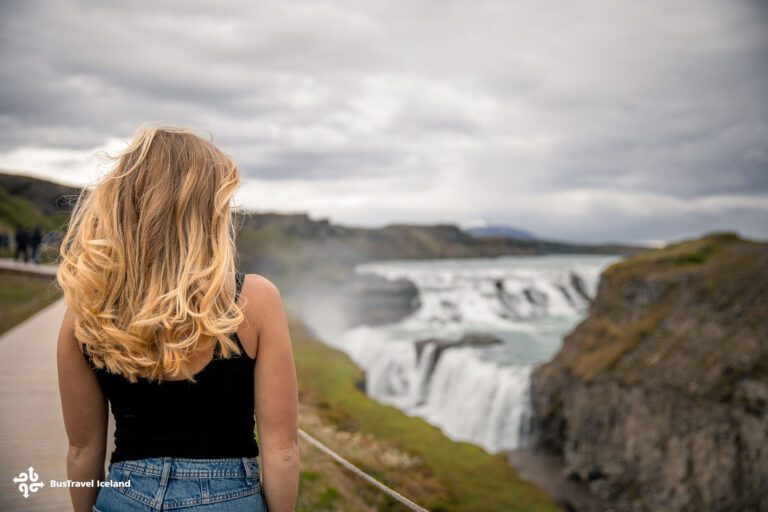
9. Gullfoss waterfall
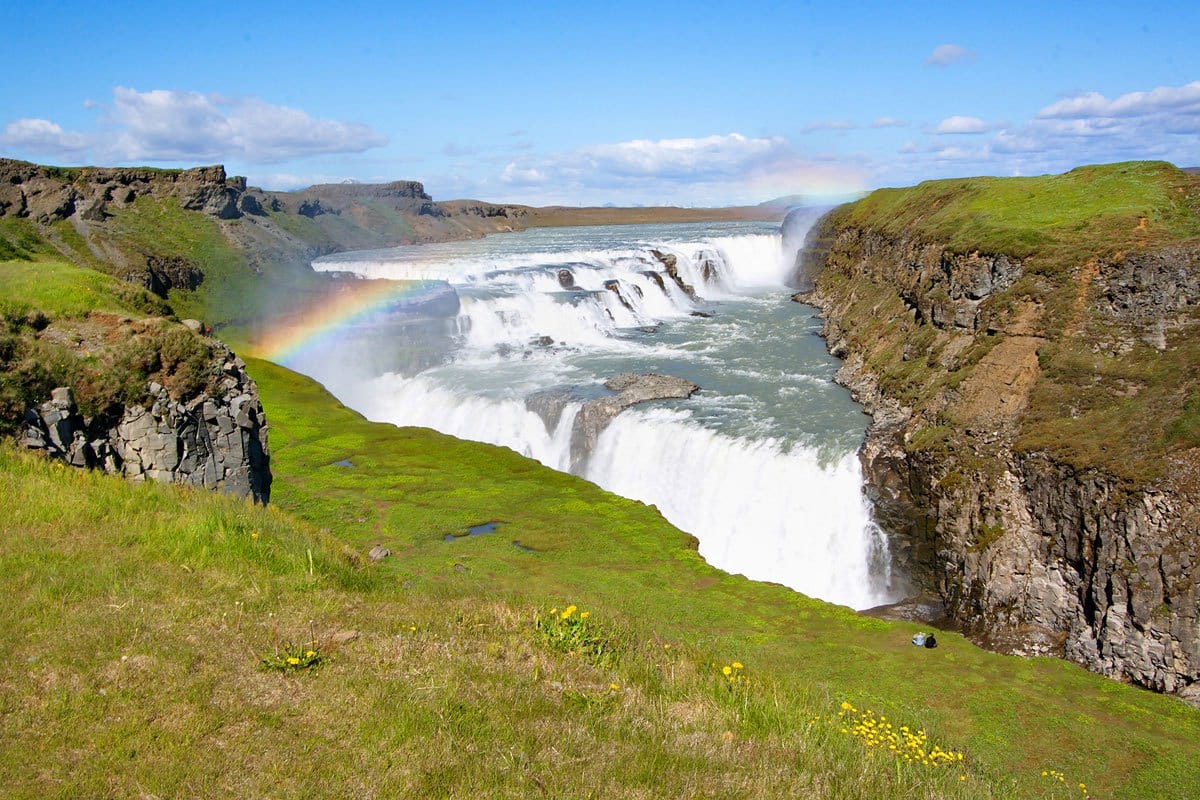
MEANING: “the Golden falls”
FACT: Gullfoss waterfall is the most visited waterfalls of the whole country, as part of the “Golden Circle”
LOCATION: Hvítá river in Southwest Iceland
NEED TO KNOW:. A very slippery trail descends to the gorge carved out by the falls and leads to brinks of both the lower and upper tiers of Gullfoss. On sunny days, you can enjoy a shimmering rainbow over the falls. You will probably end wet from the mist generated by this powerful waterfall, but it’s worth it!
Tours visiting Gullfoss waterfall

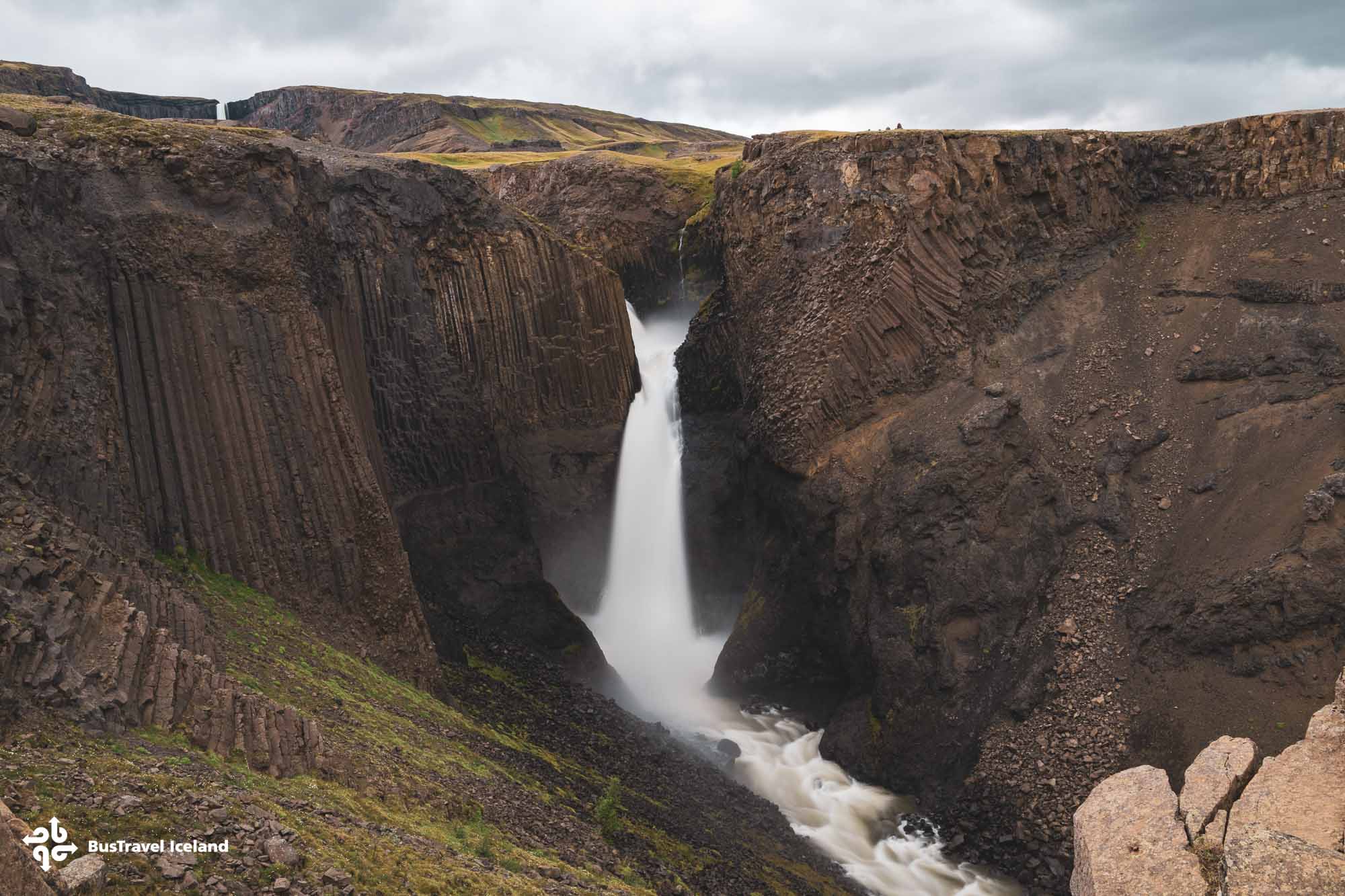
8. Hengifoss/ Litlanesfoss waterfalls
This is a two for one and for those experienced hikers.
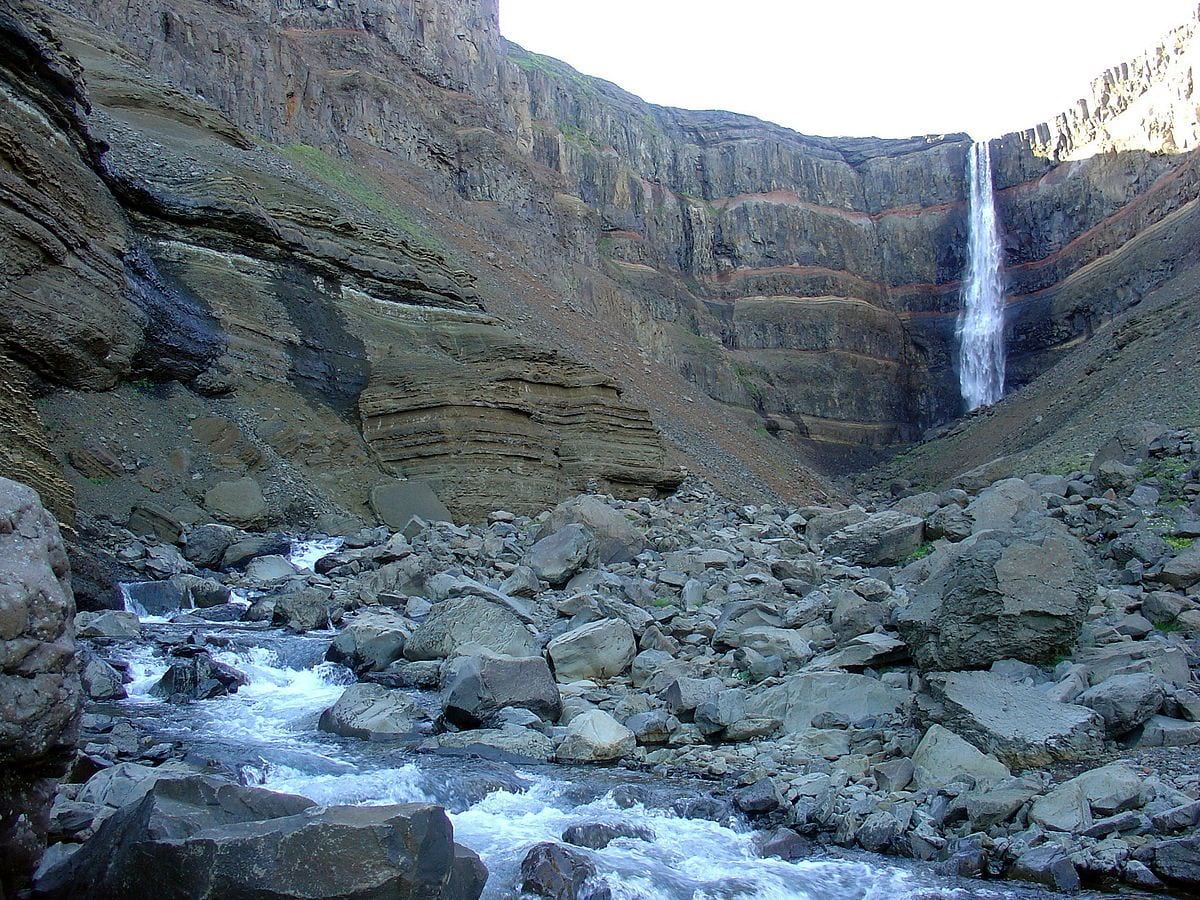
MEANING: Hengi “hanging“ Foss”waterfall“
FACT: The top of Hengifoss is about 450 meters above the sea level making this one of the highest waterfalls in the country.
LOCATION: Hengifossá in Fljótsdalshreppur, East Iceland
NEED TO KNOW: To reach the waterfall, you have to pass near a first waterfall,Litlanesfoss, with its surrounding basalt columns, at 2 km from the car park. The hike seems short but it is quite steep!
Gufufoss waterfall
Gufufoss is located in East Iceland near Seyðisfjörður, while Hengifoss and Litlanesfoss lie about 25–30 kilometers away near Lake Lagarfljót. Although they are not directly connected by the same river system, all three waterfalls are part of the same scenic region of East Iceland and are often visited together on a day trip.

MEANING: “Gufu” means steam or vapor, and “Foss” means waterfall, referring to the mist that rises from the cascading water.
FACT: Gufufoss is a picturesque waterfall dropping about 27 meters, often compared in shape to Skógafoss, though on a smaller scale.
LOCATION: Along Road 93 near Seyðisfjörður, East Iceland.
NEED TO KNOW: The waterfall is easily accessible from the roadside with a short, gentle walk from the parking area, making it one of the most convenient waterfalls to visit in the region.
Tours visiting Gufufoss waterfall in East Iceland
7. Glymur waterfall
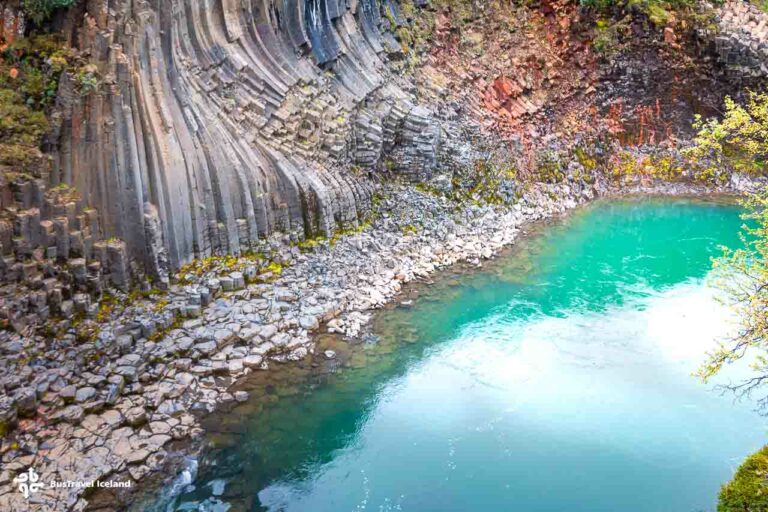
Glymur is a dramatic canyon waterfall once considered the tallest in Iceland, known for its scenic and adventurous hiking route.
MEANING: The name “Glymur” means rumbling or echoing sound, referring to the powerful noise of the waterfall in the narrow canyon.
FACT: With a drop of about 198 meters, Glymur was long regarded as Iceland’s highest waterfall before Morsárfoss was discovered.
LOCATION: At the end of Hvalfjörður fjord in West Iceland.
NEED TO KNOW: Best visited from late spring to early autumn (May–September), the 3–4 hour round-trip hike includes river crossings and steep sections, so sturdy shoes and good weather conditions are essential.

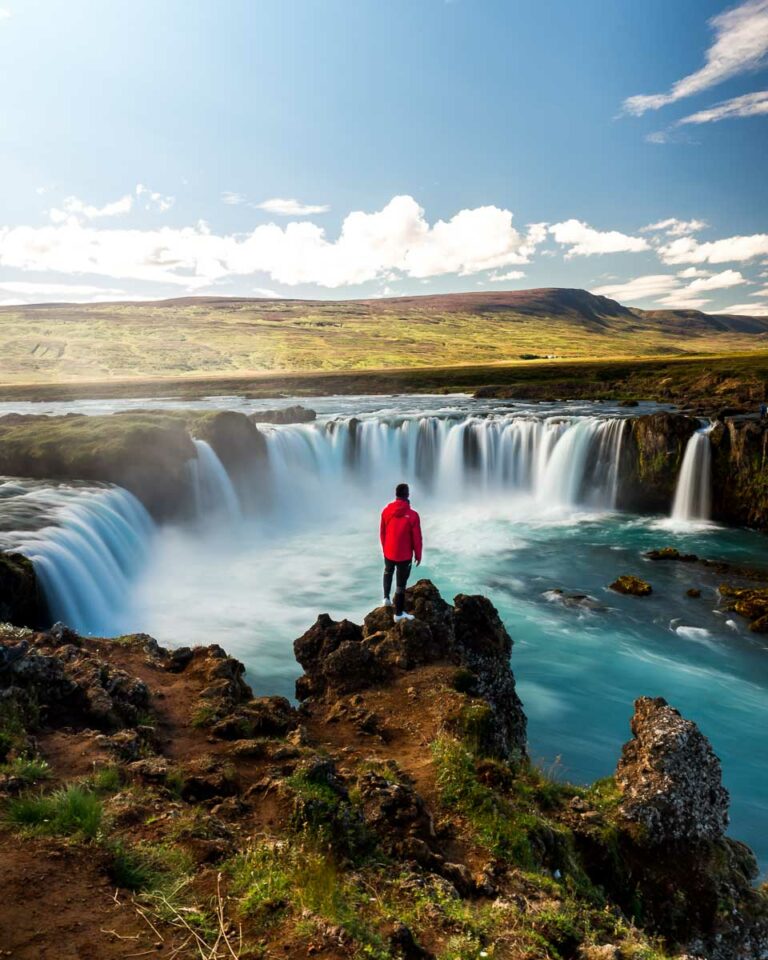
6. Goðafoss waterfall
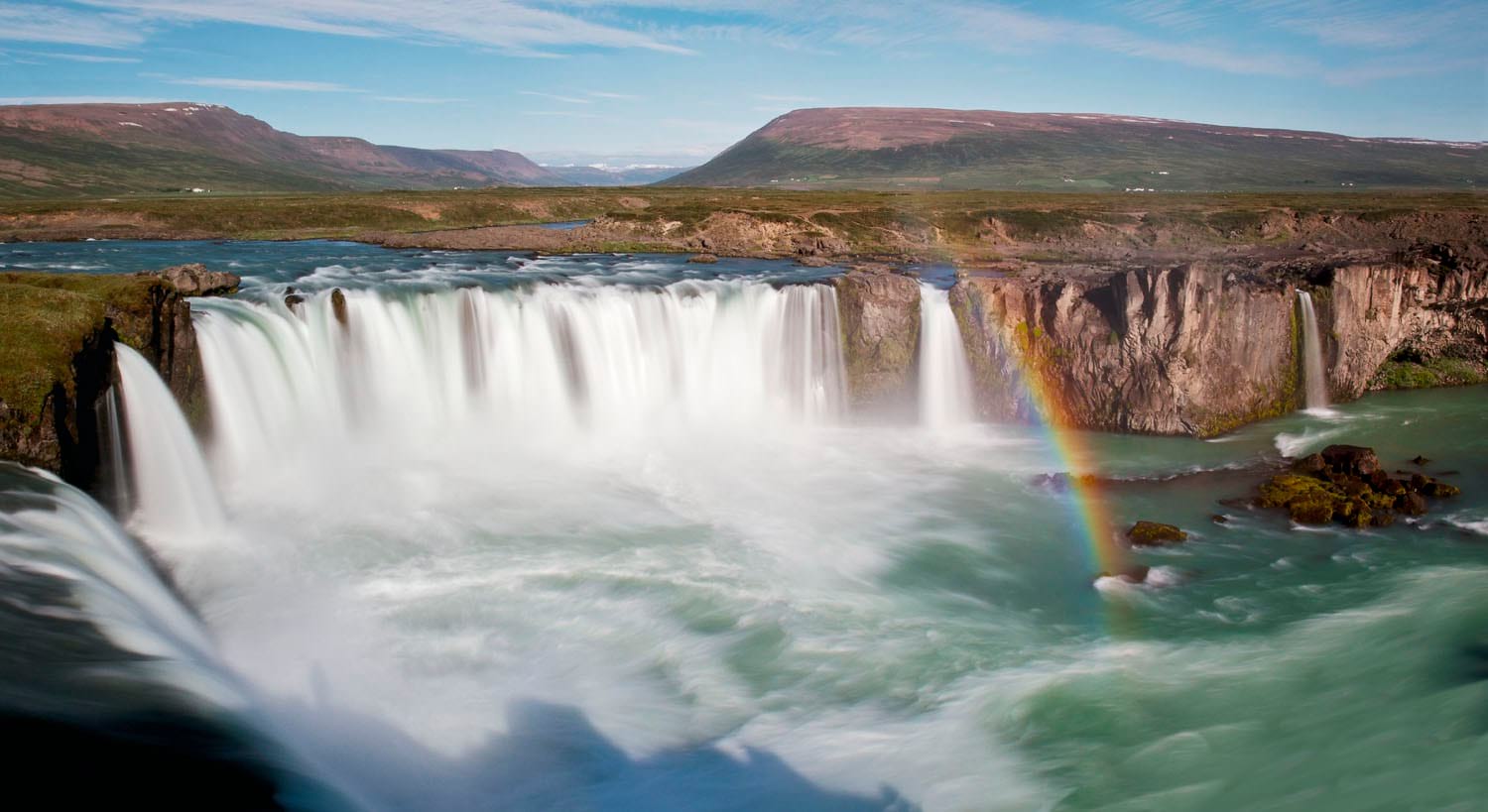
MEANING: ”the waterfall of the Gods”
FACT: Nicknamed by some locals as “The Beauty” in comparison to “The Beast” (which is Dettifoss).
LOCATION: Bárðardalur district of North-Central Iceland at the beginning of the Sprengisandur highland road
NEED TO KNOW: The east side offers the best views for photographers, with paths to the river base, and a good view of Geitafoss, Goðafoss´s little sister. On the west side you can reach the brink of the falls themselves, but due to the parking facilities, this side may be a little busier at peak times.
Tours visiting Godafoss waterfall
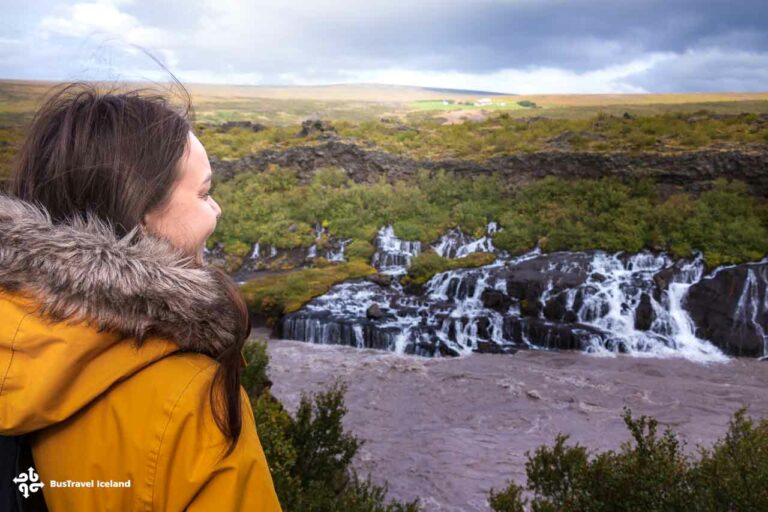
5. Hraunfossar waterfall
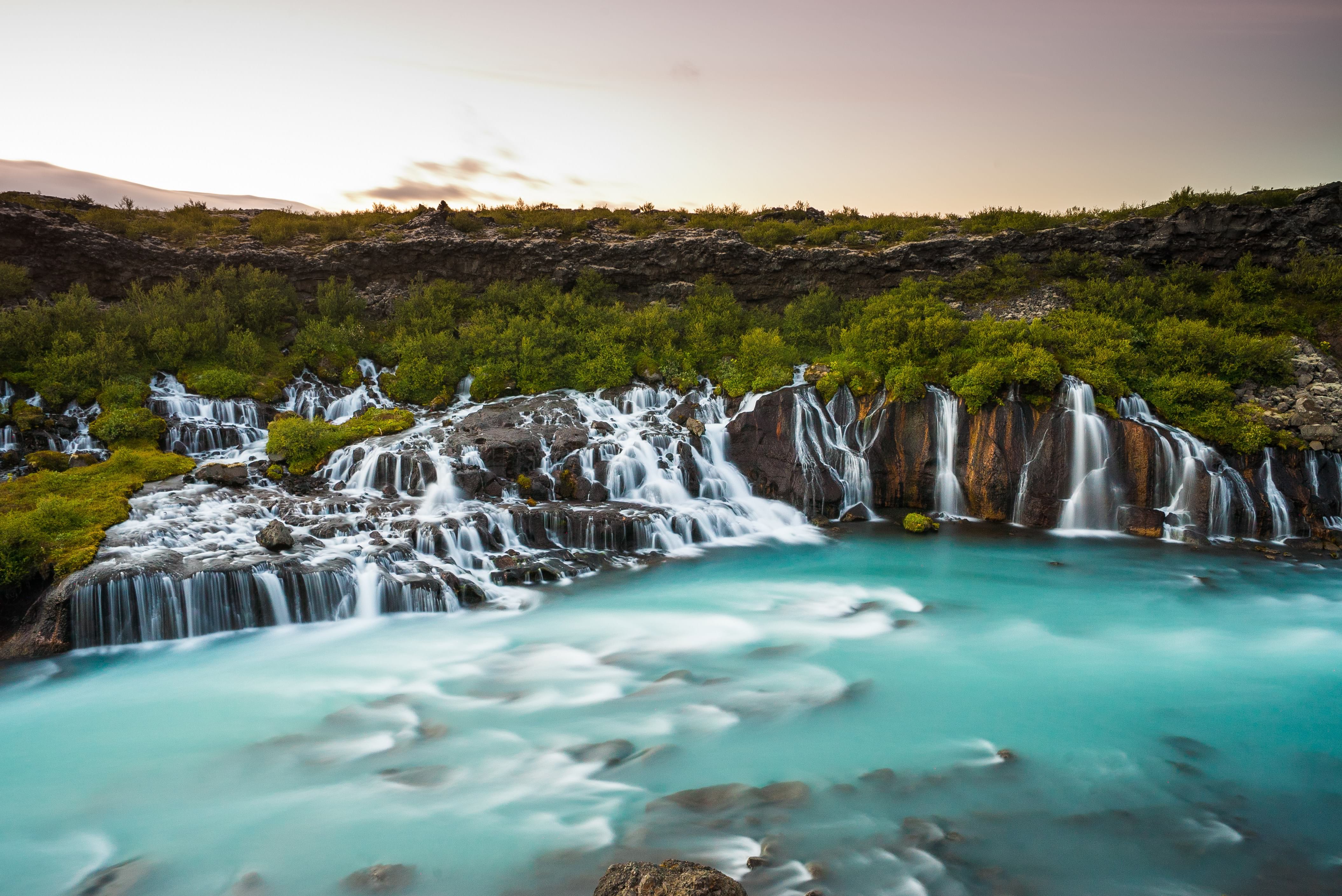
MEANING: ”lava falls”
FACT: Consists of countless springs of clear water emerging from under the edge of the Grahraun Lava Fieldand flowing into the Hvítá river
LOCATION: Highlands, six kilometers West of Húsafell
NEED TO KNOW: This is a very beautiful and not far off the roadside to go to. It is a 2 minute walk and looking at the bright blue water, you can imagine just how cold it is.
Barnafoss waterfall
Barnafoss is a powerful, fast-flowing waterfall known for its dramatic blue water rushing through a narrow lava canyon.
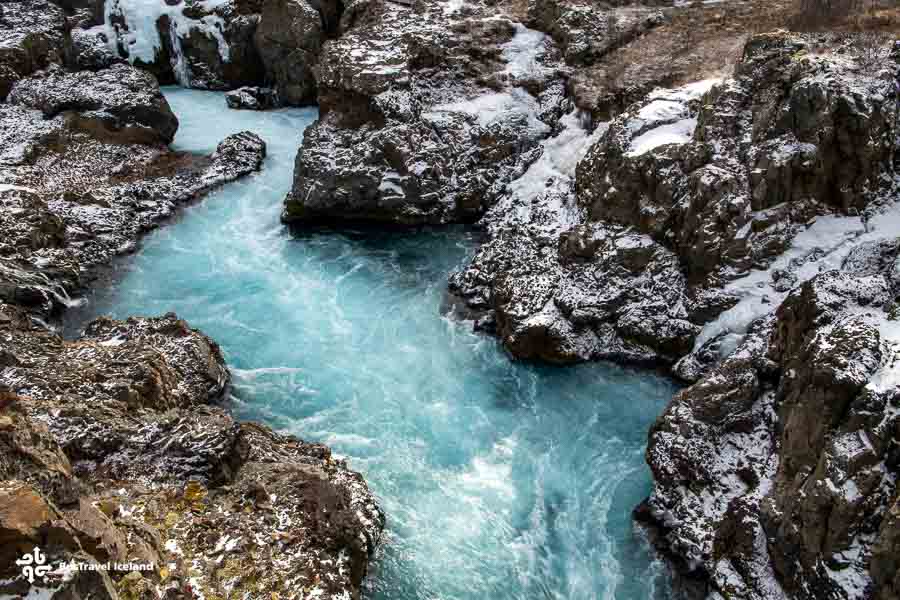
Barnafoss sits right next to Hraunfossar, and while Hraunfossar gently streams out of lava fields, Barnafoss surges turbulently through the same river system, creating a striking contrast side by side.
MEANING: “Barnafoss” means Children’s Waterfall, named after a local legend about two children who fell into the river.
FACT: Unlike traditional vertical waterfalls, Barnafoss is a series of powerful rapids twisting through a narrow volcanic rock channel.
LOCATION: On the Hvítá River in West Iceland, near Reykholt.
NEED TO KNOW: The waterfall is easily accessible from the parking area via short walking paths and viewing platforms, making it a quick and convenient stop year-round.
Tours going to Hraunfossar and Barnafoss waterfalls
4. Dynjandi waterfall
6 waterfalls, 1 stop!
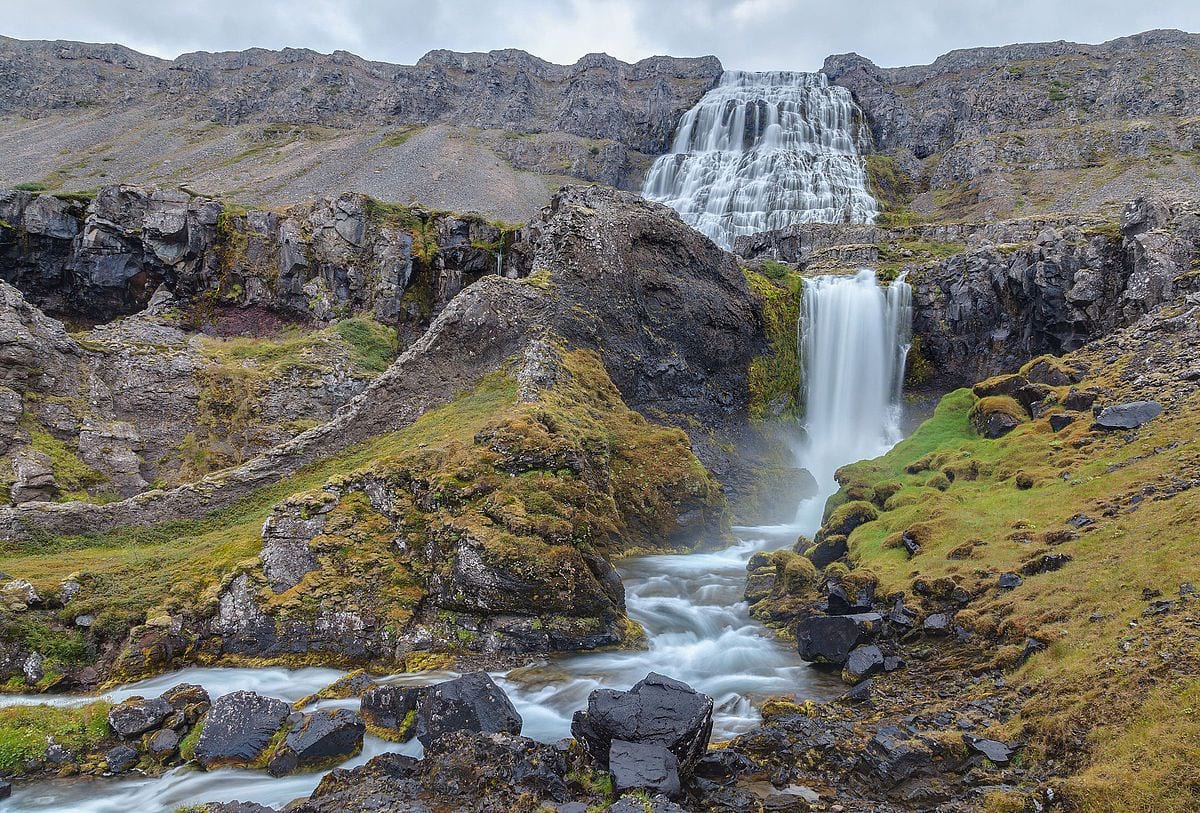
MEANING: ”the Mountain Falls”
FACT: This is in fact a series of waterfalls, with a cumulative height of 100 meters. 6 cascades connected the glacial water to the sea. The names of the other waterfalls are Hæstahjallafoss, Strompgljúfrafoss, Göngumannafoss,Hrísvaðsfoss, Hundafoss, and, Bæjarfoss.
LOCATION: Westfjords
NEED TO KNOW: This waterfall came from Dynjandisá river, a glacial river that dropped off a cliff, forming a bride’s veil shape waterfall that was approximately 30 meters wide at its top and 60 meters at its bottom. 45 minute hike to the top.
Tours visiting Dynjandi waterfall
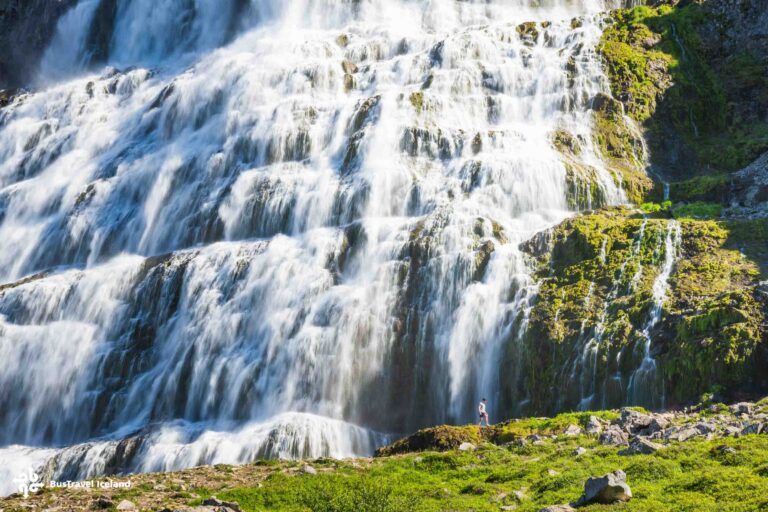
3. Háifoss waterfall
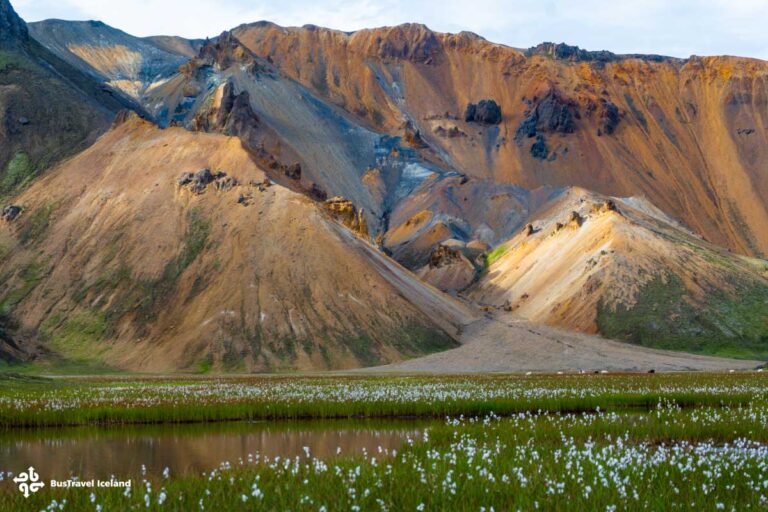
Háifoss is one of Iceland’s tallest and most dramatic waterfalls, plunging powerfully into a vast canyon in the highlands.
![Haifoss waterfall in Landmannalaugar Highlands [Photo by Danni Ardnt]](https://bustravel.is/wp-content/uploads/2025/11/Haifoss-waterfall-in-Landmannalaugar-Highlands-8802.jpg "Haifoss waterfall in Landmannalaugar Highlands-8802")
MEANING: “Háifoss” means High Waterfall, a direct reference to its impressive height.
FACT: With a drop of about 122 meters, Háifoss ranks among the tallest waterfalls in Iceland and sits beside another striking cascade, Granni.
LOCATION: On the Fossá River near Þjórsárdalur Valley in South Iceland.
NEED TO KNOW: Access requires driving a gravel highland road (4×4 recommended), and a short walk from the parking area leads to panoramic cliff-edge viewpoints—exercise caution near the steep edges.
Granni waterfall
Háifoss stands side by side with Granni, its narrower “neighbor” waterfall that flows into the same canyon, creating a dramatic twin-waterfall scene.

Hjálparfoss waterfall
Hjálparfoss and Háifoss are located about 35–40 kilometers (around 45 minutes by car) apart in Þjórsárdalur Valley. While they sit in the same region, they are on different rivers and offer very different scenery—Háifoss towering over a dramatic canyon and Hjálparfoss flowing gently between basalt columns.
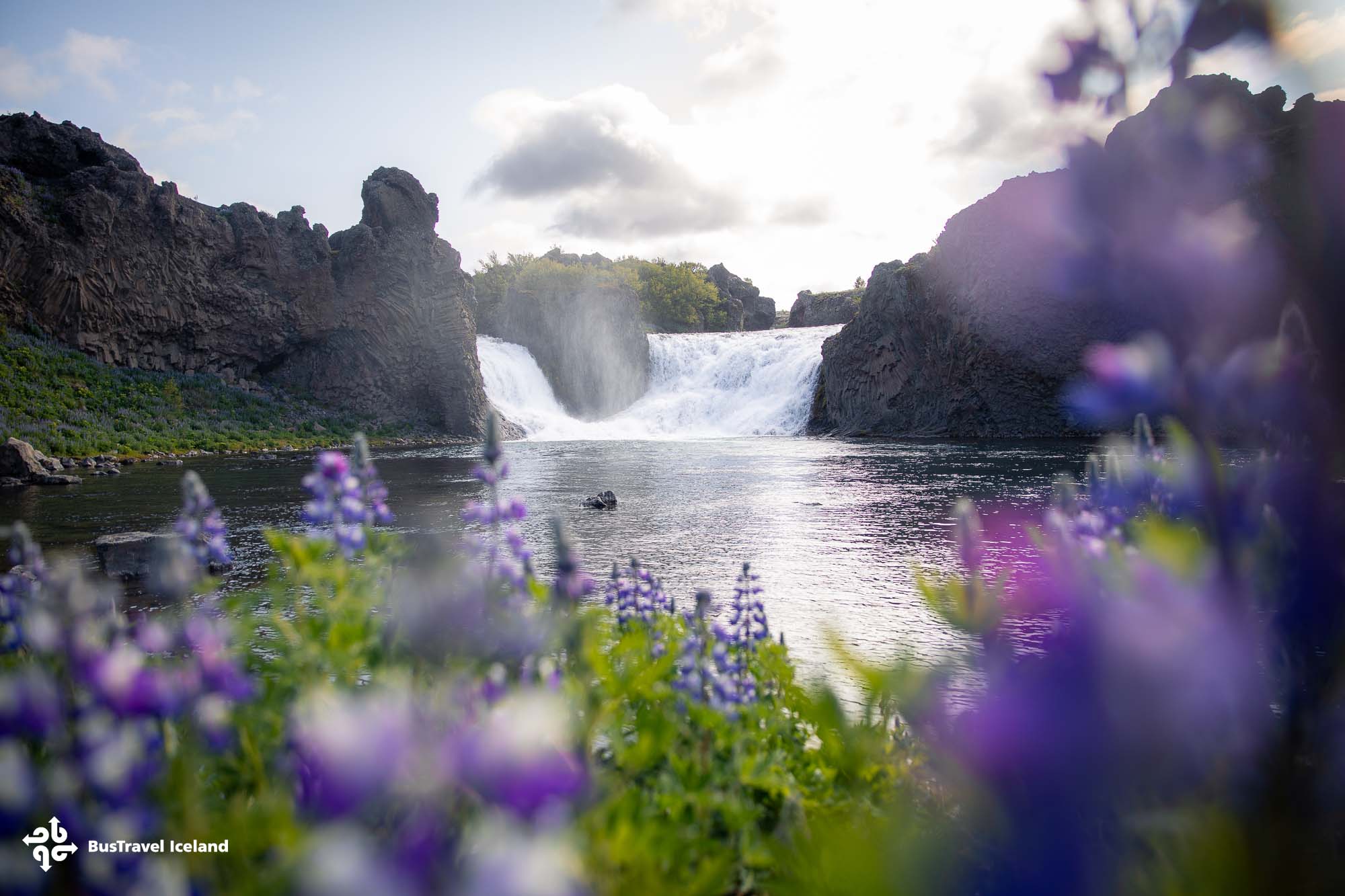
MEANING: “Hjálparfoss” means Help’s Waterfall, as it was a welcome sight for travelers crossing the harsh highlands in the past.
FACT: The waterfall features two side-by-side cascades that merge into a peaceful pool surrounded by basalt columns.
LOCATION: In Þjórsárdalur Valley, South Iceland, near the junction of the Fossá and Þjórsá rivers.
NEED TO KNOW: Easily accessible by road with a short walk from the parking area, Hjálparfoss is a convenient stop often visited together with Háifoss when exploring the region.
Tours visiting Haifoss waterfall
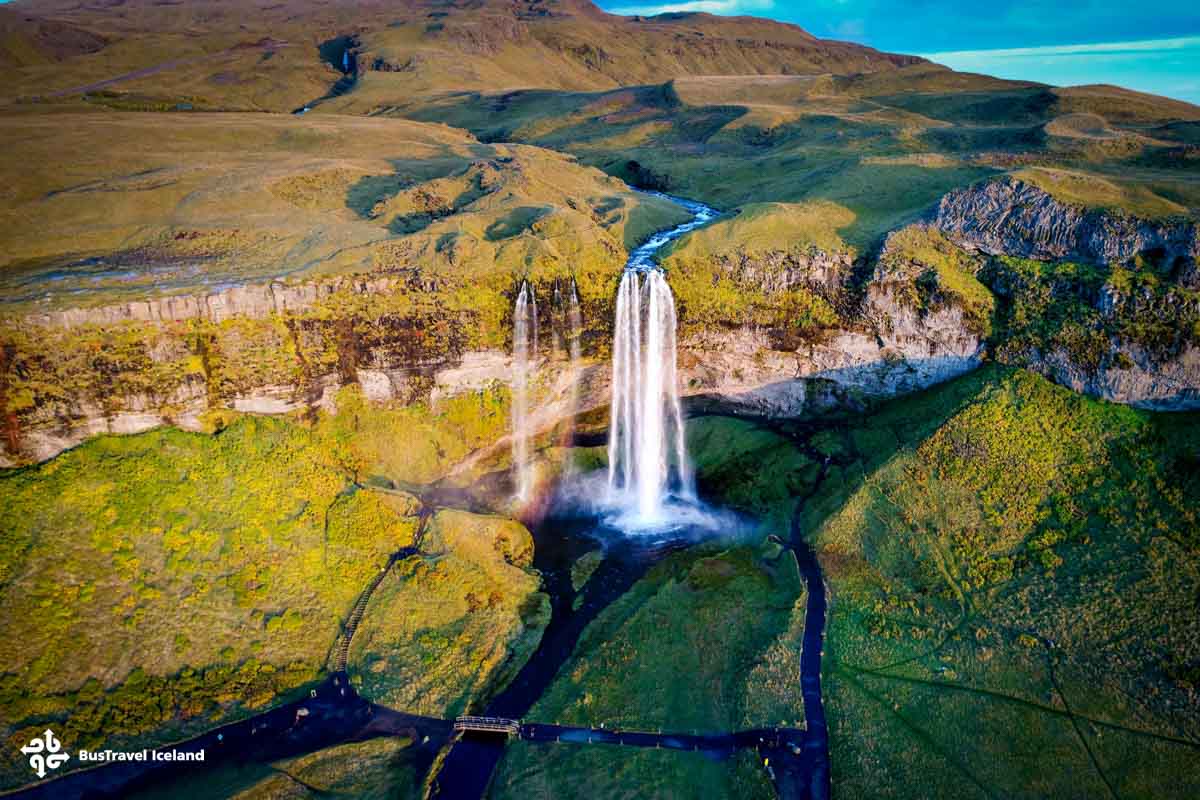
2. Seljalandsfoss waterfall
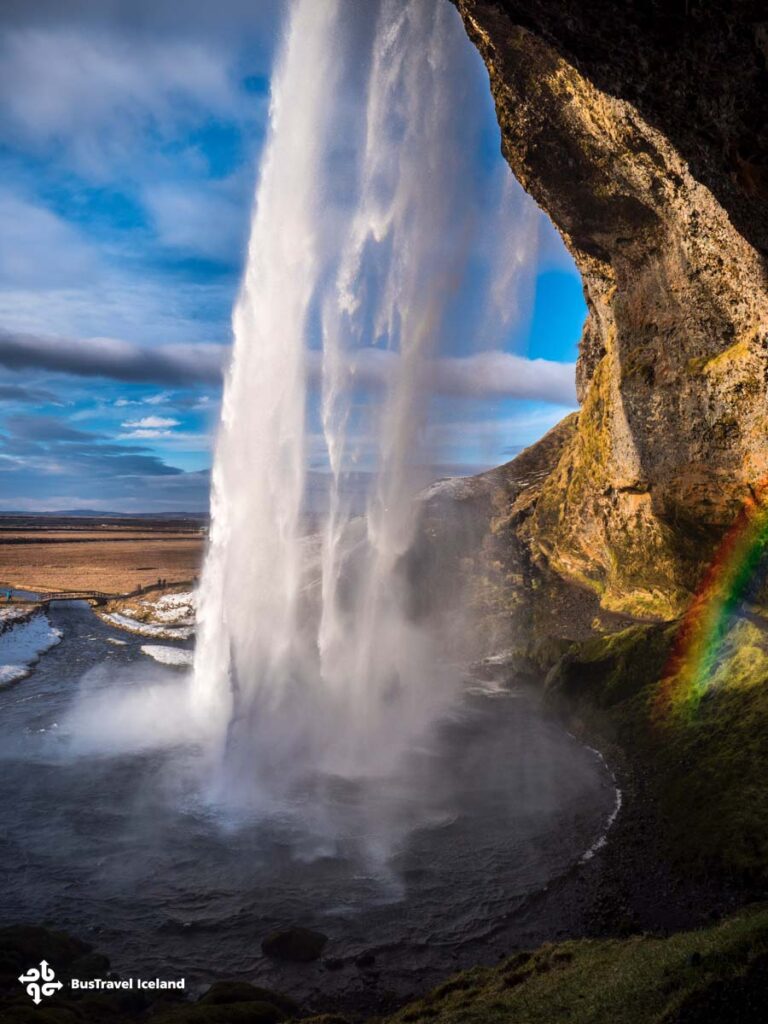
Seljalandsfoss is one of Iceland’s most iconic waterfalls, famous for the unique path that allows visitors to walk behind the cascading water.

MEANING: The name combines “selja” (farmstead or pasture) and “foss” (waterfall), referring to the farmland that once stood nearby.
FACT: The waterfall drops about 60 meters and is one of the few in Iceland where you can safely walk behind the water curtain.
LOCATION: Along the South Coast of Iceland, just off Route 1 between Hvolsvöllur and Skógar.
NEED TO KNOW: The path behind the waterfall can be slippery, especially in winter, so waterproof clothing and sturdy shoes are highly recommended.
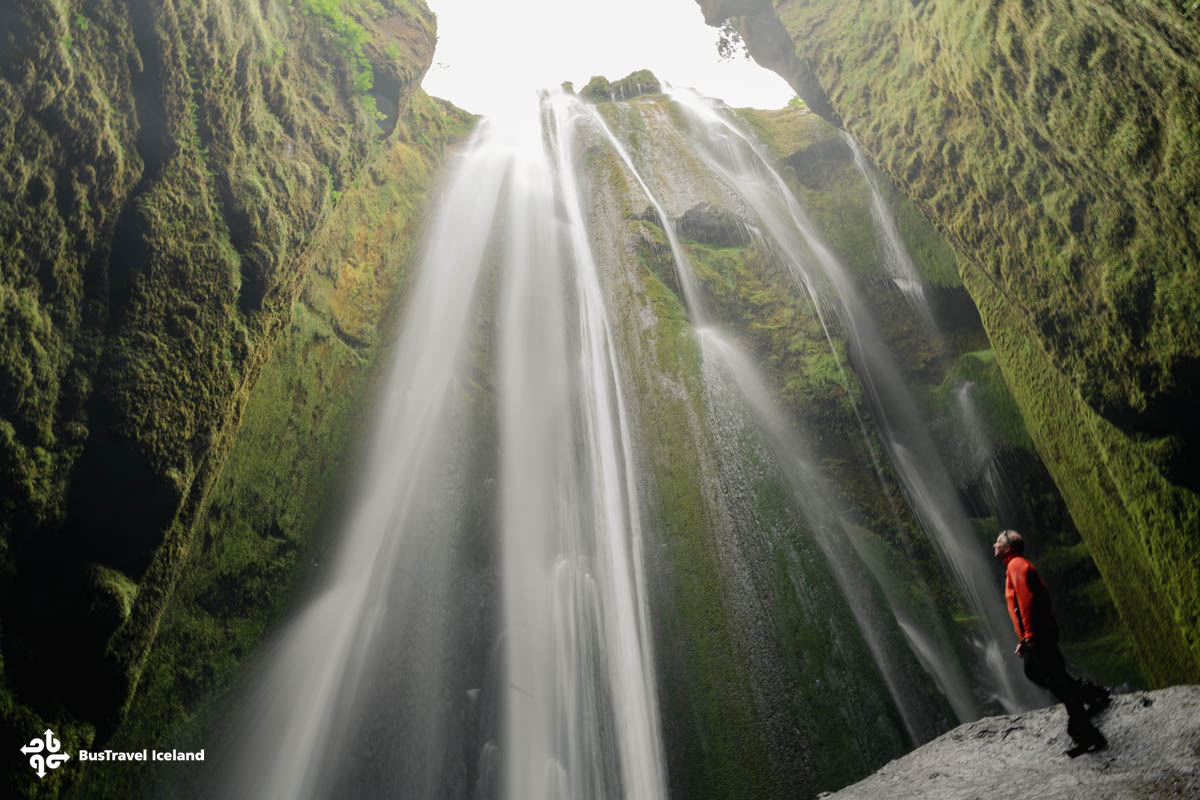
Gljúfrabúi
Just a short walk north of Seljalandsfoss lies Gljúfrabúi, a hidden waterfall partially concealed inside a narrow canyon fed by the same river.
Tours visiting Seljalandsfoss waterfall
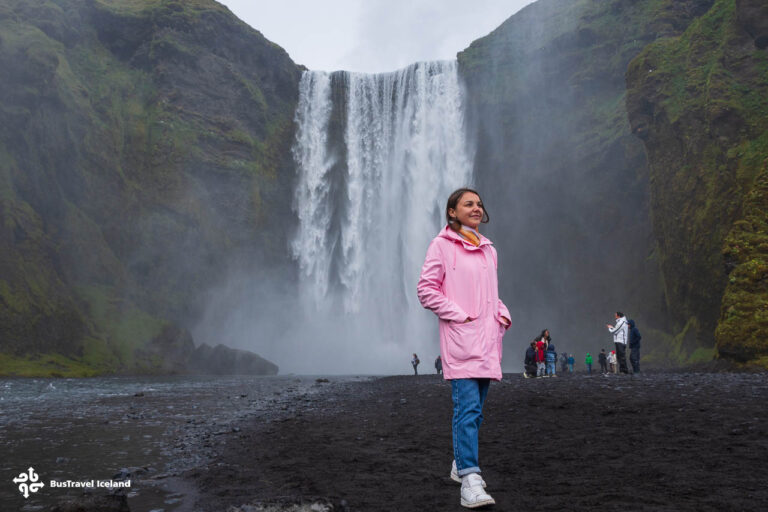
1 . Skógafoss waterfall
Skógafoss is a powerful and perfectly shaped waterfall on Iceland’s South Coast, famous for its wide cascade and frequent rainbows on sunny days.

MEANING: ”Forest waterfall”
FACT: Width of 25 meters and a drop of 60 meters.
LOCATION: South of Iceland
NEED TO KNOW: A trail leads to the top (via metal stairs to the right of the waterfall) and up to the Skógá river valley. Our most Iceland’s most beautiful and cherished waterfalls.