



Háifoss waterfall in Highlands of Iceland – Visit Stranger Things’ Finale Filming Location
- Iceland Highlands, Waterfalls
- 27 Jan 2026
![Haifoss waterfall in Landmannalaugar Highlands [Photo by Danni Ardnt]](https://bustravel.is/wp-content/uploads/2025/11/Haifoss-waterfall-in-Landmannalaugar-Highlands-8802.jpg)
The final waterfall scene in Stranger Things, Season 5 Finale, takes place not in a fictional world, but in Iceland. Filmed in a remote canyon in southern Iceland, the setting features Háifoss and its neighboring waterfall, Granni, two of the country’s most dramatic natural landmarks. This article explores the real location behind that unforgettable scene—where it is, how to get there, and why these waterfalls are every bit as powerful in real life as they are on screen.
Háifoss as a filming location in Stranger Things Season 5 Finale
As the final episode of Stranger Things aired, fans around the world were glued to their screens, saying goodbye to a story that had unfolded over nearly a decade. While opinions differed on how the final threat was resolved, one moment lingered above all others: Mike’s quiet narration at the end, offering a fragile sense of hope that Eleven might have survived and finally found peace.
That hope reached back to a childhood dream Mike once shared with Eleven—a distant, perfect place with three waterfalls, where danger could never reach them and life could be ordinary. It was a fantasy later dismissed as childish, too ideal to exist in the real world. And yet, in the closing moments of the series, that dream seemed to take shape.
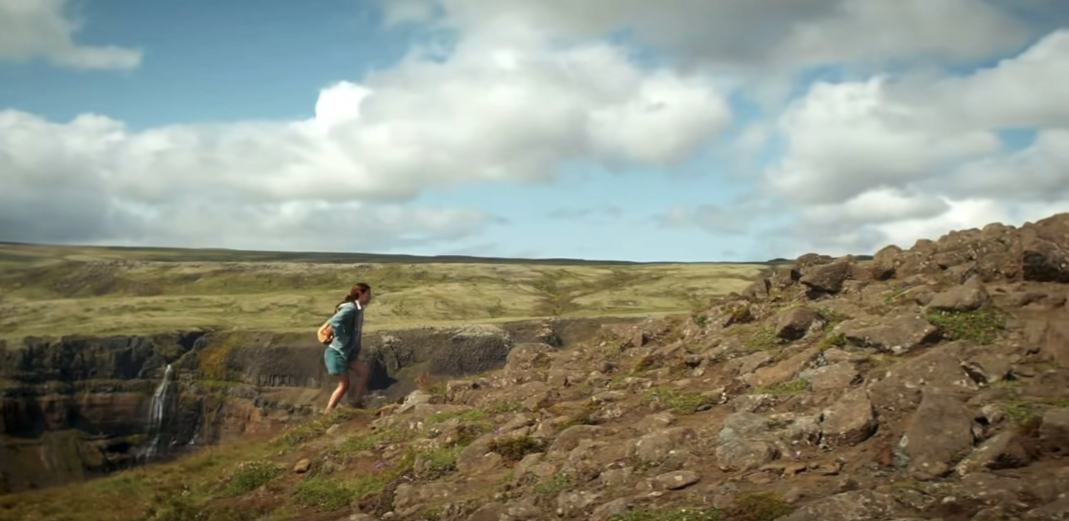
The camera follows Eleven as she hikes along a rocky mountain road, the landscape around her wide, empty, and silent. Then the perspective begins to lift. As the shot pulls back and rises, a vast volcanic canyon is revealed, cut deep into the earth, where two waterfalls plunge side by side into the depths below. Cliffs disappear into mist, falling water dominates the frame, and the scene hovers somewhere between imagination and reality.
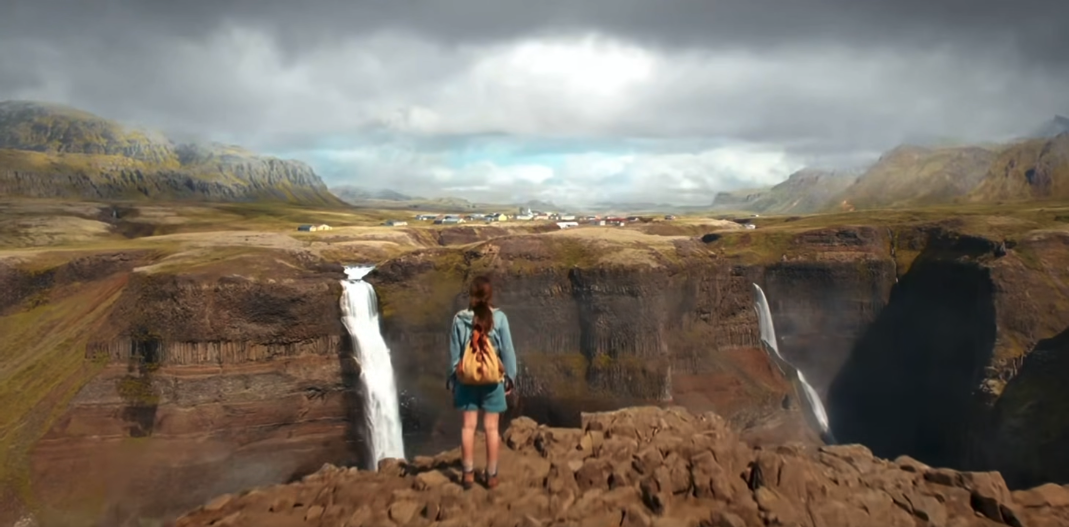
What many viewers did not immediately realize is that this place is real. The scene was filmed in Iceland, in the remote Þjórsárdalur valley of southern Iceland, and the waterfalls shown are Háifoss and its neighboring fall, Granni, plunging into a dramatic volcanic canyon at the edge of the highlands.
Viewers quickly began counting. Some saw only two waterfalls, not the three of their childhood dreams. Some pointed that a third, much smaller and unnamed stream-fed waterfall lies in close proximity, easily missed from the aerial angle. This detail reframed the debate, shifting it from symbolism toward geography, and suggesting that the long-imagined place of three waterfalls may have been grounded not in metaphor, but in the real landscape surrounding Háifoss.
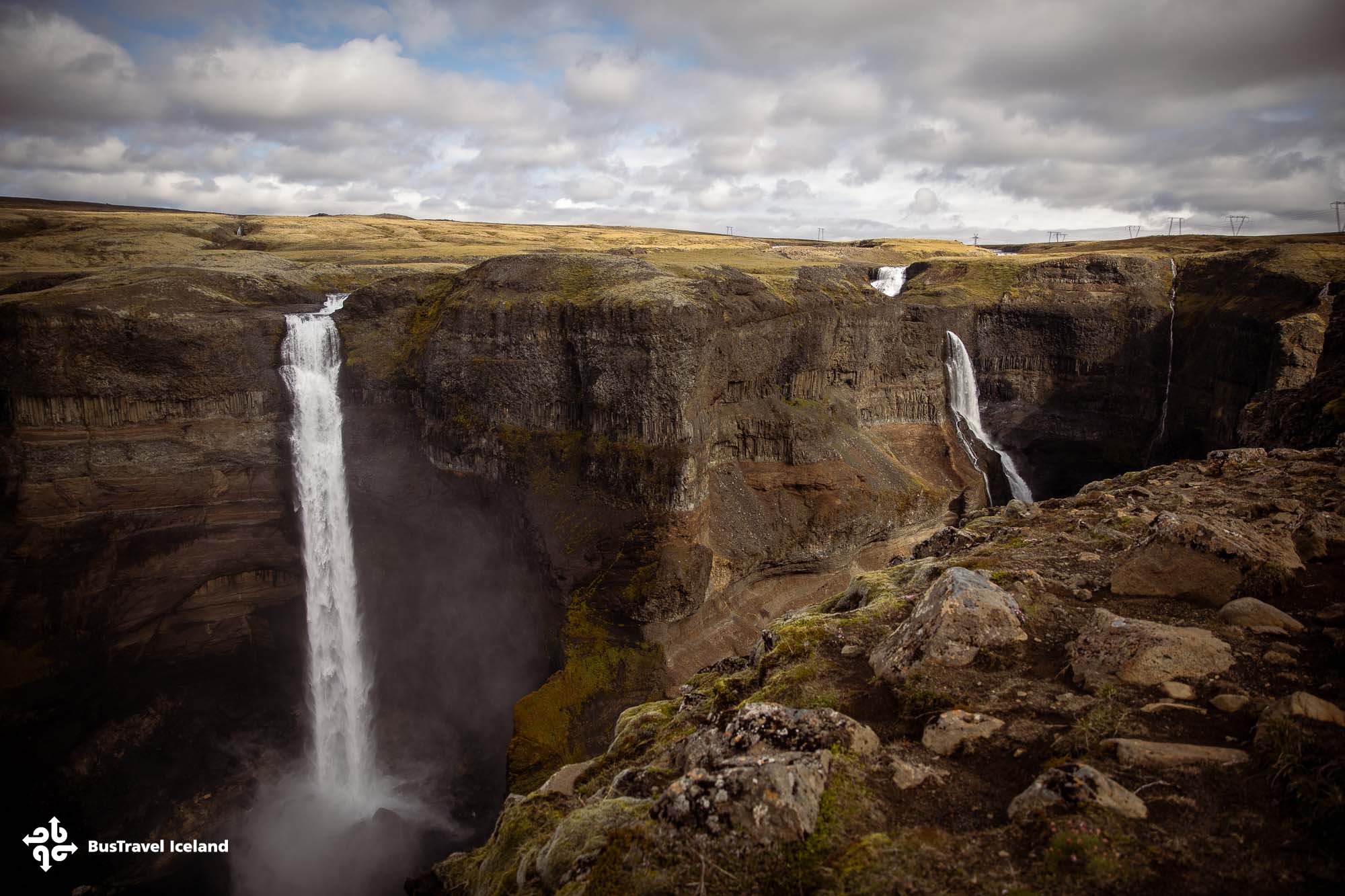
What gives the scene its lasting power is that the place itself is real. Filmed in Iceland—the so-called land of a thousand waterfalls—the finale features Háifoss and its neighbor Granni, thundering into a remote canyon in southern Iceland and transforming a once-imaginary refuge into a landscape that truly exists.
To enhance the dreamlike quality of the scene, some elements were digitally added: the small cluster of houses in the distance and the mountains framing both sides of the shot were created using CGI, while the waterfalls and canyon themselves are entirely real.
Háifoss Waterfall
Rising from the edge of Iceland’s highland interior, Haifoss and Granni are among the country’s most arresting yet least crowded waterfalls. They are often loosely associated with Landmannalaugar because of their proximity to the highlands, but geographically they belong to Þjórsárdalur, a fertile valley that forms a natural threshold between Iceland’s green lowlands and its volcanic interior. This transitional setting is part of what gives the waterfalls their striking character: lush vegetation clings to the canyon rim, while raw basalt cliffs plunge abruptly into shadow.
Haifoss, whose name simply means “Tall Falls,” lives up to its reputation. At approximately 122 meters in height, it is the third-highest waterfall in Iceland, surpassed only by Morsárfoss and Glymur. The water of the Fossá River spills over the canyon edge in a single, uninterrupted drop, crashing into a narrow gorge sculpted by centuries of glacial meltwater and volcanic activity. From the main viewpoint, the scale is difficult to grasp at first; only when watching birds circle far below does the true depth of the canyon become apparent. In spring and early summer, when snowmelt feeds the river, the waterfall reaches its most powerful state, sending mist high into the air and filling the valley with a constant, thunderous roar.
Granni Waterfall
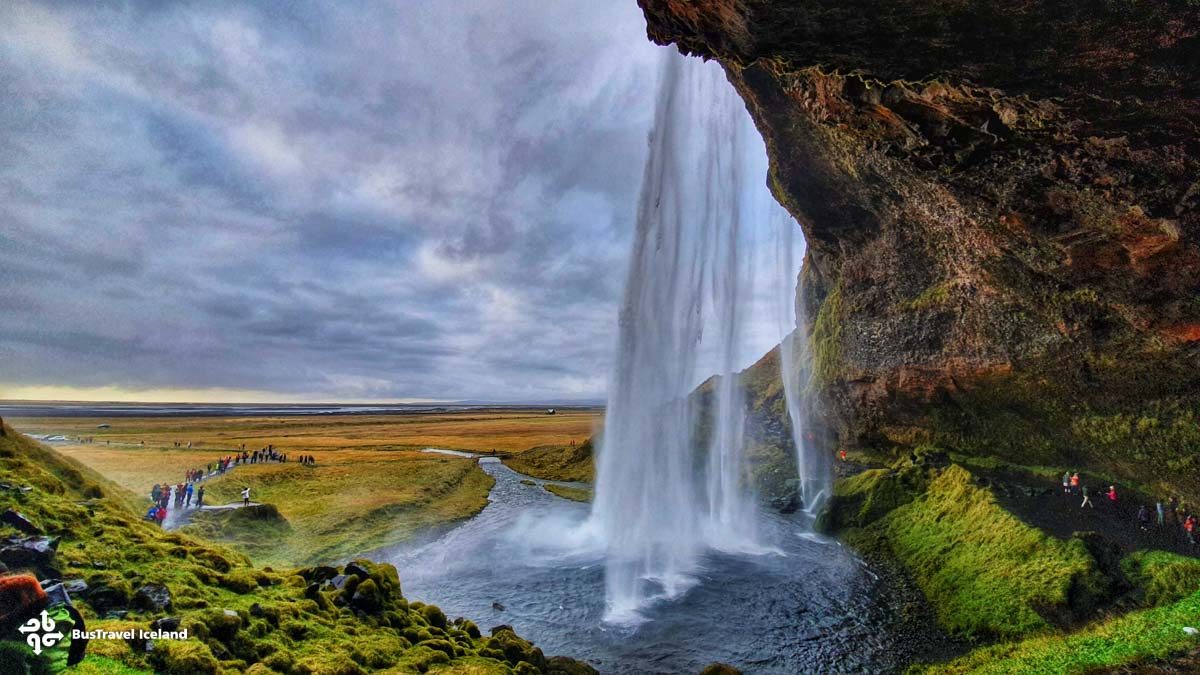
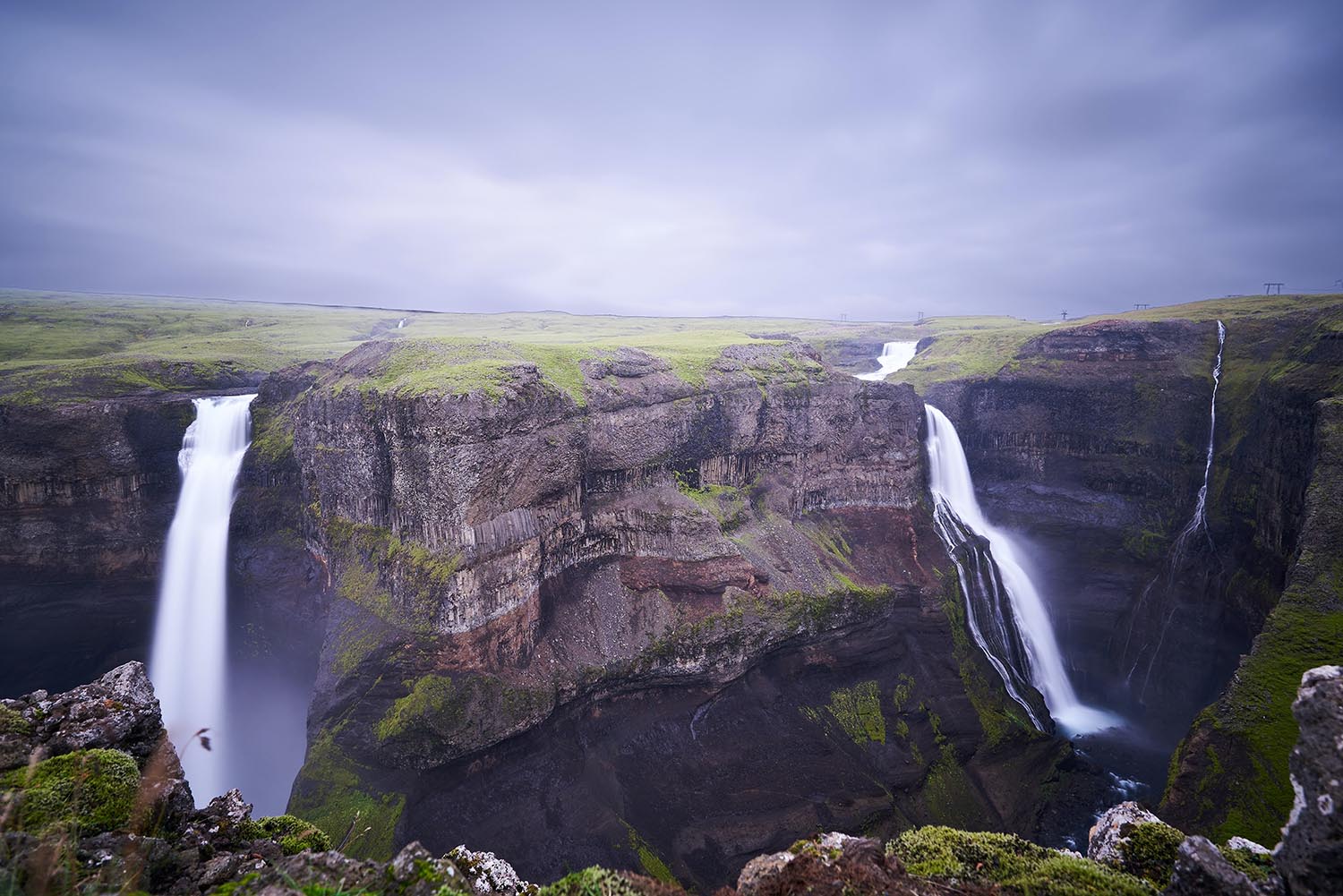
Just meters away, Granni descends alongside Haifoss into the same canyon. Smaller and slimmer, it is nevertheless inseparable from the scene. Its name translates roughly to “neighbor,” an apt description for a waterfall that feels like a quiet companion rather than a rival. When viewed together, Haifoss and Granni form a rare paired composition in Icelandic nature: one immense and dominant, the other restrained and elegant, both framed by dark volcanic rock streaked with mineral colors.
The area surrounding the waterfalls bears the geological fingerprints of Iceland’s turbulent past. Þjórsárdalur was once home to farming communities that were eventually abandoned after volcanic eruptions, particularly from nearby Hekla.
Today, the valley feels almost timeless, with sweeping views, sparse human traces, and a sense of exposure that intensifies the experience of standing above the canyon. Gravel roads lead to the viewpoint, reinforcing the feeling of having stepped away from Iceland’s more polished tourist routes.

How to Get to Háifoss waterfall
Getting to Haifoss is relatively straightforward, but it does mean leaving Iceland’s main tourist routes behind and driving onto gravel roads—part of what gives the area its distinctly remote feel.
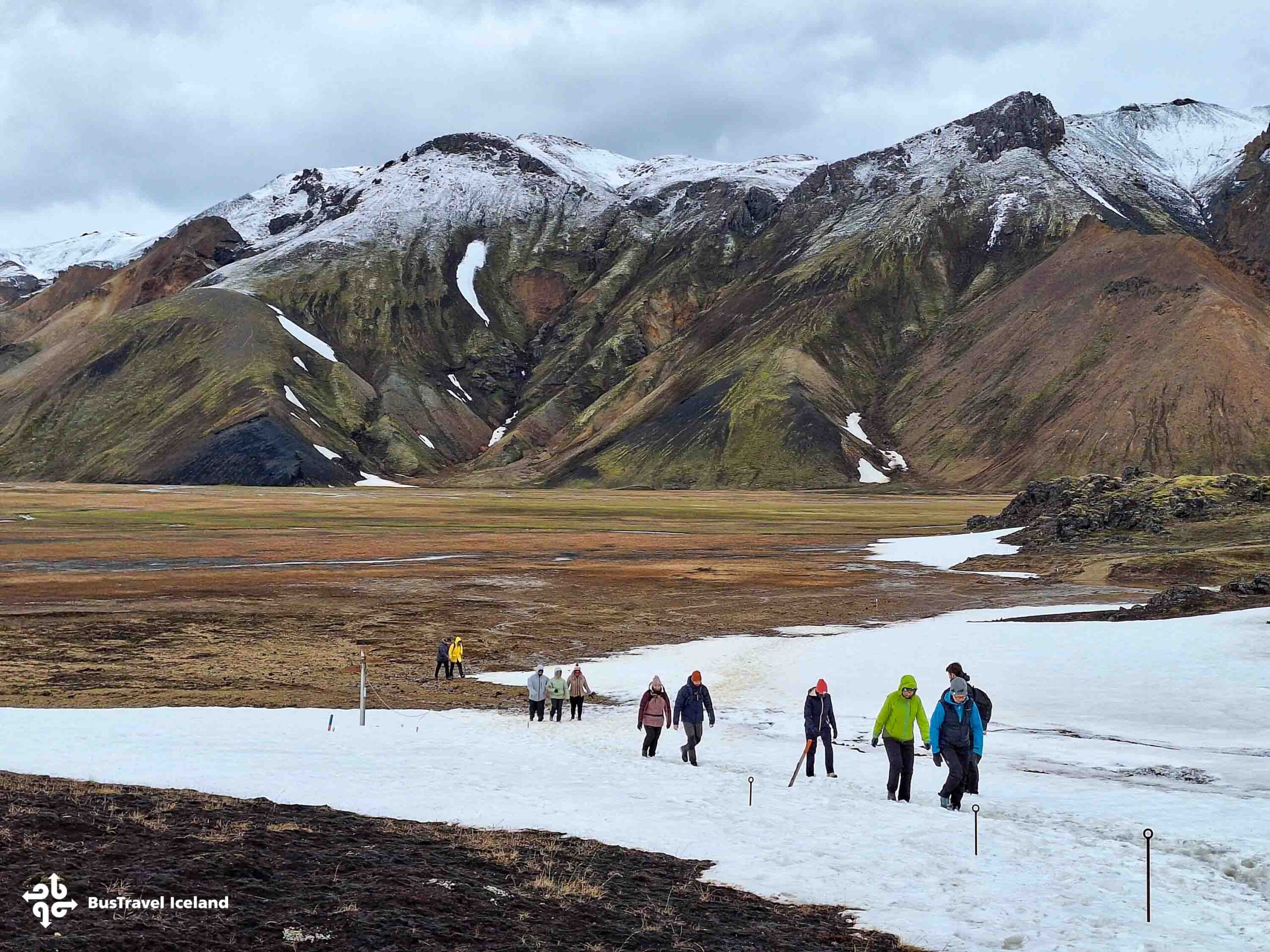
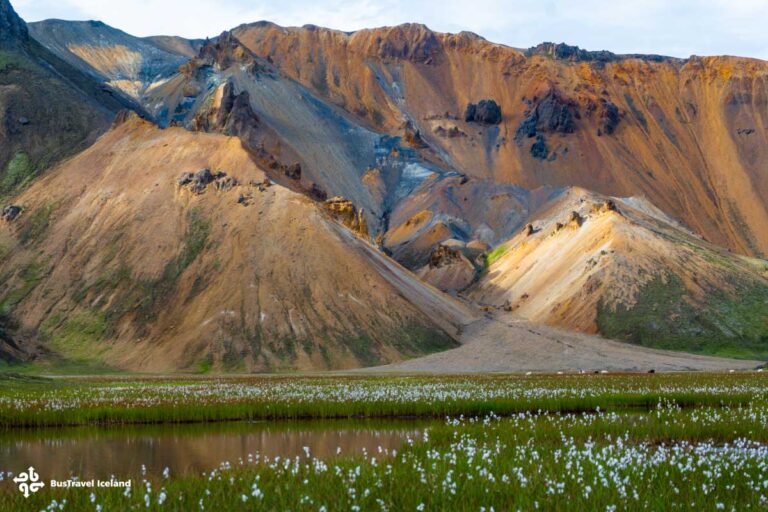
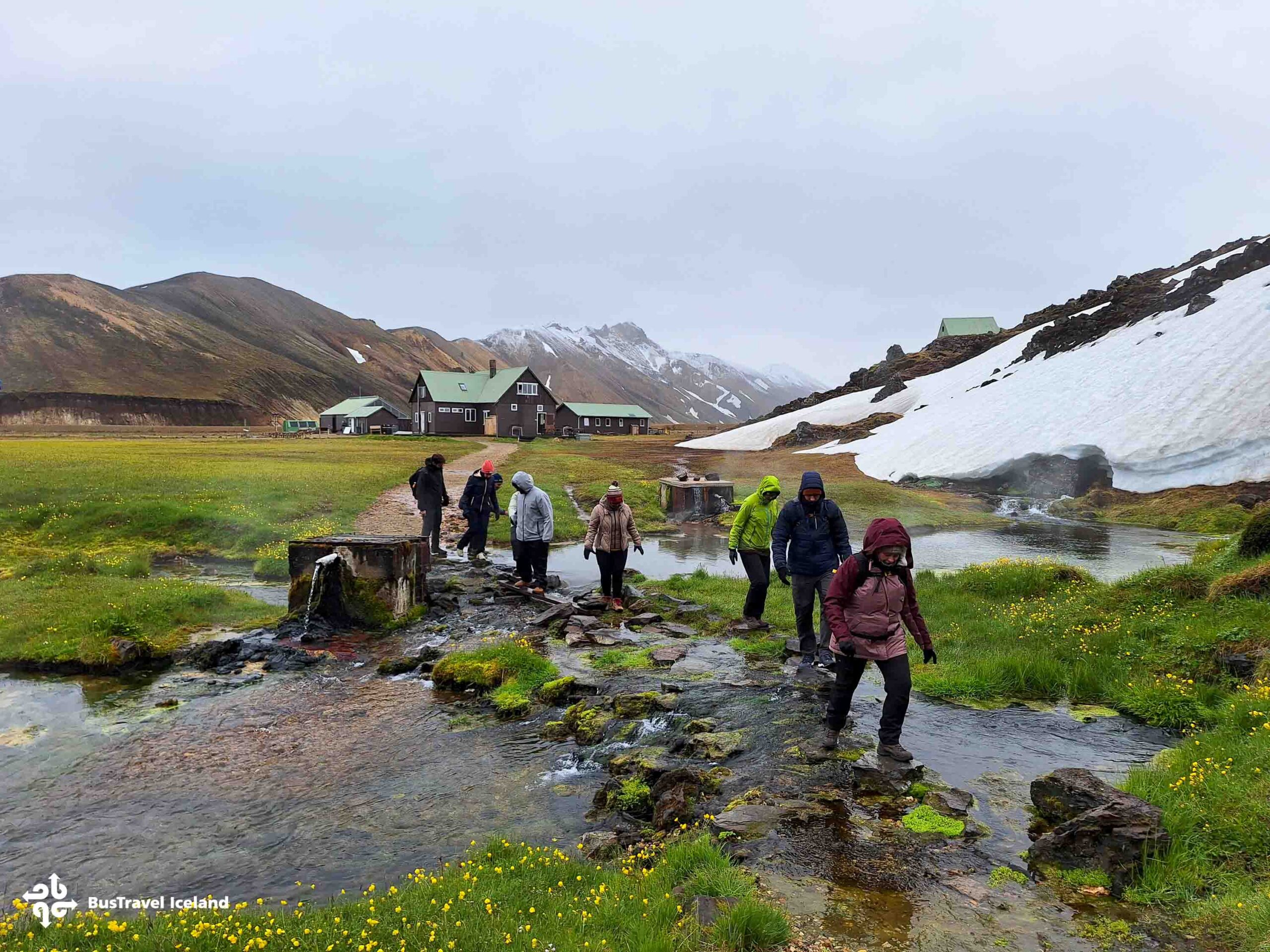
One of the easiest ways to visit is by joining an Iceland Landmannalaugar Highland day tour from Reykjavík. The guided tour includes stops at Hjálparfoss, the Hnausapollur volcanic crater, and the colorful landscapes of Landmannalaugar itself, with Háifoss and its neighboring waterfall, Granni, as key highlights along the way. Traveling with a guide removes the need to worry about road conditions and navigation, especially for those unfamiliar with highland driving.
For travelers who prefer to drive themselves, Haifoss is located in Þjórsárdalur valley in southern Iceland, about 130 kilometers (80 miles) east of Reykjavík. The journey usually takes around 2.5 hours, depending on weather and road conditions. From Reykjavík, follow Route 1 (the Ring Road) east toward Selfoss and Hella. After passing Hella, turn north onto Route 26, also known as Sprengisandur Road, which leads inland toward the highlands. Continue along Route 26 until you see signs for Þjórsárdalur and Haifoss, then turn onto Route 32, which takes you the rest of the way toward the waterfall area.
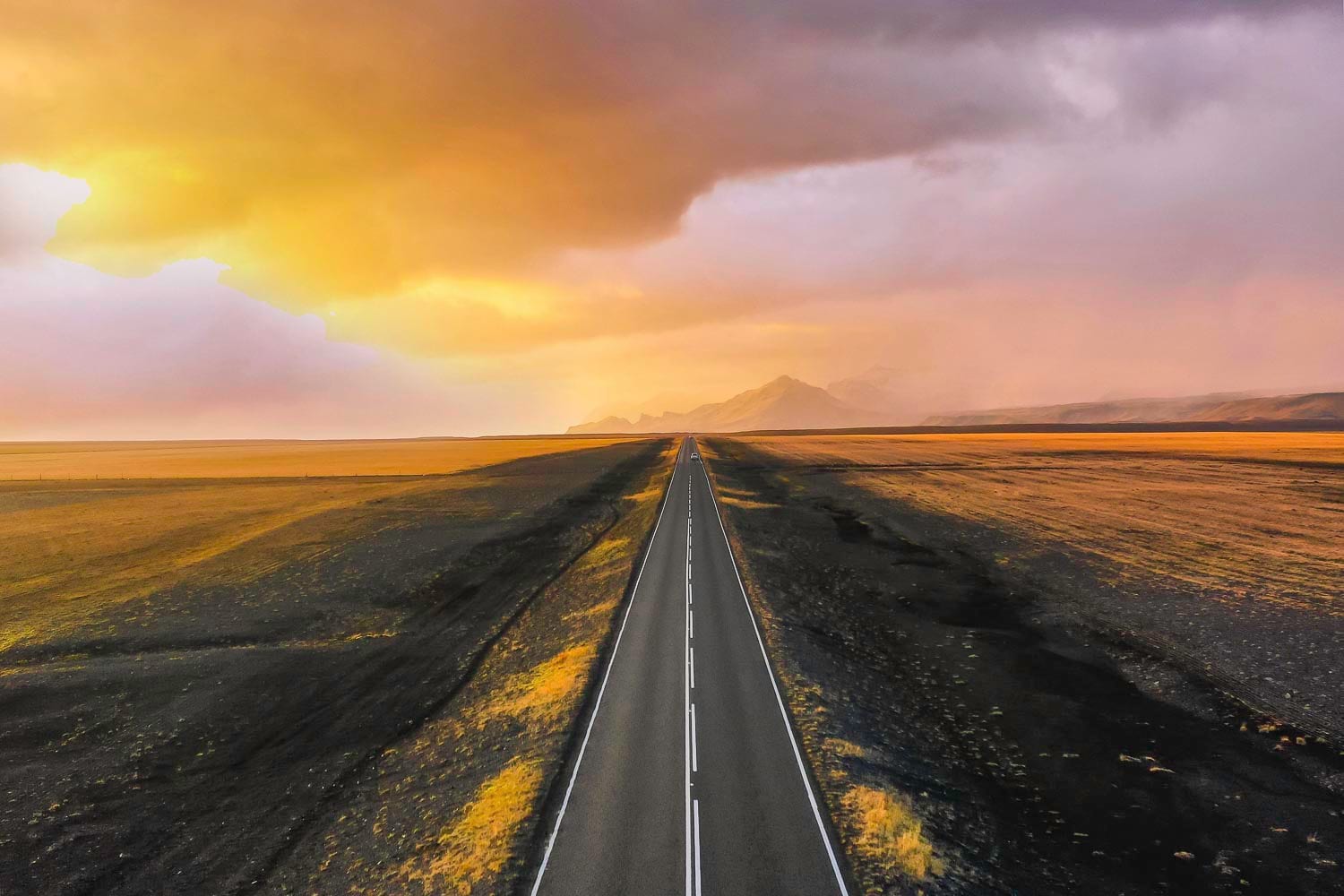
Route 32 is paved at first but eventually becomes a gravel road as you approach the waterfalls. The final stretch can be rough, with potholes and loose stones, especially after rain. A standard car is usually sufficient in summer, but driving slowly and cautiously is essential. In wet conditions or early in the season, a vehicle with higher clearance is recommended.
At the end of the road, there is a small parking area near the canyon edge. From there, it’s a short walk of just a few minutes to the main viewpoint, where both Haifoss and its neighboring waterfall, Granni, come into full view.
Haifoss is best visited from late May to September, when roads are open and snowmelt gives the waterfall its full power. Outside of summer, access can be limited or impossible due to road closures and weather conditions, so always check local road updates before setting out.
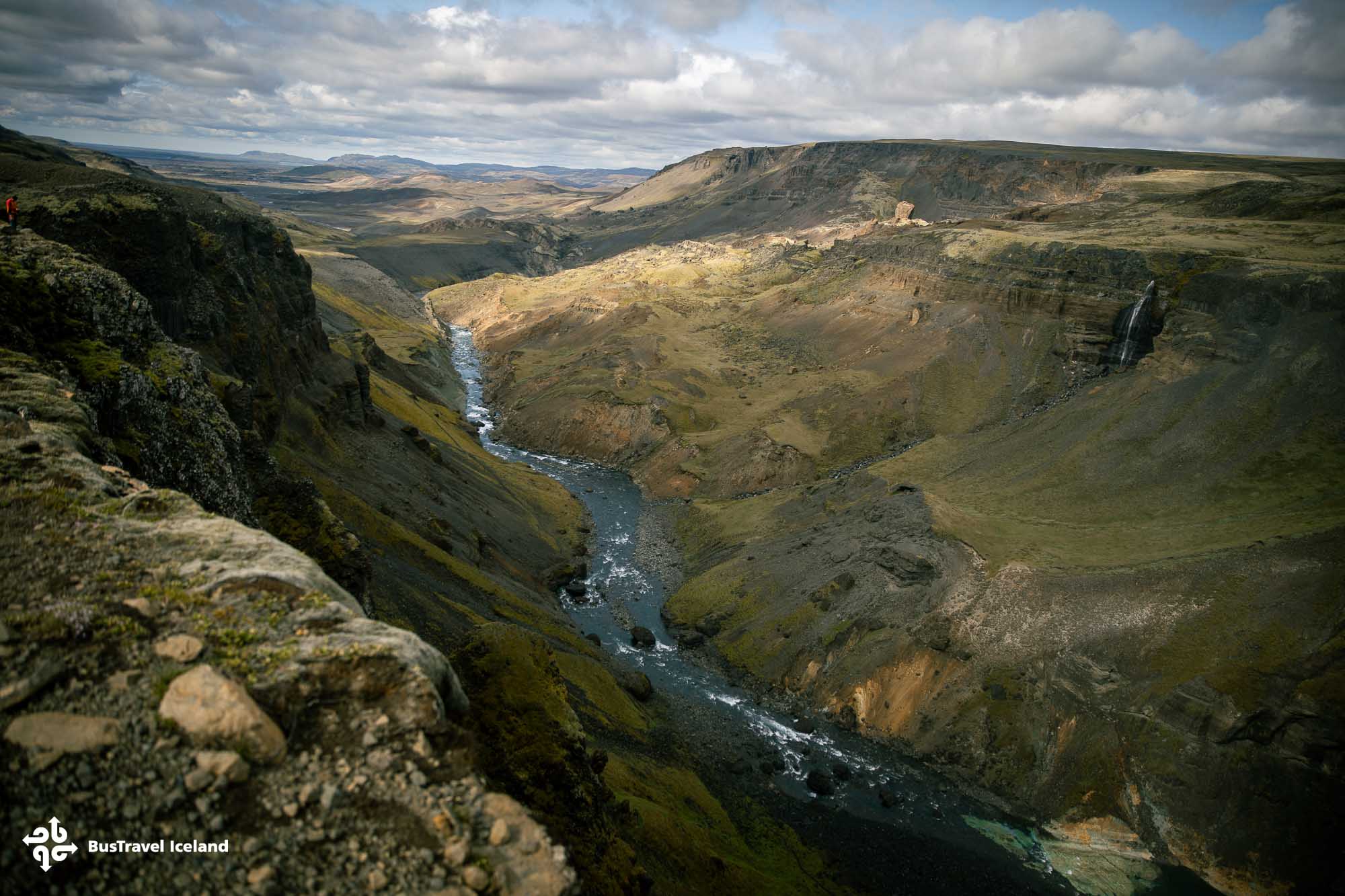
Hiking from the parking area (easy, short walk)
From the Haifoss parking area, a short, unmarked path leads directly to the main viewpoint. This walk takes only 5–10 minutes and is suitable for most visitors. The ground is uneven gravel and rock, and there are no safety barriers, so staying well back from the cliff edge is critical, especially in windy or wet conditions.
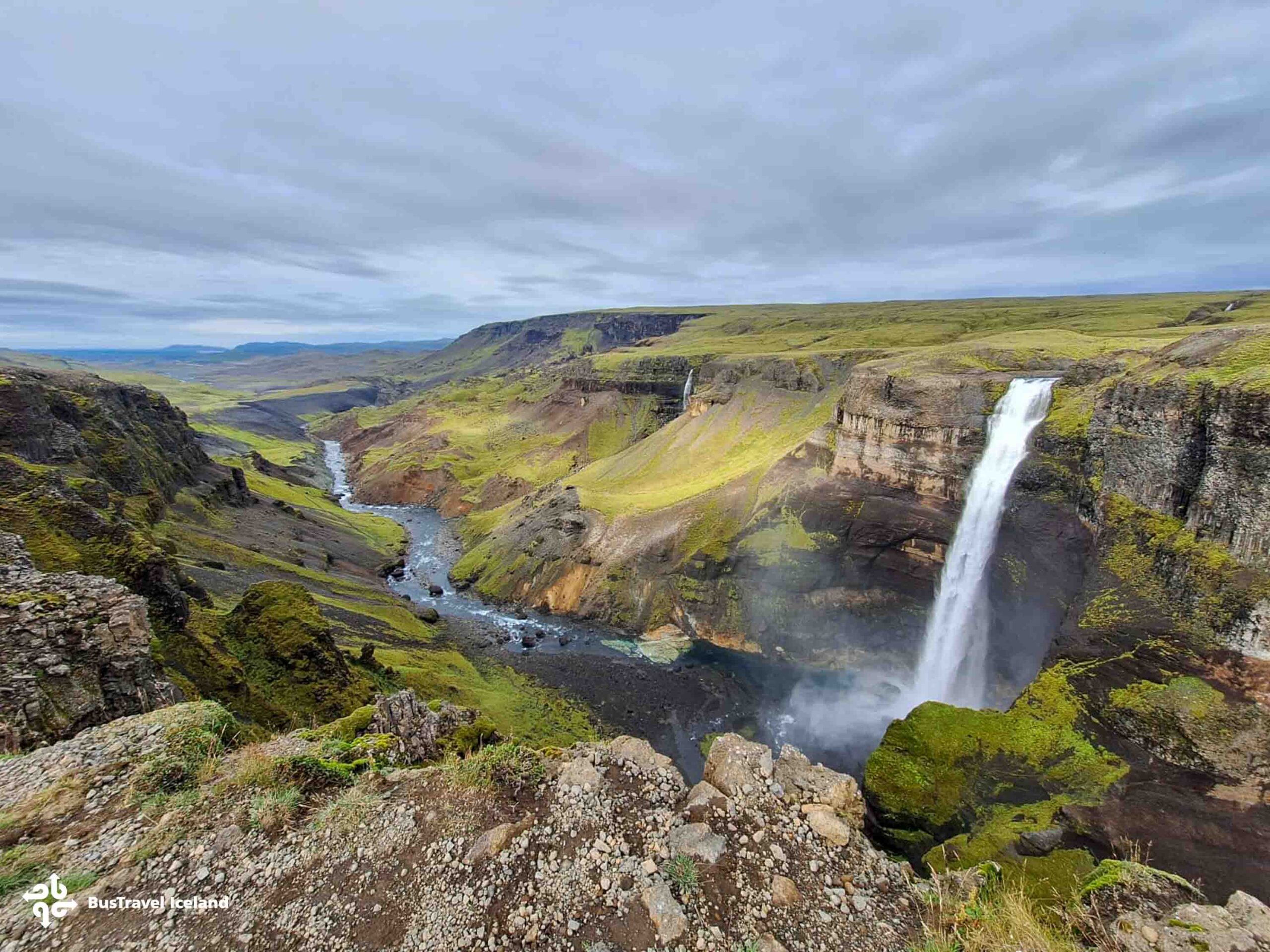
Hiking along the canyon (moderate, unmarked)
More experienced hikers often continue along the canyon rim, following faint footpaths created by previous visitors. These routes allow different angles of both Haifoss and its neighboring waterfall, Granni, and offer dramatic views into the gorge. The terrain is rough, narrow in places, and exposed, with steep drop-offs, so this hike is not recommended in poor weather or for those uncomfortable with heights.
There is no official trail signage, and the paths can fade quickly, particularly after rain. Sturdy hiking boots, windproof layers, and careful footing are essential. In early summer, lingering snow patches may still be present.
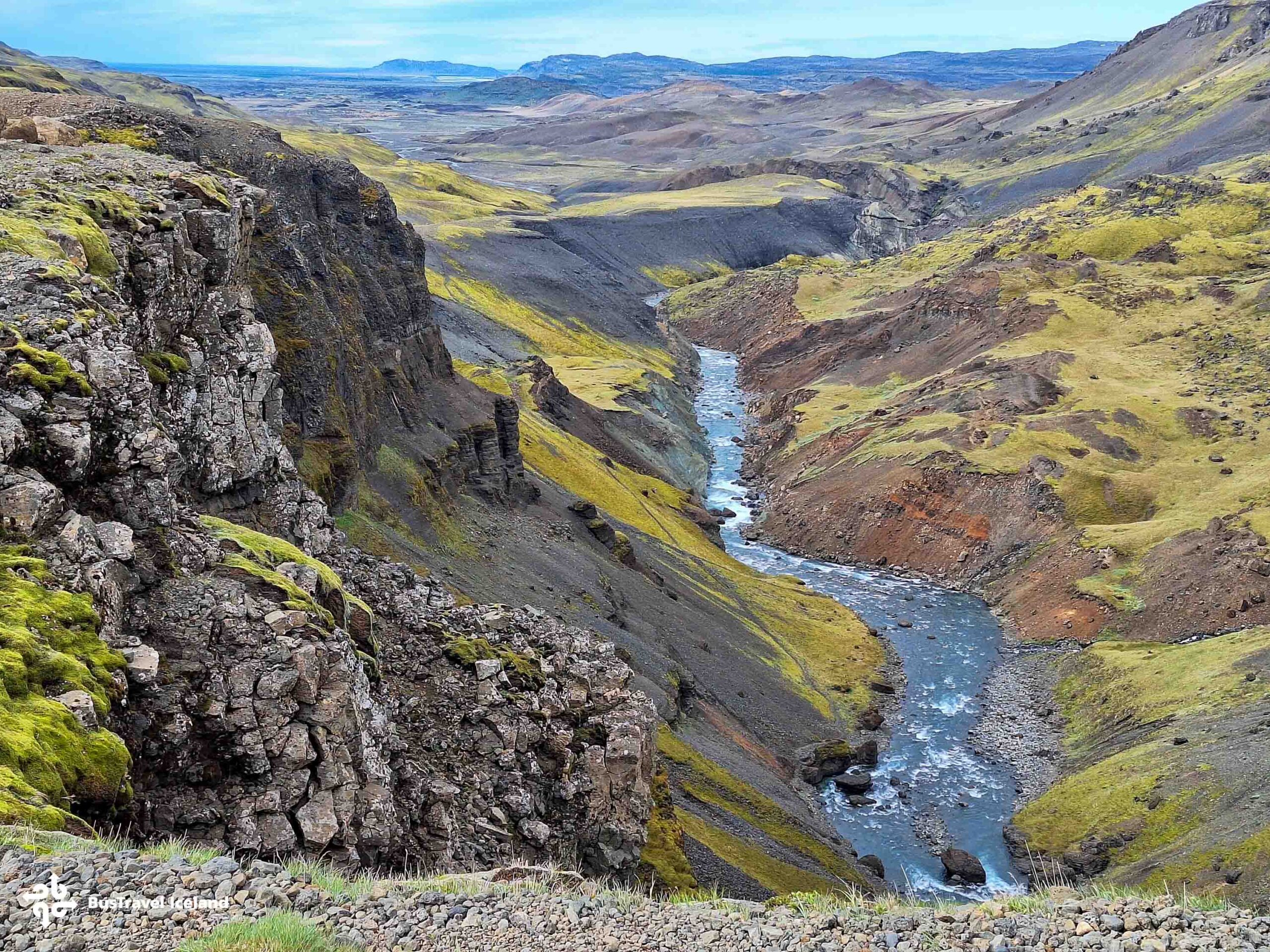
Best time to hike
Hiking around Haifoss is best from June to September, when access roads are open and conditions are most stable. Even in summer, winds can be strong and visibility can change quickly, so always check the weather before setting out.